Search our journals and articles

1 / 2016

Revista: 1 / 2016
Anul Publicarii:2016
Print ISSN: 0255 0539
Revista Transilvania

Științe socio-umane

Arte vizuale

Filozofie și studii sociale

Antropologie și etnologie

Sociologie

Științe politice & juridice

Istorie & Antropologie

Studii culturale

Biblioteconomie

Științele limbii

Științele economice

Antropologie. Studii filozofice

Teologie

Studii literare

Autor: Andreea MIRONESCU

Post-communism as a Space of Remembrance: Conceptual Remarks

In Romania and other East-European countries, post-communism is either seen as a period of voluntary oblivion, or, on the contrary, as a time of directional recollection, imposed by the canon of critically remembering „bad” communism as opposed to a nostalgia-filled „good” one. Trying to move past this false distinction, the first part of this paper briefly analyses the various types of recollecting life and socialization in communism, such as biographical, generational, historical or artistically reshaped memories. The second part discusses Jan and Aleida Assmann’s model of collective memory and seeks to investigate the critical function of literature with regard to cultural memory, pleading for a political and aesthetical approach to contemporary Romanian fiction.

Keywords: idiosyncratic memories, canonical vs. subversive memory, post-communism, Romania

  • Assmann, Aleida, Cultural Memory and Western Civilization. Functions, Media, Archives. Cambridge, Cambridge University Press, 2013.
  • Assmann Jan, Memoria culturală. Scriere, amintire și identitate politică în marile culturi antice/ Das kulturelle Gedächtnis. Scrift,Erinnerun und politische Identität in frühen Hochkulturen. Traducere de Octavian Nicolae. Iaşi, Editura Universității „Alexandru Ioan Cuza” Iaşi, 2013.
  • Borbély, Ștefan, „Generații fără memorie”/ „Generations without Memory” I-II. În Observator cultural, nr. 332/ 2006, sursă online http://www. observatorcultural.ro/Generatii-fara-memorie*articleID_15879articles_details. html accesată la 01.08.15.
  • Erll, Astrid, „Literature, Film and the Mediality of Cultural Memory”. În Astrid Erll, Ansgar Nünning (eds.), Media and Cultural Memory/ Medien und kulturelle Erinnerung. Berlin, New York, Walter de Gruyter, 2008, pp. 389-397.
  • Erll Astrid, Ann Rigney, „Literature and the Production of Cultural Memory: Introduction”. In European Journal of English Studies, vol. 10, nr. 2 (August), 2006, pp. 111-115.
  • Halbwachs Maurice, Memoria colectivă/ La mémoire collective. Ediție critică de Gérard Namer şi Marrie Jaisson. Traducere de Irinel Antoniu. Iaşi, Institutul European, 2007.
  • Hutcheon, Linda, Politica postmodernismului/ Politics of Postmodernism. Traducere de Mircea Deac. Bucureşti, Univers, 1997.
  • Petrescu, Cristina, „Websites of Memory: In Search of the Forgotten Past”. In Maria Todorova, Augusta Dimou and Stefan Troebst (eds.), Remembering Communism. Private and Public Recollections of Lived Experience in Southeast Europe. Budapest, CEU Press, 2014, pp. 595-613.
  • Petrescu, Cristina, Dragoş Petrescu , „The Canon of Remembering Romanian Communism: From Autobiographical Recollections to Collective Representations”. In Maria Todorova, Augusta Dimou and Stefan Troebst (eds.), op.cit., pp. 595613.
  • Nora, Pierre, „Entre Mémoire et Histoire. La problématique des lieux”, en Le lieux de mémoire, tome I, La République. Paris, Gallimard, 1984, p. XVII-XLII.
  • Țichindeleanu, Ovidiu, „Pornind de la Jan Assmann: democratizarea memoriei culturale şi revizuirea teoriei modernității”. Postfață la Jan Assmann, Monoteismul și limbajul violenței, traducere de MariaMagdalena Anghelescu. Bucureşti, Tact, 2012.
Autor: Claudia SPIRIDON
Email: claudia.spiridon@ymail.com

German Literature in Communist Romania. Transformations

The literature of the German minority in communist Romania was subjected to a seemingly contradictory treatment. If in the immediate post-war period it was exposed to a very strict ideological control, Nicolae Ceauşescu kept it away, at least apparently, from the terror which was representative for Gheorghiu Dej’s reign. To be able to enjoy a favorable image in the West, Ceauşescu privileged the position of German literature within the romanian borders. Paradoxically, however, he did not protect it from another instrument of power alertness, better even than the institution of censorship, namely The Securitate, which controlled the writings that could be published in the West. Ceauşescu’s fear of not damaging his image in the West led him to closely follow the ranks of the German literary movements. Securitate Officers created a complex network of surveillance, which involved the infiltration among newspaper editors and publishers, but also among the restricted circles of the authors. The aim was to block any attempt of expressing compromising ideas against Ceauşescu’s regime abroad. The actions of the Securitate have gradually led to the emigration of German-speaking authors and thus to the disappearance of a valuable literature.

Keywords: German minority, regional literature, censorship, communist regime, Securitate

  • Baier, Hannelore. Stalin und die Rumäniendeutschen. Zur Nationalitätenpolitik in Rumänien 1944-1948. [Stalin and the German minority in Romania. About the policy of nationalities in Romania 1944-1948]. În: Spiegelungen 6 (60), 2/2011, München, Editura IKGS, p . 138-150
  • Bergel, Hans. Erfahrungen eines Autors mit Verlagen. [Experiences of an author with publishers]. În: Deutsche Literatur Ostmittel- und Südosteuropas von der Mitte des 19. Jahrhunderts bis heute. Forschungsschwerpunkte und Defizite [German literature of middle and southeastern Europe from the mid-19th century untill today. Research priorities and deficiencies]. coord. Schwob, Anton, München, Editura Südostdeutsches Kulturwerk, 1992, p. 64-72
  • Frauendorfer, Helmuth. Das bißchen Kompromiß. [The little compromise]. În: Nachruf auf die rumäniendeutsche Literatur [Obituary to the German literature in Romania]. coord. Solms, Wilhelm, Marburg, Editura Hitzeroth, 1990, p. 130-136.
  • Kromer, Michael. Politische Prozesse gegen Deutsche im kommunistischen Rumänien. Versuch einer Bestandaufnahme und eines Überblicks [Political trials against Germans in communist Romania. An attempt of an inventory and an overview]. În: Worte als Gefahr und Gefährdung. Schriftsteller vor Gericht [Words as a threat and danger. Writers in court.]. coord. Motzan Peter, Sienerth Stefan, München, Editura Süddeutsches Kulturwerk ,1993, p. 31-51.
  • Markel, Michael. „Ich wohne in Europa/Ecke Nummer vier“: Identitätsprobleme einer Minderheitenliteratur im Spiegel der siebenbürgisch- deutschen Literaturgeschichte“ [„I live in Romania/corner 4“: Identity issues of a minority literature in the mirror of german- transylvanian literary history]. În: Deutsche Literatur Ostmittel- und Südosteuropas von der Mitte des 19. Jahrhunderts bis heute. Forschungsschwerpunkte und Defizite [German literature of middle and southeastern Europe from the mid-19th century untill today. Research priorities and deficiencies]. coord. Schwob, Anton. München, Editura Südostdeutsches Kulturwerk, 1992, p. 163- 175.
  • Milata, Paul. Zwischen Hitler, Stalin und Antonescu: Rumäniendeutsche in der Waffen-SS. [Between Hitler, Stalin and Antonescu: Germans in Romania as ArmedSS]. (=Studia Transylvanica), Köln, Editura Böhlau, 2009.
  • Motzan, Peter. Die rumäniendeutsche Lyrik nach 1944. Problemaufriss und historischer Überblick. [The poetry of German minority in Romania after 1944. Outline of the problem and historical overview]. Cluj Napoca, Editura Dacia, 1980.
  • Motzan, Peter. Überlegungen zu einer Geschichte der rumäniendeutschen Lyrik nach 1945. [Reflection towards the history of the German poetry in Romania after 1945]. În: Neue Literatur 24, 3/1973, p. 73-86.
  • Patapievici, Horia-Roman. Partea nevăzută decide totul [The unseen side decides everything]. Humanitas, Bucureşti, 2015.
  • Rădulescu, Raluca. Die rumäniendeutsche Literatur. Sonderstatus und Wertungsproblematik [The literature of the German minority in Romania. Special status and evaluation issues]. În: Zeitschrift der Germanisten Rumäniens 1-2 (25-26)/ 2004, 1-2 (27-28)/2005, p. 319-334.
  • Reichrath, Emmerich. Die Rezension zwischen Journalistik und Literaturkritik. Überlegungen zur Buchbesprechung in den deutschen Tages- und Wochenzeitungen Rumäniens [The review between journalism and literary criticism. Considerations of editorial works in the German daily and weekly newspapers in Romania]. În: Neue Literatur 24, 9/1973, p. 93-103.
  • Ritter, Alexander. Deutsche Minderheitenliteraturen [German minority literatures]. München, Editura Süddeutsches Kulturwerk, 2001.
Autor: Gabriel BADEA
Email: gabi_1333@yahoo.com

Mircea Eliade and the Ambivalent Character of Literary Modernism

This article aims to question more in-depth the picture of literary modernism, emphasizing its ambivalence,  distinction operated in a relationship with Tradition, Myth, Ritual, Symbol, etc. Mircea Eliade noted since the interwar period this spiritual and antihistorical direction in literary modernism, and his ideas were confirmed by more recent studies, such as those due to Sorin Alexandrescu, Roger Griffin, Hayden White. In the second part of the article I
will pursue the cultural context which prepared and announced the emergence of ethical modernism (anthropology’s progress in the late nineteenth century and early twentieth century, the rediscovery of myth and symbol as means of experience and knowledge).

Keywords: literary modernism, ethic/aesthetic, myth, tradition, forgetfulness, desacralization

  • Alexandrescu, Sorin – Privind înapoi, modernitatea/Looking Back, Modernity, Ed. Univers, Bucureşti,1999
  • Alexandrescu, Sorin – Modernism și anti-modernism. Din nou, cazul românesc/ Modernism and Anti-modernism.Again, the Romanian Case în „Modernism şi antimodernism” (coord. Sorin Antohi), Ed. Cuvântul, Bucureşti, 2008
  • Baudelaire, Charles – Curiozităţi estetice/ Aesthetic Curiosities, Ed. Meridiane, Bucureşti, 1971
  • Benjamin, Walter – Iluminări/ Illuminations, Ed. Univers, Bucureşti, 2000
  • Biès, Jean – „Chamanisme et littérature”/ „Shamanism and Literature”, în Cahiers de l`Herne: Mircea Eliade, (Tacou, Constantin dir.), Ed. de l`Herne, Paris, 1978 (ed. consult. 1987)
    Bradbury, Malcom; McFarlane, James (ed.) – Modernism. A Guide to European Literature 1890 – 1930, Penguin Books, Londra, 1991
  • Eliade, Mircea – Briser le toit de la maison. La créativité et ses symboles/ Breaking the Roof of the House: Creativity and his Symbols, Gallimard, Paris,1986
  • Eliade, Mircea – Fragmentarium, Ed. Humanitas,Bucureşti, 2008
  • Eliade, Mircea – Jurnal/ Journal, vol. I, Ed. Humanitas,Bucuresti, 1993
    Griffin, Roger – Modernism and fascism, Palgrave Macmillan, Londra, 2007
  • Habermas, Jürgen – Discursul filosofic al modernităţii/ Philosophical Discourse of Modernity, Ed. All,Bucureşti, 2000
  • Harvey, David – Condiţia postmodernităţii/ The Condition of Postmodernity, Ed. Amarcord, Timişoara, 2002
  • Ricœur, Paul – Le conflit des interpretations. Essais d`hermeneutique/ The Conflict of Interpretations.Essays of Hermeneutics, Seuil, Paris, 1969
  • Schama, Simon – Le Paysage et la Memoire/ Landscape and Memory, Seuil, Paris, 1999
  • White, Hayden – „Primitivismul şi modernismul”/ “Primitivism and Modernism”, în Modernism şi antimodernism (coord. Sorin Antohi), Ed. Cuvântul,Bucureşti, 2008
Autor: Ciprian Iulian TOROCZKAI
Email: torocipri@gmail.com

Postmodern Sci-Fi: Ioan Petru Culianu’s “Hesperus”

This study examines the presence of postmodern and Sci-Fi elements in Ioan Petru Culianu’s micro-novel Hesperus. It fully represents Culianu’ originality, as it breaks both with the literature of his Romanian generation and with Eliade’s literature. On the one hand, it illustrates a genre rarely approached by his generation – namely, the Sci-Fi; on the other, it follows a postmodern structure which neither Culianu’s, nor Mircea Eliade’s contemporaries (one of his models) have not observed in their literary works. Thus, at least a part of Culianu’s literature must be placed within the category of postmodernism, Hesperus being one of the most eloquent evidences in that regard.

Keywords: postmodern fiction, Sci-Fi, utopia, virtual worlds, distorted time, transhumanity, Ioan Petru Culianu.

*** Dialoguri întrerupte: Corespondența Mircea Eliade–Ioan Petru Culianu, ed. a II-a, Polirom, Iaşi, 2013

  • Andruşcă (Matei), Anca Ramona, „Imaginea „Statului- Politist” în literatura lui Ioan Petru Culianu”,http://www.bursedoctorale.ro/public/documente/conferinte/1332583519_articol_ART_CONF_ANDRUSCA_LIT_IULIE2010.pdf
  • Anton, Ted, Eros, magie și asasinarea profesorului Culianu, ed. a II-a, Polirom, Iaşi, 2005
  • Bellow, Saul, Ravelstein, trad. Antoaneta Ralian, Polirom, Iaşi, 2008
  • Bomher, Noemi, „Femininity in the Work of Ioan Petru Culianu”, în Cultural and Linguistic Communication 2 (2012), nr. 2, p. 153-161. 55 transilvania 1/2016 56
  • Borbely, Ștefan, „The Literary Pursuit of a Historian of Religions: The Case of Ioan Petru Culianu”, în Journal of Romanian Literary Studies (2013), nr. 3, p. 13-20.
  • Bordaş, Liviu, „Ioan Petru Culianu, Mircea Eliade, and Felix Culpa. With the I.P. Culianu – M.L. Ricketts Correspondence”, în Mihaela Grigor (ed.), Mircea Eliade between the history of Religions and the Fall into History, Presa Universitară Clujeană, ClujNapoca,
    2014, p. 67-178.
  • Călinescu, Matei, Despre Ioan P. Culianu și Mircea Eliade: amintiri, lecturi, reflecții, Polirom, Iaşi, 2002
  • Culianu, Ioan Petru, Arborele gnozei. Mitologia gnostică de la creștinismul timpuriu la nihilismul modern, Bucureşti, Nemira, 1999
  • Culianu, Ioan Petru, Arta fugii. Povestiri, Iaşi, Polirom, 2002
  • Culianu, Ioan Petru, Călătorii in lumea de dincolo, Bucureşti, Nemira, 1994, 1999; Iaşi, Polirom, 2003
  • Culianu, Ioan Petru, Dicţionarul religiilor, Bucureşti, Humanitas, 1993, 1996; Iaşi, Polirom, 2007
  • Culianu, Ioan Petru, Eros și magie în Renaștere. 1484, Bucureşti, Nemira, 1994, 1999; Iaşi, Polirom, 2003
  • Culianu, Ioan Petru, Experienţe ale extazului, Bucureşti,  Nemira, 1997; Iaşi, Polirom, 2004
  • Culianu, Ioan Petru, Gnozele dualiste ale Occidentului.  Istorie si mituri, Bucureşti, Nemira, 1995; Iaşi, Polirom, 2002
  • Culianu, Ioan Petru, Hesperus, Bucureşti, Univers, 1992;Bucureşti, Nemira, 1998; Iaşi, Polirom, 2003
    Culianu, Ioan Petru, Iocari serio. Știinţa și arta în gîndirea Renașterii, Iaşi, Polirom, 2003
  • Culianu, Ioan Petru, Iter in silvis I. Eseuri despre gnoză și alte studii, Iaşi, Polirom, 2012
  • Culianu, Ioan Petru, Iter in silvis II. Gnoză și magie, Iaşi, Polirom, 2013 Culianu, Ioan Petru, Jocul de smarald, Iaşi, Polirom, 2005, 2011
  • Culianu, Ioan Petru, Jocurile minţii. Istoria ideilor, teoria culturii, epistemologie, Iaşi, Polirom, 2002
    Culianu, Ioan Petru, Mircea Eliade, Bucureşti, Nemira,1995, 1998; Iaşi, Polirom, 2004
  • Culianu, Ioan Petru, Păcatul împotriva spiritului. Scrieri politice, Bucureşti, Nemira, 1999; Iaşi, Polirom, 2005,2013
  • Culianu, Ioan Petru, Pergamentul diafan. Povestiri, Bucureşti, Nemira, 1994
  • Culianu, Ioan Petru, Pergamentul diafan. Ultimele povestiri, Bucureşti, Nemira, 1996; Iaşi, Polirom, 2002
  • Culianu, Ioan Petru, Psihanodia, Bucureşti, Nemira, 1997, Iaşi, Polirom, 2006
    Culianu, Ioan Petru, Religie și putere, Bucureşti, Nemira,  1996; Iaşi, Polirom, 2005
  • Culianu, Ioan Petru, Studii românești I. Fantasmele nihilismului. Secretul Doctorului Eliade, Bucureşti, Nemira, 2000; Iaşi, Polirom, 2006
  • Culianu, Ioan Petru, Studii românești II. Soarele și Luna. Otrăvurile admirației, Iaşi, Polirom, 2009
  • Culianu, Ioan Petru, Tozgrec, Iaşi, Polirom, 2010
  • Culianu, Ioan Petru, Cult, magie, erezii. Articole din enciclopedii ale religiilor, Iaşi, Polirom, 2003
  • David, Dorin, De la Eliade la Culianu, Eikon, Cluj, 2010
  • De Martino, Marcello, Mircea Eliade esoterico. Ioan Petru Culianu e i „non detti”, Settimo Sigillo, Roma, 2008
  • Dumbravă, Daniela, „Il Carteggio Ugo Bianchi & Ioan Petru Culianu: fonte per la storiografia italian della storia delle religioni”, în Archaeus 15 (2011), nr. 3, p. 451-470.
  • Dumbravă, Daniela, „The Unplubished Correspondence between Ugo Bianchi and Ioan Petru Culianu”, în Archaeus 14 (2010), nr. 3, p. 93-120
  • Galațchi, Simona, Etapele unei inițieri: o abordare jungiană și psihanalitică a literaturii lui Ioan Petru Culianu, Ed. Muzeul Național al Literaturii Române, Bucureşti, 2013.
  • Gavriluță, Nicu, Culianu, jocurile minții și lumile multidimensionale, Polirom, Iaşi, 2000
  • Antohi, Sorin (ed.), Ioan Petru Culianu. Omul și opera, Polirom, Iaşi, 2003
  • Gorshunova, Olga, „Terra Incognita of Ioan Culianu”, în Ètnografičeskoe obozrenie, 2008, n° 6, p. 94-110 (în rusă)
  • Kitchin, Rob şi Kneale, James, „Science fiction or futurefact? Exploring imaginative geographies of the new millennium”, în Progress in Human Geography 25 (2001), nr. 1, p. 19–35.
  • McHale, Brian, Ficțiunea postmodernistă, trad. Dan H. Popescu, Polirom, Iaşi, 2009;
    Oişteanu, Andrei, „Mircea Eliade and Ioan Petru Culianu on Narcotics and Religion”, în Archaeus 14 (2010), nr. 3, p. 121-140
  • Oişteanu, Andrei, Religie, politică și mit. Texte despre Mircea Eliade și Ioan Petru Culianu, Polirom, Iaşi, 2007; ed. a II-a 2014
  • Patapievici, Horia-Roman, Ultimul Culianu, Humanitas, Bucureşti, 2010
  • Pîrjol, Florina, „Actualitatea lui Culianu”, în Dilemateca, august 2010, p. 53.
  • Popescu, Raul, „Ioan Petru Culianu şi lumile sale ficționale”, în Steaua 59 (2013), nr. 7-8, p. 22-24.
  • Scholes, Robert, Structural Fabulation: An Essay on Fiction of the Future, Notre Dame University Press, Notre Dame, London, 1981;
  • Spătaru, Emilia, „Lucian Blaga si Ioan Petru Culianu în context european”, http://www.philippide.ro/distorsionari_2008/553-556%20SPATARU%20Emilia.pdf
  • Suvin, Darko, Metamorphoses of Science Fiction: On the Poetics and History of a Literary Genre, Yale University Press, New Haven, London, 1979;
  • Zolla, Elemire, Ioan Petru Culianu, Alberto Tallone Editore, 1994.
Autor: Dragoș Varga

Umberto Eco, Technician of The Novel

The present study is, above all, an exercise of admiration for the literary, scientific, academic and essaystic work of Umberto Eco, undoubtedly one of the most translated writers of the last century, proving an impressive stylistic and discursive versatility, wielding with equal dexterity the sober, scientific discourse of the semiotician, the playful, parodic, ironic and self-ironic rhetoric of the globetrotter from “the minimal diaries” and, not least, the narrative discourse, excellently built on technical premises, wich, at some point, he does not hesitate to unveil, more precisely in “Confessions of A Young Novelist”.
Keywords: Umberto Eco, technique of the novel, narrative discourse, fictional world, literary convention.

  • Eco, Umberto, Confesiunile unui tânăr romancier Confessions of A Young Novelist, Polirom, Iaşi, 2011.
  • Kundera, Milan, Arta romanului / The Art Of The Novel, Humanitas, Bucureşti, 2008.
  • Manolescu, Nicolae, O întrebare pentru Umberto Eco / A Question For Umberto Eco, în „România literară”, nr. 10 / 2012.
  • Varga, Dragoş, În căutarea naratorului perfect / In Search Of The Perfect Narrator, Institutul European, Iaşi, 2011.

Acknowledgment:

This work was supported by a grant of the Romanian National Authority for Scientific Research, CNCS – UEFISCDI, project number PN-II-RUTE-2012-3-0411.

Autor: Monica Cojocaru

Contending Narratives in Ian McEwan’s Fiction

My study examines an abiding theme in Ian McEwan’s fiction–the sciences vs. the humanities–within the context of the “two cultures” debate and the extent to which McEwan’s novels can be seen as participating in the debate. One needs to refrain from the impulse of situating McEwan’s fiction as complacently resting within a “two cultures” framework, as a careful examination of his texts, which attest to their author’s refusal to take for granted scientific or any kind of doctrines, demolishes such a view. Nevertheless, this refusal is not readily apparent since it is camouflaged by the main characters’ rationalistic and scientific interpretations of events. By creating characters who are proven wrong for exclusively endorsing one side of the conflict, McEwan engages in the “two cultures” debate and challenges the significance of science in a dehumanised, globalised world. Determining whether the epistemological models of the sciences and the humanities as thematised in McEwan’s fiction can be reconciled and can converge into a “third culture”
so as to offer a comprehensive and moral outlook is the chief aim of my investigation.
Keywords: Ian McEwan, science, the humanities, morality, the “third culture.”

  • Arnold, Matthew. “Literature and Science.” Available at
    http://homes.chass.utoronto.ca/~ian/arnold.htm, last accessed: Sept. 17, 2015.
  • Bewes, Timothy. “What is Philosophical ‘Honesty’ in Postmodern Literature?” New Literary History 31.
  • Cook, Jon; Groes, Sebastian; Sage, Victor. “Journey without Maps: An Interview with Ian McEwan.”  Ian McEwan: Contemporary Critical Perspectives. Ed. Sebastian Groes, London, Continuum, 2009.
  • Garner, Dwight. “The Salon Interview: Ian McEwan.” 31 March 1998. Available at
  • http://www.salon.com/1998/03/31/cov_si_31int, last accessed: Sept. 17, 2015.
  • Head, Dominic. Contemporary British Novelists: Ian McEwan. Manchester and New York,
  • Manchester University Press, 2007. Lakoff, George; Johnson,  Mark. Metaphors We Live By. The University of Chicago Press, 2003.
  • McEwan, Ian. Enduring Love. London: Vintage Books, 1998.
  • McEwan, Ian. “Faith v Fact.” The Guardian. 7 Jan. 2005.
  • Available at
  • http://www.theguardian.com/science/2005/jan/07/g2, last accessed: Sept. 17, 2015.
  • McEwan, Ian. “Literature, Science and Human Nature.” Human Nature: Fact and Fiction. Ed.
  • Robin Headlam Wells and Johnjoe McFadden. London and New York, Continuum, 2006.
  • McEwan, Ian. “Move Over, Darwin…” The Observer. London, 20 Sept. 1998.
  • McEwan, Ian. Saturday. New York, Anchor Books, 2006.
  • McEwan, Ian. The Child in Time. London, Picador, 1988.
  • Rees-Jones, Deryn. “Fact and Artefact: Poetry, Science, and a Few Thoughts on Ian
  • McEwan’s   Saturday.”   Interdisciplinary Science Reviews 30:4 Dec. 2005.
  • Slay, Jack, Jr.. “Vandalising Time: Ian McEwan’s  The Child in Time.”   Critique 35: 4 Summer 1994.
  • Wilson, Edward O. Consilience: The Unity of Knowledge. New York, Vintage Books, 1999.
Autor: Anamaria Mihăilă
Email: mihaila.anamaria93@yahoo.com

From sympathetic to demoniac. Reflections upon the creator in Lucian Blaga and Liviu Rusu’s philosophy

The aim of this essay is to analyse the aesthetical conceptions of Lucian Blaga and Liviu Rusu regarding the relationship between the creation and its creator. Beyond the shared philosophical influences of the two academics, their philosophic beliefs communicate their vision about art and the author. They develop their aesthetic universe starting from an imbalanced state that needs to be rebuilt through creation. Debating the origins of the artwork, placing those in a subconscious projection, in play or through an evolutive path, establishing the creative affliction, bypassing censorship through the artistic performance are only some of the features discussed in this paper. In an attempt to unravel both
the converging and conflicting aspects of their works we believe to have retraced the inception of the Romanian art philosophy.
Keywords: creator, creation, aesthetics, transmutation, abstraction

  • Balotă, Nicolae, Euphorion / Euphorion, Editura Pentru Literatură, Bucureşti, 1969.
  • Blaga, Lucian, Elanul insulei: aforisme și însemnări / The Upsurge of the island: aphorisms and notes, Editura Dacia, Cluj-Napoca, 1977.
  • Blaga, Lucian, Trilogia culturii / The Trilogy of Culture, Editura Minerva, Bucureşti, 1987.
  • Blaga, Lucian, Trilogia valorilor / The Trilogy of Value, Editura Minerva, Bucureşti, 1987.
  • Blaga, Lucian, Zări și etape / Horizons and Stages, Editura Pentru Literatură, Bucureşti, 1968.
  • Braga, Corin, Geneza lumilor imaginare / The Genesis of imaginary worlds, Editura Institutul European, Iaşi, 1998.
  • Borcilă, Mircea, Eonul Blaga : întâiul veac. Culegere de lucrări dedicată Centenarului Lucian Blaga (18951995), Editura Albatros, Bucureşti, 1997.
  • Gavriliu, Leonard, Inconștientul în viziunea lui Lucian Blaga / The unconscious in Blaga’s perspective, Editura  IRI, Bucureşti, 1997.
  • Muthu, Mircea, Studii de estetică românească / Romanian aesthetic studies, Editura Limes, Cluj-Napoca, 2005.
  • Micu, Dumitru, Estetica lui Lucian Blaga / The aesthetics of Lucian Blaga, Editura Științifică, Bucureşti, 1970.
  • Papahagi, Marian, Studiu introductiv la Liviu Rusu, Eseu despre creația artistică / Introductory study to Liviu Rusu, An essay on artistic creativity, Editura Științifică şi Enciclopedică, Bucureşti, 1989.
  • Pop, Traian, Lucian Blaga. Ontologia culturii / Cultural ontology, Casa Cărții de Știință, Cluj-Napoca, 2006.
  • Rusu, Liviu, Eseu despre creația artistică. Contribuții la o  estetică dinamică / An essay on artistic creativity, Editura Științifică şi Enciclopedică, Bucureşti, 1989.
  • Vaida, Mircea, Afinități și izvoare / Affinities and sources, Editura Minerva, Bucureşti, 1975.
  • Vidam, Teodor, Lucian Blaga și filosofia europeană a secolului XX / Lucian Blaga and the twentieth-century European philosophy, Casa Cărții de Știință, ClujNapoca, 2005.
  • Voia, Vasile, Tentația limitei și limita tentației / The limit of temptation and the temptaion of the limit, Editura Ideea Europeană, Bucureşti, 2012.
  • Zamfirescu, Vasile Dem, Filozofia inconștientului / Philosophy of the unconscious, vol I, Editura Trei, Bucureşti, 2001.

Științe vizuale

Autor: Camelia GRĂDINARU

Ephemeral Albums. Digital Photography in the Household

Exploring philosophical, sociological, communicational or ethnographic approaches about photography, this paper focuses on the ways in which digital photography is integrated in the household and on the functions that it plays at home. Present changes in the understanding of the concept of „family” in the light of ”mobile privatisation” can challenge the traditional dichotomy between public and private spheres. The digital technology has transformed the nature of the photography; its democratization has shaped its functions (self-presentation, memento, communication, storytelling) and also its selection, preservation, archiving or display modalities. In the same vein, the snapshot culture has emphazised the importance of the socializing function, sometimes unconcerned with the quality of image. The family photographs are embedded in specific practices and have to be understood within these practices. The perceived frailty of digital photographies in family (difficulty of access, problems with use) challenges the design of new ways of better integrating the digital mementos in the house.
Keywords: digital photography, family, home, archive, digital memento, storytelling, snapshot culture

  • Barthes, Roland. La chambre claire: Note sur la photographie. Paris, Seuil, 1980.
  • Batchen, Geoffrey. Snapshots. Art history and the ethnographic turn. În: Photographies, 1(2), 2008, p.121-142.
  • Baudrillard, Jean. L’echange symbolique et la mort. Paris, Gallimard, 1976.
  • Baudrillard, Jean. Photographies: For Illusion Isn’t The Opposite of Reality. În: Fotografien, Photographies, Photographs, 1985-1998, Peter Weibel (editor). Hatje Cantz Publishers, 1999, p. 129.
  • Baudrillard, Jean. Photography, or the Writing of Light. În: Ctheory.net, http://www.ctheory.net/text_file.asp?pick=126, 2000.
  • Baudrillard, Jean. Please Follow Me. În: The Jean Baudrillard Reader, editor Steve Redhead. New York, Columbia University Press, 2008, p. 71-82.
  • Bourdieu. Pierre et al. Photography: A Middle Brow Art. Tr. de S. Whiteside. Cambridge, Polity Press, 1990.
  • Brockmeier, Jens. Autobiographical time. În: Narrative Inquiry 10(1), 2000, p. 51-73.
  • Chalfen, Richard. Snapshot Versions of Life. Madison, University of Wisconsin Press, 1987.
  • Di Bello, Patrizia. Seductions and flirtations: photographs, histories, theories. În: Photographies 1(2), 2008, p. 143155.
  • Durden, Mark (ed.). Fifty Key Writers on Photography. New York, Routledge, 2013.
  • Edwards, Elisabeth, Hart, Janice. Photographs as objects. În: Photographs Objects Histories. On the Materiality of Images, editori E. Edwards, J. Hart. New York, Routledge, 2004, p. 1-15.
  • Fernback, Jan. Legends on the net: an examination of computer-mediated communication as a locus of oral culture. În: New Media & Society 5 (1), 2003, p. 29-45.
  • Garry, Maryanne, Gerrie, Matthew. When Photographs Create False Memories. În: Current Directions in Psychological Science 14(6), 2005, p. 321-325.
  • Harrison, Barbara. Photographic Visions and Narrative Inquiry. În: Narrative Inquiry 12(1), 2002, p. 87-111.
  • Kim, J., Zimmerman, J. Cherish: smart digital photo frames for sharing social narratives at Home. În: CHI ’06: CHI ’06 extended abstracts on Human factors in computing systems, 2006, p. 953-958.
  • Kirk, David S. et al. Opening up the family archive. În: Proceedings of the 2010 ACM conference on Computer supported cooperative work, ACM, 2010.
  • McQuire, Scott. Digital Photography and the Operational Archive. În: Digital Light, editori Sean Cubitt, Daniel Palmer şi Nathaniel Tkacz. Londra, Open Humanities
    Press, 2015, p. 122-143.
  • Nunes, M., Greenberg, S., Neustaedter, C. Using Physical Memorabilia as Opportunities to Move into Collocated Digital Photo Sharing, Research Report 2009-919-32. Department of Computer Science, Calgary, Alberta, University of Calgary, 2009.
  • Petersen, M.G., Gronbaek, K. Domestic hypermedia: mixed media in the home. În: CHI 2004, New York, ACM Press, p. 108-109.
  • Petrelli, Daniela, Bowen, Simon, Whittaker, Steve. Photo mementos: Designing digital media to represent ourselves at home. În: International Journal of HumanComputer Studies 72(3), 2014, p.320-336.
  • Petrelli, Daniela, Whittaker, Steve. Family memories in the home: contrasting physical and digital mementos. În:  Personal and Ubiquitous Computing  14(2), 2010, p. 153-169.
  • Rose, Gillian. Doing Family Photography: The Domestic, the Public and the Politics of Sentiment. Surrey,Burlington, Ashgate, 2010.
  • Schiano, Diane J., Chen, Coreena P., Isaacs, Ellen. How Teens Take, View, Share, and Store Photos. În: Proceedings of the Conference on Computer-Supported Co-operative Work (CSCW). New York, ACM, 2002.
  • Sit, R. Y., Hollan, J. D., Griswold, W. G. Digital photos as conversational anchors. În:  System Sciences, 2005, HICSS’05, Proceedings of the 38th Annual Hawaii International Conference on System Sciences, 2005.
  • Slater, Don. Domestic photography and digital culture. În Martin Lister (ed.), The Photographic Image in Digital Culture. Oxon, New York, Routledge, 1995.
  • Soffer, Oren. Silent Orality: Toward a Conceptualization of the Digital Oral Features in CMC and SMS Texts. În: Communication Theory 20, 2010, p. 387-404.
  • Sontag, Susan. Despre fotografie/ On Photography. Tr. de Delia Zahareanu. Bucureşti, Vellant, 2014.
  • Van Dijck, José. Digital photography: communication, identity, memory. În: Visual Communication  7(1), 2008, p. 57-76.
  • Whittaker, Steve, Bergman, Ofer, Clough, Paul. Easy on that trigger dad: a study of long term family photo retrieval. În:  Personal and Ubiquitous Computing 14(1), 2010, p. 31-43.

Dosar

Istorie si studii culturale

Autor: Ioan STANOMIR
Email: ioan.stanomir@gmail.com

1875 – Romanian Liberalism, A Family Portrait

The aim of this paper is to provide a new insight into the way in which Romanian liberalism was being historically shaped. Far from being homogenous, the liberal party established in 1875 is a broad coalition that encompasses radicals as well as moderates. Those who are the true  holders of moderation, in the European sense,  namely the members of the political group of “ Junimea”, are not part of this new alliance. Paradoxically or not, the Romanian liberal party doesn’t reach out to political moderation around 1875.

Keywords: Liberalism, radicalism, evolution

  • Marin Bucur, “C.A. Rosetti,– mesianism şi donquijotism revoluţionar”/ “C. A. Rosetti – a quixotic messianic revolutionary”, Editura Minerva, 1973.
  • Ioan C. Filitti, “Conservatorii şi junimiştii în viaţa politică românească”/ “The conservatives and the “junimists” in the romanian political life”, Institutul de arta grafice Lupta- N. Stoilă, Bucureşti, 1935.
  • Anastasie Iordache, “Ion Ghica – diplomatul şi omul politic”/ “Ion Ghica – statesman and diplomat”, Bucureşti, 1995.
  • Apostol Stan, “Grupări şi curente politice între Unire şi Independenţă, 1859-1877”/ “Political tendencies and groups in Romania, between 1859 and 1878”, Editura Știinţifică şi Enciclopedică, Bucureşti, 1979 .
  • Apostol Stan, “Ion. C. Brătianu, un promotor al liberalismului în România”/ “Ion. C. Brătianu, a romanian liberal”, Editura Globus, Bucureşti,1996.
  • Apostol Stan, Mircea Iosa, “Liberalismul politic în România. De la origini până la anul 1918/ ”A history of romanian liberalism , up to 1918”, Editura Enciclopedică, Bucureşti, 1996.
  • Alexandru Zub, “Mihail Kogălniceanu, un arhitect al României moderne”/, “Mihail Kogălniceanu – founding  father of modern Romania”, Editura Institutul European, Iaşi, 2005.
Autor: Peter KOPECKÝ
Email: peter_kopecky2002@yahoo.com

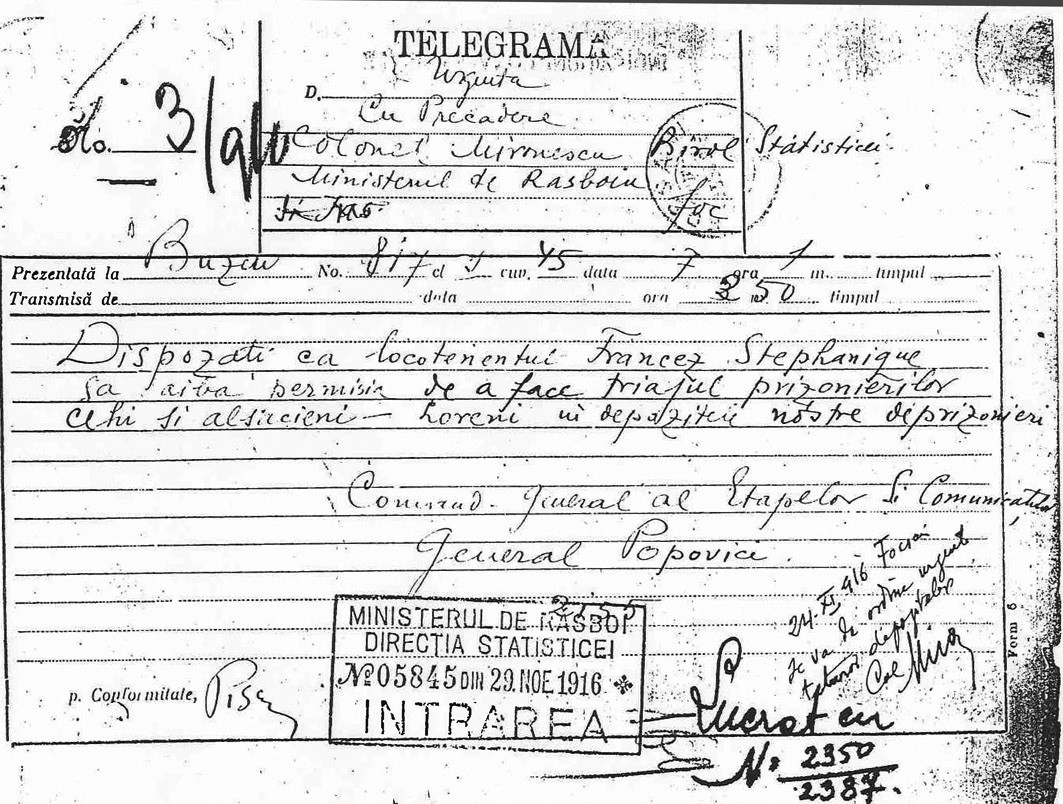
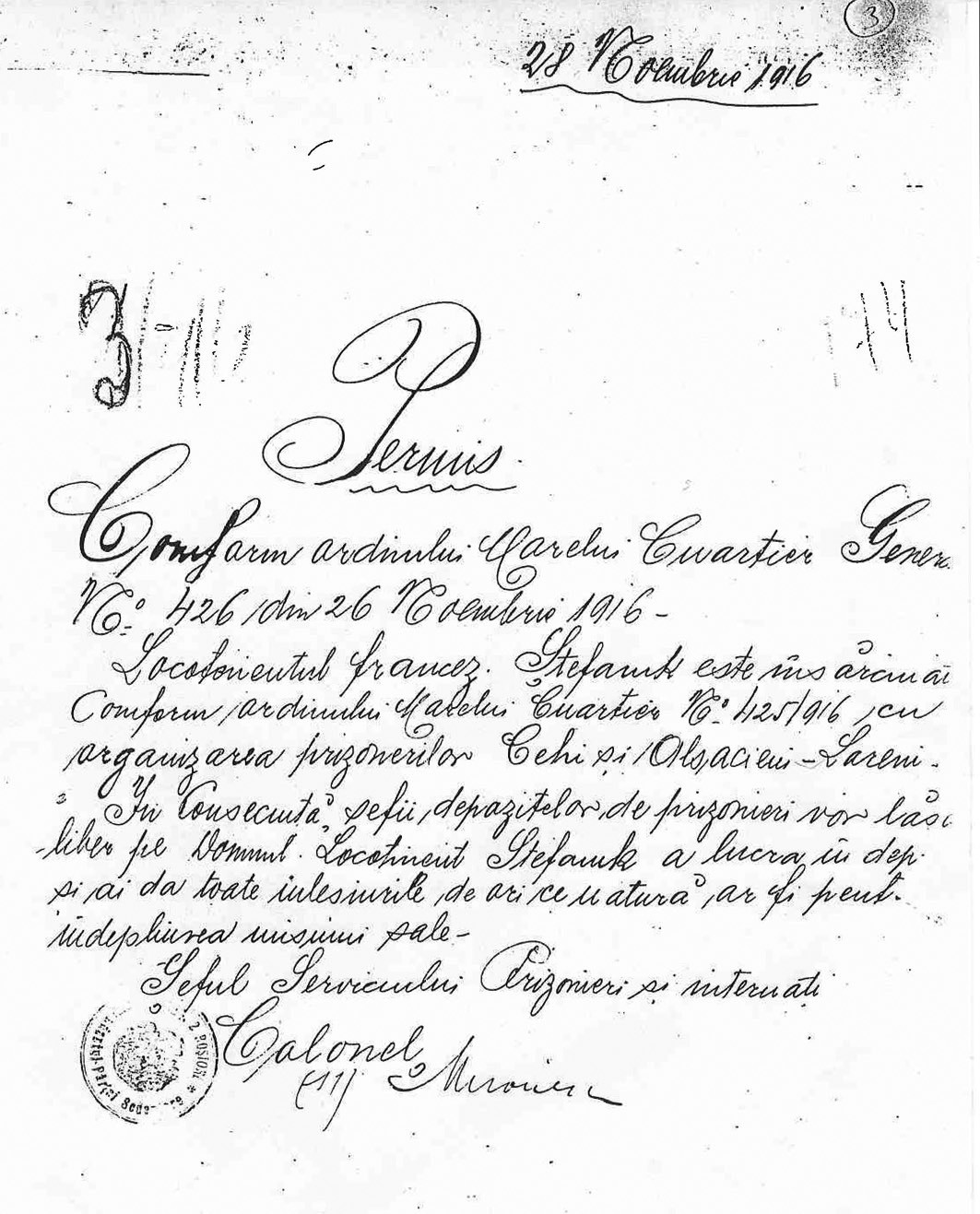
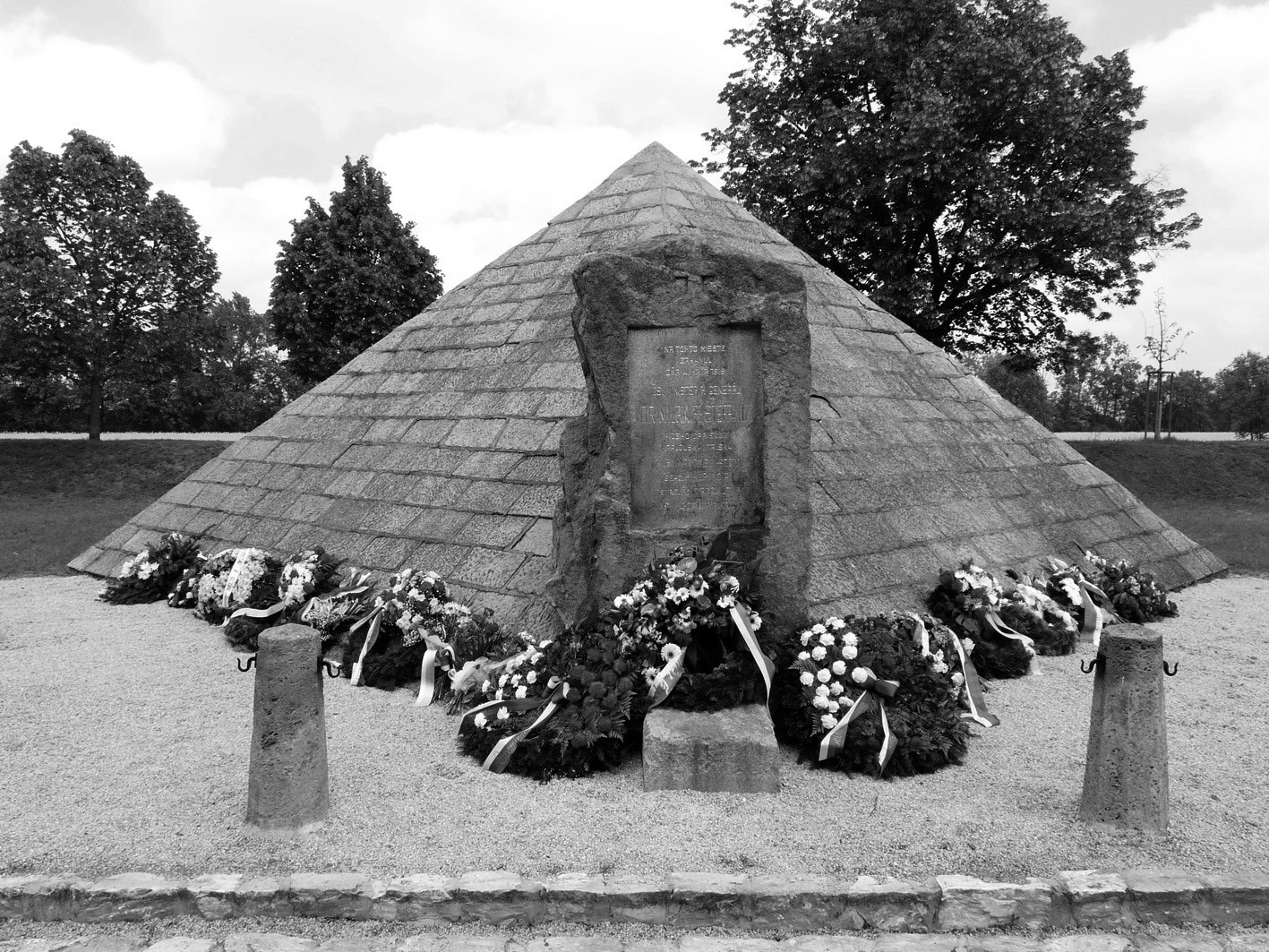
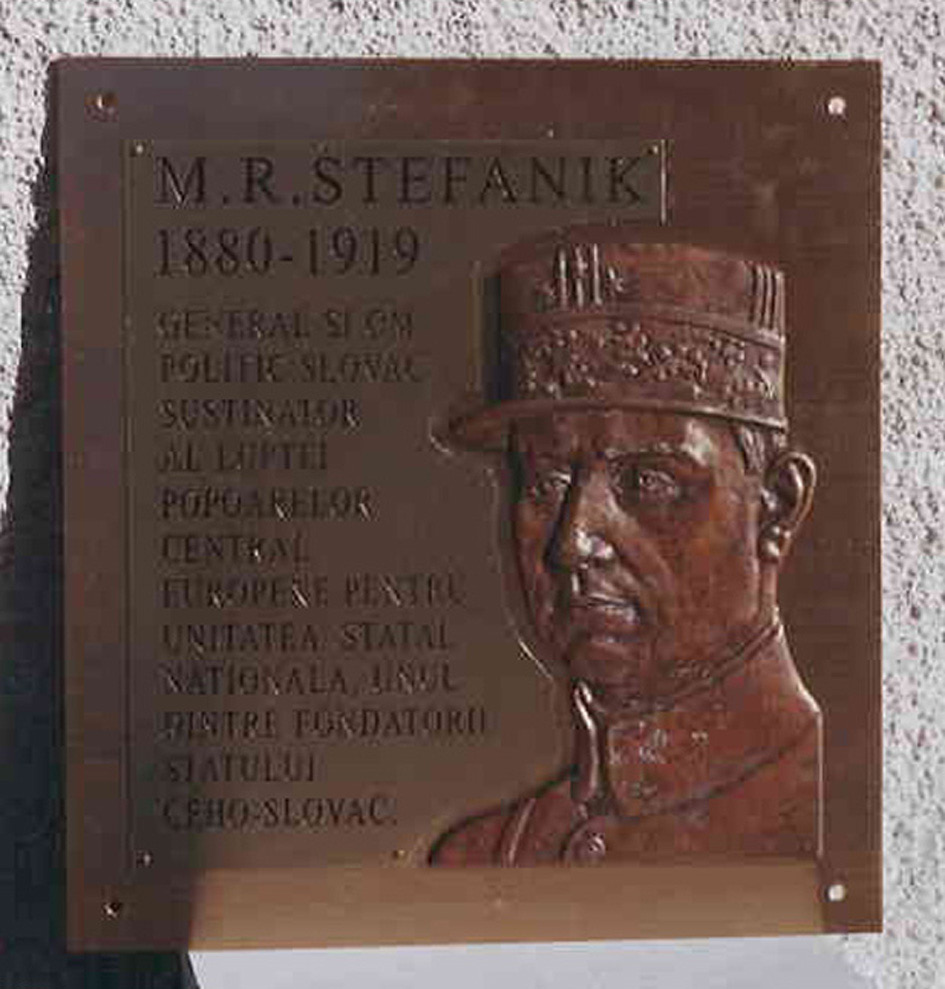
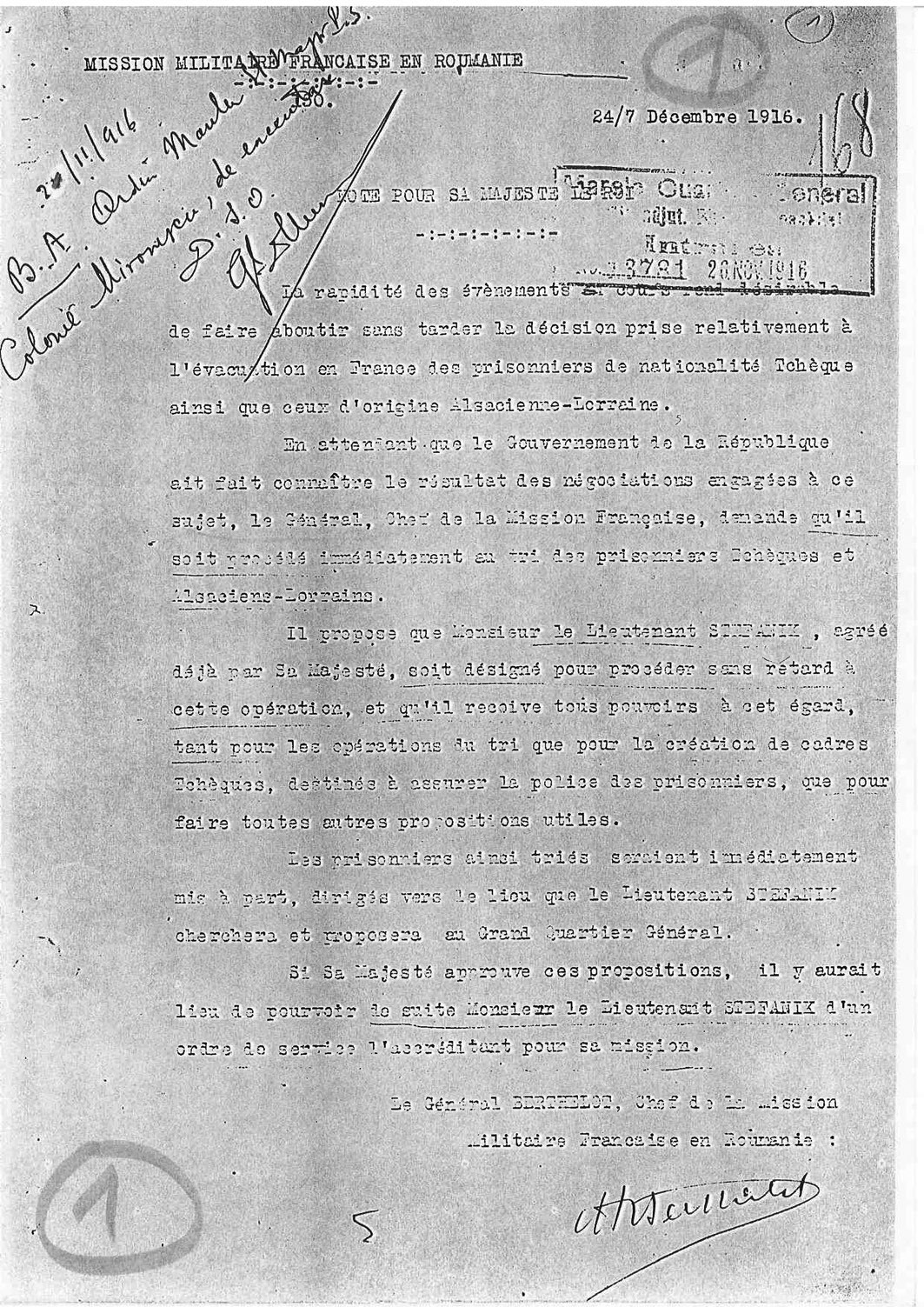
The military mission of general Milan Rastislav Štefánik in Romania, according to the documents from the Romanian Military Archives

There are many long-lasting privileged historical connections between Slovakia and Romania, reaching different and multiple fields. It is from this perspective that the Joint Slovak-Romanian Commission of Historians has been very active. The Commission has provided a lot of room for discussing Slovak personalities who acted in the interest of both nations on Romanian territory. For example: Vladimír Štefanovič, a solicitor, defended Romanian Memorandists during the so-called ”Cluj Trial” in 1894; Gustav Augustíny, a journalist from Tribuna of Sibiu, supported, on the intellectual field, both nations’ struggle for national emancipation; the former Czechoslovak prime minister Milan Hodža studied in Sibiu where his commemorative tablet is. The Slovak and French general, Milan Rastislav Štefánik, a Slovak national hero, managed to recruit with superhuman efforts Slovak and Czech prisoners for a new Czechoslovak Army (legions), in Romania, from October 1915 until January 1916. The Commission has paid scant attention to Štefánik. Hence this paper aimed at filling the existing gap in both historiographies.

Keywords: Štefánik – Slovak and French general, military mission in Romania (1915-1916), recruiting Slovaks and Czechs among prisoners of war.

  • Almanach: Milan Rastislav Štefánik, astronomer, soldier, important French, Slovak and European figure.) Coordonatorul volumului: Bohumila Ferenčuhová. Misiunea lui Štefánik în Romania constituie tema contribuţiilor cercetătorilor Authors: Zuzana StanovaFaivre Dupaigre, Marian Hronský. Volumul a fost editat de Societatea Pentru Istoria şi Cultura Europei Centrale şi de Est, 1999.
  • Col. Dějiny Rumunska/ History of Romania (Kurt W.Treptow editor), Nakladatelství Lidové noviny, Praha, 2000, p. 252 şi urm.
  • E. Campus, Thomas Masaryk, în Diplomaţi iluştri. (Thomas Masaryk. In: Illustrious diplomats.) Editura politică, Bucureşti, 1983.
  • Jean Grandhom, La mission Berthelot en Roumanie et dans la Russie méridionale. (Berthelot´s mission in Romania and southern Russia), Service historique de l´armée de terre, Paris, 1999.
  • Marián Hronský, Milan Rastislav Štefánik et l´armée étrangère tchécoslovaque – les légions (Milan Rastislav Štefánik and Czechoslovak Army in foreign countries – legions. In: Almanach …) , în Zborník…
  • Dušan Kováč, Deux hommes dans la Grande Guerre: Maurice Janin et Milan Rastislav Štefánik (Two men in the Great War: Maurice Janin and Milan Rastislav Štefánik) , în “Guerres Mondiales et conflits contemporains”, avril 199.
  • Petre  Otu, «  L’influence de la doctrine militaire française sur l’évolution de l’armée roumaine (18781940) » Influence of the French military doctrine over the evolution of the Romanian Army 1878-1940. On line. In: Revue historique des armées [En ligne], 244 | 2006, mis en ligne le 24 novembre 2008.
  • V.S. Mamatey, The United States and East-central Europe, Princeton, 1957.
  • Ioan Saizu, Repere noi în relaţiile româno-cehe (New points of reference in Romanian-Czech relations) , Octombrie 1917 T.G. Masaryk la Mărăşeşti în 1917. Pe frontul de Est, Focşani, 1997.
  • Ladislav Takáč, Životná cesta generála Ferdinanda Píseckého. (The life course of general Ferdinand Písecký.) Bratislava, Arm 333: 2006.
Anexa 1
Anexa 2
Anexa 3
Anexa 4
Anexa 5
Autor: Camelia BURGHELE
Email: cameliaburghele@yahoo.com

Potter-ology (the science on Harry Potter), a fundamental science on a culturally aggressive marketing

One can observe the way that contemporary man orients towards re-valuing magic – in cinematography, literature, visual arts, even academics. He does nothing more than to respect the general principles of marketing within the framework of economics, which he transfers to cultural marketing. It is expected then that all finite products of the contemporary society should react to the demand created by the market – which encompasses individuals to which the appetite for magic, under different shapes and formulas, grows feverishly. A great example in this respect is the Harry Potter series with all that defines this „phenomenon”.

Keywords: magic, cultural marketing, the appetite for magic, Harry Potter

  • Damian, Eva Claudia, Reprezentări ale puterii în „Harry Potter”, Acta Iassyensia Comparationis, nr 4 / 2006, Iaşi, 2006
  • http://saccsiv.wordpress.com/2009/07/16/vaticanullauda-ultima-serie-din-harry-potter/
  • Mendlesohn, Sarah, Crowning the King, Harry Potter and the Construction of Authority în Lana A. Whited, „The Ivory Tower and Harry Potter”, University of Missouri Press, Columbia, 2002
  • Sandu, Dan, Magia și vrăjitoria, forme suspecte de religiozitate,  http://www.dansandu.ro/pdf/carti/ vrajitoria-si-practicile-magice.pdf
  • Zell-Ravenheart, Oberon, Manual de inițiere în vrăjitorie, Editura Polirom, Iaşi, 2007 şi Cartea ucenicului vrăjitor, Editura Polirom, Iaşi, 2011
Autor: Radu DRĂGULESCU

The Contribution of Printing in the Romanian Countries of the 16th century at the establishment of the literary norm

Print was received with understanding and interest in the Romanian Countries. The craft came to us from the West and was organized by the Slavs. Beginning in Târgovişte, just seventeen years from the first printing with Slavic letters, the art of printing will play a decisive role in spreading and fixing of the supra-dialectal norms. Copies of the books printed in the sixteenth century, in Wallachia, have been found in some churches in Transylvania and Moldavia, but also in Bulgaria, Serbia and Mount Athos. The essence of speech tends to become, the essence of the written language tends to immutability, in conclusion the norms of spoken language are generated and fixated by the written language.

Keywords: first printings, Sixteenth Century, Slavic letters, Wallachia, Moldavia, Mount Athos

  • Ciobanu, Șt., Istoria literaturii române vechi / History of old Romanian literature, Chişinău, Editura Hyperion, 1992
  • Demeny, L., Psaltirile chirilice tipărite în Transilvania în a doua jumătate a secolului al XVI-lea / The Chirilic Psaltires printed in Transylvania in the second half of the sixtennnth century, în Studii și cercetări de bibliologie, XIII (1974).
  • Drăgulescu, Radu, Istoria limbii române literare. Primele manifestări / History of Romanian Literary Language. First manifestations, Sibiu, Editura Universității Lucian Blaga, 2006.
  • Gafton, Alexandru, După Luther. Edificarea normei literare românești prin traduceri biblice / After Luther. Consolidation of Romanian literary norm through biblical translations, Iaşi, Editura Universității Alexandru Ioan Cuza, 2005. http://www.diacronia. ro/ro/indexing/details/B2.
  • Gafton, Alexandru, Vasile Arvinte, Palia de la Orăștie (1582). II. Studii / Palia from Orăștie (1582). II. Studies, Iaşi, Editura Universității Alexandru Ioan Cuza, 2007, http://www.diacronia.ro/ro/indexing/ details/B29.
  • Gafton, Alexandru, De la traducere la norma literară. Contribuţia traducerii textului biblic la constituirea vechii norme literare / From translation to literary norm. Contributions of the translation of the Biblical text to the formation of the old literary norm, Iaşi, Editura Universității Alexandru Ioan Cuza, 2012, http://www.diacronia.ro/ro/indexing/details/B3.
  • Liturghierul lui Coresi (1570) / Coresi’s Liturghier (1570), ed. Al. Mareş, Bucureşti, Editura Academiei, 1969.
  • Mihăilă, G., Între Orient şi Occident / Between Orient and Occident, Bucureşti, Editura Roza Vânturilor, 1999.
  • Oltean, Vasile, Şcoala românească din Şcheii Braşovului / The Romanian school from Șcheii Brașovului, Bucureşti, Editura Știinţifică şi Enciclopedică, 1989.
  • Palia de la Orăștie / Palia from Orăștie, ed. Viorica Pamfil, Bucureşti, Editura Academiei, 1968.
  • Palia de la Orăștie interpretată de… / Palia form Orăștie interpreted by…, Bucureşti, Editura Eminescu, 1984.
Autor: Bianca KARDA
Email: bianca_karda@yahoo.com

Romanian Firms of Sibiu in Austrian-Hungarian Monarchy: 1867-1918

Sibiu (also known as Hermannstadt or Nagyszeben) was a major economical, political and cultural centre of Transylvania during the Austrian-Hungarian Empire (1867-1918). More than fifty per cent out of its population was of German descent, as the town has got this tradition for centuries. About 5-10 per cent out of the firms were owned by Romanians. They were: shoe makers, tailors, furriers, carpenters, locksmiths, machinists, house painters, shop keepers. Out of the printed publicity in newspapers of Sibiu from the end of the nineteenth until the beginning of the twentiest century, one can learn the throb of the economic climate of those years.

Keywords: Business, Romanians, Sibiu, Transylvania, Austrian-Hungarian Empire

  • The People’s Fellow, Sibiu, Tiparul şi Editura Krafft, 1870-1913 selectiv.
  • The People’s Calendar, Sibiu, Editura Foii poporului, 1893-1913 selectiv.
  • Adam I. Iosif, The Economy of Transylvania during 1900-1918. Ph. D. Thesis, Bucureşti, 1976.
  • Nicolae Balteş, Sibiul, as a forwarder of Romanian credit in Transylvania, Sibiu, 1997
  • Lucian Boia, Eugen Brote 1850-1912, Bucureşti, Editura Litera, 1974.
  • Traian Chirilă, The Cultural and National Assembly of Romanian Craftsmen from Sibiu – after eighty years, Sibiu, Tiparul Tipografiei Arhidiecezane, 1946.
  • Ana Grama, Valeria Soroştineanu, Ioan Mariş, Mihai Sofronie, în Transilvania, an XXXV (CXI), nr. 4/ 2006.
  • Ana Grama, International trade and traditional life – Dumitru B. Comșa and Nicolae Ţintea, traders from Săliștea Sibiului în Studii şi comunicări de etnologie, an XIII, 1999
  • Ana Grama, Mateii – traders in Sibiu in the nineteenth century în Tribuna, an CXX/ 2004 şi an CXXI/ 2005.
  • Iosif Kovács, The emergence of the first improved agricultural machinery in Transylvania în Acta Musei Napocensis, nr. 1/ 1964.

Istorie

Științele educației

Filozofie și studii politice

Stiintele comunicarii

Autor: Agnes Erich
Email: agnes_erich@yahoo.com

The social role of public libraries in the community

The public library plays a vital role in the communities it serves, being the main institution that provides information and documentation services in various forms and in different contexts. Thus, it contributes to the personal development of its users through formal education, through lifelong learning, through after-school activities, information literacy, leisure, skills development and access to public information. Another aspect covered by a public library is linked to social cohesion, institution space transformed into a meeting place and center for community development. The culture and local identity are problems with a significant impact of belonging to the community which is served by the public library and the imagination and creativity develop people’s interest in cultural activities. All these situations are the most convincing evidence that a public library plays a very important social role for the community.
Keywords: public library, community, culture, personal development

  • Ciuraru, Corina (ed.). Servicii pentru comunitate în bibliotecile publice din România (Services for the Community in the Public Libraries of Romania).Brăila, Proilavia, 2013.
  • Farkas, Meredith G. Social Software in Libraries. Medford, New Jersey, Information Today, 2007.
  • Legea bibliotecilor nr. 334/31.05.2002, republicată (The Romanian Law for Libraries, republished). In: Monitorul Oficial, Partea I, nr. 132/11.02.2005.
  • Muddiman, Dave; Durrani, Shiraz; Dutch, Martin; Linley, Rebecca; Pateman, John; Vincent, John. Open to all? The Public Library and social exclusion.
    Available at: http://eprints.rclis.org/6283/1/lic084.pdf [Accessed on 07.04.2015].

Etnografie si folclor

Fizica speculativa

Recenzii

Economie

Autor: Dan POPESCU

The social market economy: German coordinates from a european perspective

The german model of evolution, the social market economy, has always attracted researchers’ attention. On what ideas, theses doctrine are based and will be supported by in the future? What was the secret application today and in the European Union, in Europe, in the world of what Germany is doing? How overcame terrible precipice, where to put, we can say, alone? What perspectives can arise? This is my communication about, this are the problems I address in a european perspective.

Keywords: social market economy, Friedrich List, historical school, Ludwig Erhard, solidarity, progress, liberalism

  • Michel Beaud, L’Histoire du capitalisme de 1500 à nos jours / The History of Capitalism from 1500 to the Day, Edit. Du Seuil, Paris, 1990.
  • Mark Blaug, La pensée économique / Economic Thought, Edit. Economica, Paris, 1998.
    Charles Rist şi Charles Gide, Istoria gândirii economice de la fiziocrați până azi / The History of Economic Thought from the Physiocrats to the Day, Edit. Cassei Școalelor, Bucureşti, 1926.
  • Ludwig Erhard. Deutsche Wirtschaftspolitik. Der Weg der Sozialen Marktwirtschaft / erman Economy. The Path of the Social Economic Market, Düsseldorf, Wien, Frankfurt/Main, 1962.
  • Ludwig Erhard, Wohlstand für alle / Prosperity for All, Düsseldorf/Viena, 1957.
  • Walter Eucken, Die Grundlagen der Nationalökonomie / The Foundation of the National  conomy, Ed. 9-e, Berlin/Heidelberg, New York, 1989.
  • Emile Jamres, Histoire de la pensée économique au XX-e siècle / History of Economic Thought in the 20th Century, Presses Universitaire de France, Paris, 1995.
  • John Maynard Keynes, Teoria generală a folosirii mâinii de lucru, a dobânzii și a banilor / The General Theory of the Use of Man Power, Rate and Money, Edit. Științifică, Bucureşti, 1970.
  • Friedrich List, Sistemul Național de Economie Politică / The National System of Political Economy, Edit. Academiei, Bucureşti, 1973.
  • Friedrich List, Das nationale System der Politischen Ökonomie / The National System of Political Economy, Edit. Eugen Wendler, Baden-Baden, 2008.
  • Mihail Manoilescu, Forțele naționale productive și comerțul exterior / The Productive National Forces and Exterior Trade , Edit. Științifică şi Enciclopedică, Bucureşti, 1986.
  • Anastasios Mintopoulos, Dissertation, Der deutsche Weg zur sozialen Markwirtschaft / Disertation. The German Way of Social Market Economy, Wissenschaflicher Leiter Prof. Dr. D.H.C. Dan Popescu, Sibiu/hermannstadt, 2014.
  • Dan Popescu, Istoria gândirii economice din antichitate până la sfârșitul secolului XX / The History of Economic Thought from the Antiquity to the End of the 20th Century, Edit. Continent, Sibiu-Bucureşti, 1999.
  • Dan Popescu, Cataclismele economice care zguduie lumea / The Economic Cataclysms That Shook the World, Edit. Continent, Sibiu-Bucureşti, 2010.
  • Dan Popescu, Amenințări pentru secolul XXI / Threats for the 21st Century, Edit. Continent, Sibiu-Bucureşti, 2014.
    ***, Le bilan du XX-ième siècle / The Balance Sheet of the
    20th Century, Edit. Harenberg, Bruxelles, 1997.

Artele spectacolului

Autor: Diana FLOREA

Opera in the European context: traditions and globalization

Opera is the most complex form of the performing arts that harmoniously combines instrumental and vocal music with dance and drama. Throughout time, most epresentative works (of the past and of the present) have been performed in both traditional and modern theatres. My paper sets out to examine several highlights of the phenomena of globalization and adaptation to the new economic, social and cultural factors, undergone by the lyrical theatre in its evolution.
Keywords: opera house, traditions, globalization, culture, popularity

  • Agid, Phillipe şi Tarondeau, J.C. The Management of Opera: An International Comparative Study, Palgrave Macmillan, 2010.
  • Dicționar de termeni muzicali, Ed. Enciclopedică, Bucureşti, 2008.
  • Gambert, Elisabeth. Externe Steuerung der Stiftung Oper in Berlin, Berlin, Universitat Potsdam, Paris, Universite Pantheon Sorbonne & Ecole Nationale d’Administration, 2008.
  • Kimbell, David, Italian Opera, Cambridge University Press, Cambridge,1991.
  • Logsdon & Wood, 2002; Zumbausen, 2006, citat de Williams, Cynthia A.; Ruth V. Aguilera, Corporate Social Responsibility in a Comparative Perspective, în Crane, A., et. al. The Oxford Handbook of Corporate Social Responsibility, Oxford: Oxford University Press, 2008, p.2.
  • Norhouse, Cameron. Twentieth Century Opera in England and the United States, G. K. Hall, 1976.

Eveniment