
Search our journals and articles

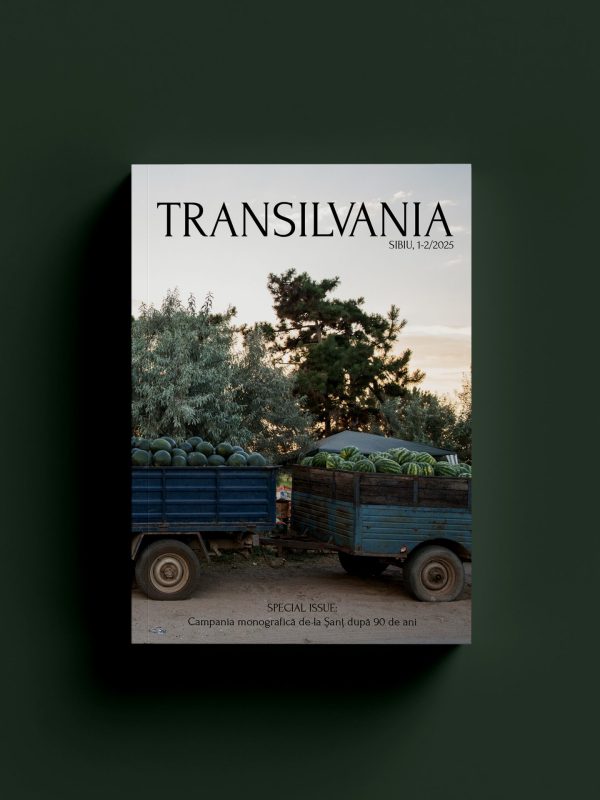
1-2 / 2025

featured Transilvania 1-2 2025a
Revista: 1-2 / 2025
Anul Publicarii:2025
Print ISSN: Print ISSN 0255-0539; Electronic ISSN 3061-2217

Științe socio-umane

Arte vizuale

Filozofie și studii sociale

Antropologie și etnologie

Sociologie

Științe politice & juridice

Istorie & Antropologie

Autor: Cosmina Timoce-Mocanu, Zoltán Rostás
Email: cosminatimoce@gmail.com

Monographic Campaign from Șanț after 90 Years

Abstract: This introductory article highlights the continuity of alternative history research in Romanian sociology. Members and collaborators of the independent organization “Cooperativa Gusti” aim to bring back into focus – in this anniversary year of the monographic sociology campaign from Șanț, Bistrița-Năsăud County – the unique experience of this interwar rural sociology research, viewed through a new, interdisciplinary lens. The article also points to other research that broadens the investigation to include the communist regime period and the developments after 1989.

Keywords: Sociological monograph from Șanț, Dimitrie Gusti, Henri H. Stahl, ethnological aspects, documentary film, dialectological research

“Cercetările monografice ale Echipelor și Institutelor Sociale” [The Monographic Research of the Teams and Social Institutes]. Sociologie românească, no. 12 (1936): 37–38.

“Echipele regale din județ și-au încheiat activitatea” [The Royal Teams in the County Have Concluded Their Activity]. Universul, no. 275, October 6, 1935, 12.

“Inspecția d-lui prof. Gusti la Echipa regală din com. Șanț-Năsăud” [The Inspection of Prof. Gusti at the Royal Team in Șanț-Năsăud]. Universul, no. 245, September 6, 1935, 7.

“Intelectuali străini în Echipele studențești” [Foreign Intellectuals in Student Teams]. Dreptatea, no. 2643, August 22, 1936, 2.

“O frumoasă și pilduitoare manifestare culturală” [A Beautiful and Exemplary Cultural Event]. Albina, no. 7, February 14, 1936, 112.

Adam, Gabriela. “Valorificarea din perspectivă lingvistică a documentelor din campaniile monografice de la Șanț (BN)” [The Documents from the Monographic Campaigns in the Village of Șanț (BN County). A Linguistic Approach]. Transilvania, no. 1–2 (2025).

Branda, Alina. “Recenzie: Marius Lazăr, Teoria blocului de gheață. Explorări în sociologia relațiilor interetnice. Cluj-Napoca: Casa Cărții de Știință, 2023, 323 p.” [Book Review: Marius Lazăr, The Ice Block Theory. Explorations in the Sociology of Interethnic Relations. Cluj-Napoca: Casa Cărții De Știință, 2023, 323 p.]. Transilvania, no. 1–2 (2025).

Butoi, Ionuț. “Șanț sau intrarea în post-monografie” [Șanț or the Beginning of the Post-Monography]. Transilvania, no. 1–2 (2025).

Călinescu, R. I. “Activitatea Echipei regale de la Șanț (Năsăud)” [The Activities of the Royal Team in Șanț (Năsăud)]. Dimineața, no. 10703, October 9, 1936, 10.

Constantin, Marin. “Book Review: Valentin-Veron Toma, Culture, Mental Health And Social Inclusion, București: Editura Rao, 2023, 82 p.”. Transilvania, no. 1–2 (2025).

Constantin, Marin. “Observarea participativă în practica Școlii gustiene” [Participant Observation in the Practice of Sociological School of Bucharest]. Transilvania, no. 1–2 (2025).

Costin, Dana. “Istorie și sociologie în România: de la primele întâlniri la inovațiile interdisciplinare ale Școlii Gusti” [History and Sociology in Romania: from the First Encounters to the Interdisciplinary Innovations of the Gusti School]. Transilvania, no. 1–2 (2025).

Dorobanțu-Gordon, Ioana. “Satul Șanț prin lentila aparatului de filmat. O analiză formală a filmului documentar sociologic de la 1936” [The Village of Șanț through the Lens of the Camera. A Formal Analysis of the Sociological Documentary Film from 1936]. Transilvania, no. 1–2 (2025).

Gusti, D. “Trei academicieni dispăruți” [Three Lost Academicians]. Revista Fundațiilor Regale, no. 10 (1944): 33–34.Top of Form

Hedeșan, Otilia. “Henri H. Stahl. Analize și reprezentări ale tradiției” [Henri H. Stahl. Frameworks and Representation of Tradition]. Transilvania, no. 1–2 (2025).

Ignat, Sanda. “Colaborări româno-germane ale Școlii Sociologice de la București: socio-demograful Helmut Haufe (1906-1943) în România” [Romanian-German Collaborations of the Bucharest Sociological School: the Socio-demographer Helmut Haufe (1906-1943) in Romania]. Transilvania, no. 1–2 (2025).

Ilaș, Constantin. “Ce se petrece atunci când se renunță la pluralismul politic? Recenzie: Petre Andrei, Petru P. Andrei, Memorii și istorii, ediție îngrijită de Sorin Bocancea, Iași, Institutul European, 2022” [What Happens when Political Pluralism is Abandoned? Book Review: Petre Andrei, Petru P. Andrei, Memoirs and Histories, edited by Sorin Bocancea, Iași, Institutul European, 2022]. Transilvania, no. 1–2 (2025).

Imbrescu, Dumitru. “Granița Năsăudului” [The Borders of Năsăud County]. Țara noastră, no. 922, 19 iulie 1935, 2.

  1. P. “Manifestația culturală a Fundației ‘Principele Carol’. Concertul corului țărănesc din Leșu și filmul documentar ‘Satul Șanț’” [The Cultural Event of the ‘Prince Carol’ Foundation. The Concert of the Peasant Choir from Leșu and the Documentary Film ‘The Village of Șanț’]. Curentul, no. 2878, February 7, 1936, 3.

Micu, Constantin. “Viața unui sat din Năsăud” [Life in a Village from Năsăud]. România, no. 15, June 16, 1936, 7.

Mitulescu, Sorin. “Sociologia românească și poloneză în comunism: evoluție la paralele inegale” [Romanian and Polish Sociology during Communism: Evolution at Uneven Bars]. Transilvania, no. 1–2 (2025).

Mitulescu, Sorin. “Traduceri sociologice în România anilor ’60–’70” [Sociological Translations in Romania in the ’60s and ’70s]. Transilvania, no. 1–2 (2025).

Momoc, Antonio. “Recenzie: Viețile sociologului. Academicianul Mihail M. Cernea în dialog cu Zoltán Rostás. București: Corint, 2024” [Book Review: The Lives of the Sociologist: Academician Mihail M. Cernea in Dialogue with Zoltán Rostás. Bucharest: Corint, 2024]. Transilvania, no. 1–2 (2025).

Stahl, Henri H. “Școala monografiei sociologice” [School of Sociological Monographs]. Arhiva pentru Știința și Reforma Socială, no. 14 (1936): 1130–1165.

Timoce-Mocanu, Cosmina. “Ecouri ale campaniilor monografice de la Șanț (1935 & 1936) în studiile etnologice românești” [The Effects of the Monographic Campaign Conducted in the Village of Șanț (1935 & 1936) in the Romanian Ethnology]. Transilvania, no. 1–2 (2025).

Timoce-Mocanu, Cosmina. “Practici și tradiții alimentare în satul Șanț. Documente etnologice și comentarii” [Food Habits in the Village of Șanț. Ethnological Documents and Comments]. Transilvania, no. 1–2 (2025).

Zulean, Marian. “Philip E. Mosely și Școala Sociologică de la Bucureşti: o prietenie de o jumătate de veac” [Philip E. Mosely and Sociological School of Bucharest: a Half Century Friendship]. Transilvania, no. 1–2 (2025).

Autor: Ionuț Butoi
Email: ionut.butoi@fsjc.ro

Șanț, or the Beginning of the Post-Monography


Abstract: In this paper, I provide a close evaluation of the two monographic campaigns conducted by Gusti and his collaborators in the Șanț village in the summers of 1935 and 1936. The purpose of the investigation is to evaluate the group dynamic in the context of the campaigns, the scientific acquisitions and the integration of the social action dimensions of the School alongside with the scientific research. The findings show that, although the campaigns were productive in terms of scientific publications, constructive in terms of institutional development, the group dynamic is degrading, and the gap between the interests and projects of D. Gusti and those of his close collaborators is even larger.


Key words: history of sociology, interwar sociology, monographic research, Gustian School, organizational climate.

Butoi, Ionuț. “Conflict and Cooperation within the Monographic Collective.” Acta Univ. Sapientiae, Social Analysis 13 (2023): 17–28.

Făcăoaru, Iordache. “Plan pentru cercetările antropologice” [Anthropologic Research Guide]. In Îndrumări pentru monografiile sociologie [Handbook for Monographic Sociology], edited by D. Gusti and T. Herseni, 107–112. Bucharest: Institutul de Științe Sociale al României, 1940.

Făcăoaru, Iordache. “Problemele sociologiei biologice” [The Problems of the Biological Sociology]. In Îndrumări pentru monografiile sociologie [Handbook for Monographic Sociology], edited by D. Gusti and T. Herseni, 81–90. Bucharest: Institutul de Științe Sociale al României, 1940.

Golopenția, Anton. Corespondența germană (1933-1936). Deutsche Korrespondenz (1933-1936) [German Letters (1933-1936)]. Bucharest: Editura Spandugino, 2022.

Golopenția, Anton. Rapsodia epistolară. Scrisori primite și trimise de Anton Golopenția (1923-1950). Vol. I (Ion Adameșteanu–Nina Crainic) [Epistolary Rhapsody: letters sent and received by Anton Golopenția. Vol. I (Ion Adameșteanu–Nina Crainic)]. Bucharest: Editura Albatros, 2004.

Golopenția, Anton. Rapsodia epistolară. Scrisori primite și trimise de Anton Golopenția (1932-1950). Vol. II (Ștefania Cristescu-Golopenția) [Epistolary Rhapsody: letters sent and received by Anton Golopenția. Vol. II (Ștefania Cristescu-Golopenția)]. Bucharest: Editura Enciclopedică, 2010.

Golopenția, Anton. Rapsodia epistolară. Scrisori primite și trimise de Anton Golopenția (1923-1950). Vol. IV (Marele Stat Major–Iuhim Zelenciuc) [Epistolary Rhapsody: letters sent and received by Anton Golopenția. Vol. IV (Marele Stat Major–Iuhim Zelenciuc)]. Bucharest: Editura Enciclopedică, 2014.

Herseni, Traian. “Monografia satului Măguri” [Monography of Măguri Village]. Arhiva pentru Știință și Reformă socială, no. 3-4 (1935): 564–566.

Rostás, Zoltán, Monografia ca utopie. Interviuri cu H.H. Stahl (1985-1987) [Monography as Utopia: Interviews with Stahl Henri H. (1985-1987)]. Bucharest: Paideia, 2000.

Rostás, Zoltán, Scrisori inedite adresate lui Dimitrie Gusti [Unpublished Letters Sent to Dimitrie Gusti]. Brașov: Editura Creator, Muzeul de Etnografie Brașov, 2020.

Salamon, Martin Ladislau, Un aliat uitat. Relațiile româno-maghiare în sociologia interbelică [A Forgotten Ally: Romanian Hungarian relationships in the Interwar Sociology]. Bucharest: Editura Tracus Arte, 2014.

Stahl, Henri H. Amintiri și gânduri din vechea școală a „monografiilor sociologice” [Memories and Thoughs from the Old School of “Sociological Monographs”]. Bucharest: Editura Minerva, 1981.

Telegdy, Balazs. Cazul Joszef Venczel. Destinul unui sociolog gustian maghiar ardelean [The Case of Joszef Venczel: The Fate of a Gustian Hungarian Sociologist from Transylvania]. Cluj-Napoca: Presa Universitară Clujeană, 2016.

Autor: Ioana Dorobanțu-Gordon
Email: ioana.dorobantu@e-uvt.ro

The Village of Șanț Through the Lens of the Camera: A Formal Analysis of The Sociological Documentary Film From 1936

Abstract: The purpose of this article is to explore the positioning of the documentary film Șanț Village (Satul Șanț) within Romanian sociological and ethnographic films, as well as to analyse – from the perspective of the theory and practice of the non-fiction film – the approach of the filmmaking team, the methods and decision-making mechanisms involved in the creation of this referential film in the context of the inter-war period. The film, made during the monographic campaign in 1935 in the village of Șanț, Năsăud County, by Henri H. Stahl and Tudor Posmantir, is part of the Gustian School’s strategy of capitalising on monographic research, and is an example of the innovative (at the time) use of documentary film in the monographic campaigns of Drăguș, Cornova and Șanț.

Keywords: documentary film, sociological film, ethnographic film, Șanț village, monographic campaign

Cosma, Simion, Valer. “Inventing the Romanian Peasant in Transylvania during the Nineteenth Century.” In Ruralism and Literature in Romania, edited by Ștefan Baghiu, Vlad Pojoga, Maria Sass, 165–190. Berlin: Peter Lang, 2019.

Cotoi, Călin. Holera și „Duhul comunismului”. Inventarea socialului în România, 1831-1914. [Holera and the “Spirit of Communism.” Inventing the Social in Romania, 1831-1914]. Cluj-Napoca: Idea Design & Print, 2022.

Drace-Francis, Alex. Geneza culturii române moderne. Instituțiile scrisului și dezvoltarea identității naționale 1700-1900. Iași: Polirom, 2016.

Guga, Ștefan. Sociologia istorică a lui Henri H. Stahl [The Historical Sociology of Henri H. Stahl]. Cluj-Napoca: Editura Tact, 2015.

MacDougall, David. Transcultural Cinema. Princeton. New Jersey: Princeton University Press, 1998.

Ruby, Jay. Picturing Culture: Explorations of Film and Anthropology. Chicago: The University of Chicago Press, 2000.

Mihăilescu, Vintilă. “Autochthonism and National Ethnology in Romania.” Sofia Academic Nexus. How to Think about the Balkans: Culture, Region, Identity, vol. 1, 3–26. Sofia: Centre for Advanced Study Sofia, 2007.

Mihăilescu, Vintilă, and Otilia Hedeşan. “The Making of the Peasant in Romanian Ethnology.” MARTOR. The Museum of the Romanian Peasant Anthropology Review, no. 11 (2006): 187–201.

Stahl, Henri H. Amintiri și gânduri din vechea școală a „monografiilor sociologice” [Memories and Thoughs from the Old School of “Sociological Monographs”]. Bucharest: Minerva, 1981.

Stahl, Henri H. “Școala monografiei sociologice” [School of Sociological Monographs]. Arhiva pentru Știința și Reforma Socială, no. XIV (1936): 1130–1165.

Stahl, Henri H. “Al treilea film documentar al Institutului Social Român: «Satul Șanț»” [“The Romanian Social Institute’s Third Documentary Film: The Village of Șanț”]. Sociologie Românească, no. 2 (1936): 30–32.

Neamţu, Octavian “Instrumente ale cunoaşterii şi publicisticii sociologice” [Tools of Sociological Knowledge and Publication]. In Sociologia militans. Şcoala Sociologică de la Bucureşti. Vol. III, edited by Pompiliu Caraion, 105–126. Bucharest: Editura Ştiinţifică, 1971.

Radu, Sorin. “Statul național și integrarea politică a țăranilor. O temă de cercetare deschisă” [The National State and the Political Integration of Peasants. An Open Research Topic]. In România interbelică. Modernizare politico-instituțională și discurs national [Interwar Romania: Political and Institutional Modernization and National Discourse], edited by Sorin Radu & Oliver Jens Schmitt, 104–133. Iași: Polirom, 2023.

Radu, Sorin, Schmitt, and Oliver Jens, eds. România interbelică. Modernizare politico-instituțională și discurs national [Interwar Romania. Political-institutional Modernization and National Discourse]. Iași: Polirom, 2023.

Satul Șanț (1936), documentary film, 66 minutes, directed by Henri H. Stahl – copy viewed online at https://youtu.be/qSUNJQ_zsPs?feature=shared

Autor: Gabriela Violeta Adam
Email: cosminatimoce@gmail.com

The Documents from the Monographic Campaigns in the Village of Șanț (Bn County): A Linguistic Approach

Abstract: In the interwar period, the village of Șanț, located on the Upper Valley of Someș River, has always been the focus of researchers, several inventory actions for promotion of material and immaterial cultural heritage were carried out there. At the beginning of year 1930, shortly after the start of surveys for Atlasul lingvistic român [Romanian Linguistic Atlas], Sever Pop performed a linguistic survey based on a questionnaire with 2140 questions. Five years later, Șanț is one of the villages where the Sociological School from Bucharest makes a halt, event which involves the entire community. Having as starting point the materials collected in the monographic campaigns performed by the Sociological School from Bucharest during the period 1935-1936, this paper aims to analyse from linguistic perspective (phonetic, morphosyntactic and lexical) the dialect in this village.  This research step is justified by the fact that the particularities of the spoken language were not highlighted in the studies published after the completion of the monographic campaigns, although they were a part of this multidisciplinary survey.  As the material on which the research was based was not collected by linguists, but by sociologists, the phonetic, morphosyntactic and lexical particularities identified in the set of documents were compared to the linguistic material collected during the same period (1931) by Sever Pop within the paternalization project of the spoken Romanian language: Atlasul lingvistic român. The linguistic material offered by the documents of the sociological survey is varied, includes ancient/archaic elements, elements specific to the North-Eastern area of Transylvania, alloglotic influences, neologism influences, objectively highlighting the dialect of the locals in the village. 

Keywords: dialectal surveys, sociological surveys, idiom, Atlasul lingvistic român, Șanț

Adam, Gabriela. O anchetă inedită în Munții Apuseni (II) [An Unpublished Linguistic Survey in Apuseni Mountains (II)]. Caietele Sextil Pușcariu VI. Actele Conferinței internaționale Zilele „Sextil Pușcariu”, ediția a VI-a, Cluj-Napoca, 9–10 septembrie 2023, 15-26. Cluj-Napoca: Presa Universitară Clujeană, 2023.

ALR I. Atlasul lingvistic român [Romanian Linguistic Atlas]. Partea I, material inedit, cules de Sever Pop (1930-1936).

ALR I/I. Atlasul lingvistic român [Romanian Linguistic Atlas]. Partea I, vol. I. Sever Pop. Cluj: Muzeul Limbii Române, 1938.

ALRM I/I. Micul Atlas lingvistic român [The Little Romanian Linguistic Atlas]. Partea I, vol. I. Sever Pop. Cluj: Muzeul Limbii Române, 1938.

ALRM I/II. Atlasul lingvistic român [Romanian Linguistic Atlas]. Partea I, vol. II. Sever Pop. Sibiu – Leipzig: Muzeul Limbii Române – Otto Harrassowitz, 1942.

Cazan, I.C. “Strigături din Șanț” [“Rhythmic Shouts Collected in the Village of Șanț”]. Sociologie Românească, no. 7-9 (1936): 80–84.

Cazan, I. C. 1937, “Un document folkloric. Peștii pe brazdă” [“A Folkloric Document. The Fish on the Furrow”]. Sociologie Românească, no. 2-3 (1937): 137–138.

Constante, Lena. “Varvara Gușe, sucița din Șanț” [“Varvara Gușe, the Furrier Woman from Șanț”]. Sociologie Românească, no. 3 (1936): 35–39.

Micu, V. Constantin. “Viața politică a unui sat din Năsăud” [“The Political Life of a Village in Năsăud”]. Sociologie Românească, no. 9-10 (1937): 459–465.

Cristescu, Ștefania. “Cum descântă «de întors» Ana Dănilă din satul Șanț” [“How Ana Dănilă from the Village of Șanț charms away a Person?”]. Sociologie Românească, no. 5 (1936): 36–39.

Cristescu, Ștefania. Descântatul în Cornova – Basarabia [Enchanting in Cornova – Basarabia], edited by Sanda Golopenția. [București]: Paideia, 2003.

DA/DLR. Marius Sala et alii (coord.). Dicţionarul limbii române [Romanian Language Dictionary]. Ediţie anastatică, tomurile I–XIX. Bucureşti: Editura Academiei Române, 2010.

DELR. Dicționarul etimologic al limbii române [The Etymological Dictionary of the Romanian Language] coord. Acad. Marius Sala, Andrei Avram.Vol. I, A–B, București: Editura Academiei Române, 2011; vol. II partea I, Ca–Cizmă. București: Editura Academiei Române, 2015; vol. II, partea a 2-a, Clac–Cyborg, coord. Ion Giurgea, Cristian Moroianu. București: Editura Academiei Române, 2018.

DEX. Dicționarul explicativ al limbii române [Explanatory Dictionary of the Romanian Language] Ediția a II-a, sub conducerea lui Ion Coteanu și Lucreția Mareș. București: Editura Univers Enciclopedic, 1996.

Golopenția, Anton. Rapsodia epistolară. Scrisori primite și trimise de Anton Golopenția (1923-1950) [Epistolary Rhapsody: letters sent and received by Anton Golopentia (1932-1950)]. Vol. II. Ediție îngrijită de Sanda Golopenția și Ruxandra Guțu Pelazza. București: Editura Enciclopedică, 2010.

Gusti, Dimitrie et all. Cornova 1931 [Cornova 1931], edited by Marin Diaconu, Zoltán Rostás, and Vasile Șoimaru. Chișinău: Editura Quant, 2011.

Herseni, Traian. “Cercetarea monografică a satului Măguri” [“Monographic Research of Măguri Village”]. Gând Românesc, no. 7-8 (1934): 455–457.

Munteanu, Dumitru (eds.). Comuna Șanț. Repere monografice interbelice [Commune Șanț. Interwar Monographic Landmarks]. Bistrița: Editura George Coșbuc, 2014.

Pop, Sever. Recueil posthume de linguistique et dialectologie [Posthumous Collection of Linguistics and Dialectology]. Societatea Academică Română, Roma: Acta Philologica IV, 1966.

Popoiu, Paula (eds.). Șanț după 80 de ani de la prima campanie monografică [80 Years after the First Monographic Campaign]. Vol. I, Craiova: Editura Universitaria, 2011.

Popoiu, Paula (eds.). Șanț după 80 de ani de la prima campanie monografică [80 Years after the First Monographic Campaign]. Vol. II, Craiova: Editura Universitaria, 2012.

Pușcariu, Sextil. Limba română. Rostirea [Romanian Language. Uttering]. Vol. II. București: Editura Academiei, 1959.

Stahl, H. Henri. “Cununa în satul Șanț” [“The Harvest Feast in Șanț Village”]. Sociologie Românească, no. 2 (1936): 11–21.

TDRG. Dr. H. Tiktin. Rumänisch-deutsches Wörterbuch [Band I–III]. Bukarest – Staatsdruckerei, 1903–1924; 3., überarbeitete und ergänzte Auflage von Paul Miron und Elsa Lüder, Bukarest, Band I: A–C, Band II: D–O, Band III: P–Z. Cluj-Napoca: Editura Clusium, 2000-2005.

Autor: Cosmina Timoce-Mocanu
Email: cosminatimoce@gmail.com

The Effects of the Monographic Campaign Conducted in the Village of Șanț (1935-1936) in the Romanian Ethnology

Abstract: This study aims to demonstrate that the special position that Șanț holds in the symbolic geography of Romanian ethnological disciplines was built as a legacy of the monographic campaigns carried out here by Dimitrie Gusti and his collaborators in 1935 and 1936. After outlining the context of these campaigns, I intend: (a) to present the main categories of folkloric data that the gustians researched at Șanț, using the documents and articles published by them in the pages of the journal Sociologie românească [Romanian Sociology], which I analyse in the light of memoirs, but also of epistolary or oral history papers that have appeared in the meantime; (b) to identify topics, theoretical ideas and methodological acquisitions that emerged in the Șanț monographic campaigns  and which have subsequently made a career in Romanian ethnological disciplines; (c) to briefly outline the monographers’ contribution to the “invention” of the unwritten theatre, which the community currently values as one of its defining traditions.

Keywords: Gustian School, monographic campaigns, folklore, filedwork, history of ethnology

Bot, Nicolae. “Șezătoarea în zona Năsăudului” [The Șezătoarea Custom in the Năsăud Area]. Anuarul Muzeului Etnografic al Transilvaniei pe anii 1965-1967 (1968): 306–346.

Bot, Nicolae. Cântecele cununii [The Harvest Songs]. Bucharest: Minerva, 1989.

Brăiloiu, Constantin. Opere VI [Collected Works VI]. Edited by Emilia Comișel. Bucharest: Editura Muzicală, 1998.

Cazan, I.C. “Strigătură” [A Rhythmic Shout]. Sociologie Românească, no. 4 (1936): 10.

Cazan, I.C. “Strigături din Șanț” [Rhythmic Shouts Collected in the Village of Șanț]. Sociologie Românească, no. 7-9 (1936): 80–84.

Cristescu, Ștefania. “Cum descântă «de întors» Ana Dănilă din satul Șanț” [How Ana Dănilă from the Village of Șanț charms away a Person?]. Sociologie Românească, no. 5 (1936): 36–39.

Cristescu, Ștefania. Descântatul în Cornova-Basarabia [Charms and Charming in the Village of Cornova-Bessarabia]. Edited by Sanda Golopenția. Bucharest: Paideia, 2003.

Culea, Haralamb. “Implicații ale analizei sociologice a fenomenului religiozității, pornind de la o investigație concretă” [Implications of the Sociological Analysis of the Phenomenon of Religiosity based on a Field Research]. Viitorul Social, no. 1 (1973): 198–209.

Golopenția, Anton. Rapsodia epistolară: scrisori primite și trimise de Anton Golopenția (1923-1950). Vol. II (Ștefania Cristescu-Golopenția) [Epistolary Rhapsody: Letters sent and received by Anton Golopenția. Vol. II (Ștefania Cristescu-Golopenția)]. Bucharest: Editura Enciclopedică, 2010.

Iștoc, Lucia, and Elena Hlinca-Drăgan. “Tipuri melodice ale cântecului de cunună la seceriș” [Melodic Types of the Harvest Songs]. Anuarul Arhivei de Folclor, no. XII-XIV (1991-1993): 379–404.

Moldoveanu, Elisabeta. Cântecele de seceriș ale poporului român. Tipologie muzicală și literară [The Harvest Songs of the Romanian People. Musical and Literary Tipology]. Bucharest: Editura Academiei Române, 2000.

Moldoveanu-Nestor, Elisabeta. “Cununa–sărbătoare a secerișului. Cântecele de seceriș din Ținutul Năsăud–Transilvania” [Harvest Feast. Harvest songs from Năsăud-Transylvania]. Revista de Etnografie și Folclor, no. 6 (1964): 615–635.

Moldoveanu-Nestor, Elisabeta. “Cununa–sărbătoare a secerișului. Cântecele de seceriș din Ținutul Năsăud–Transilvania” [Harvest Feast. Harvest songs from Năsăud-Transylvania]. Revista de Etnografie și Folclor, no. 1 (1965): 43–79.

Mosely, Philip. “Lumea psihologică a unui «american» din Șanț” [The Psychology of an ‘American’ from Șanț]. Sociologie Românească, no. 7-8 (1936): 75–78.

Munteanu, Dumitru. Teatrul nescris „Constantin Iugan” [Unwritten Theater ‘Constantin Iugan’]. Bistrița: Editura „George Coșbuc”, 2013.

Niculescu, Radu. “Din realizările folcloristicii noastre” [From the Achievements of Romanian Folkloristics]. Revista de Folclor, no. 1-2 (1963): 171–172.

Pop, Mihai. “Problemele și perspectivele folcloristicii noastre” [Challenges and Perspectives of Romanian Folklore Studies]. Revista de Folclor, no. 1-2 (1956): 9–36.

Rostás, Zoltán. Monografia ca utopie. Convorbiri cu Henri H. Stahl (1985-1987) [Monography as Utopia. Interviews with Henri H. Stahl (1985-1987)]. Bucharest: Editura Paideia, 2000.

Rostás, Zoltán. Sala luminoasă. Primii monografiști ai Școlii gustiene [The Lighted Room. The First Monographists of the Gustian School]. Bucharest: Editura Paideia, 2003.

Salamon, Ladislau Martin. Un aliat uitat. Relațiile româno-maghiare în sociologia interbelică [Forgotten Ally. Romanian-Hungarian Relationships in the Interwar Sociology]. Bucharest: Tracus Arte, 2014.

Stahl, Henri H. “Al treilea film documentar al Institutului Social Român: «Satul Șanț»” [The Romanian Social Institute’s Third Documentary Film: The Village of Șanț]. Sociologie Românească, no. 2 (1936): 30–32.

Stahl, Henri H. Amintiri și gânduri din vechea școală a „monografiilor sociologice” [Memories and Thoughs from the Old School of ‘Sociological Monographs’]. Bucharest: Minerva, 1981.

Stahl, Henri H. Epistolar monografist [Letters of a monographist]. Edited by Zoltán Rostás. Bucharest: Paideia, 2015.

Stahl, Henri H., Teoria și practica investigațiilor sociale. Vol. I. Metode și tehnici [Theory and Practice of Social Inquiry. Vol. I. Methods and techniques]. Bucharest: Editura Științifică, 1974.

Stoian, Stanciu. “Procesul educativ în satul Șanț, județul Năsăud” [Process of Education in the village of Șanț, Năsăud County]. Sociologie Românească, no. 1-6 (1943): 63–108.

Timoce-Mocanu, Cosmina. “Terenul etnografic în concepţia Ştefaniei Cristescu-Golopenţia” [“Fieldwork as conceived by Stefania Cristescu-Golopenția”]. Revista Română de Sociologie, no. 3-4 (2013): 231–259.

Vlad, Laurențiu. Imagini ale identității naționale. România la expozițiile universale și internaționale de la Paris (1867-1937) [Representations of National Identity. Romania at Universal and International Exhibitions in Paris (1867-1937)]. Iași: Institutul European, 2007.

Zamfir, Constantin, Victoria Dosios, and Elisabeta Moldoveanu-Nestor. 132 cântece și jocuri din Năsăud [132 Songs and Dances from Năsăud]. Ediția a II-a. Bistrița: Editura Charmides, 2017.

Autor: Sanda Ignat
Email: sanda.ignat@acad-cj.ro

Romanian-German Collaborations of the Bucharest Sociological School: The Socio-Demographer Helmut Haufe (1906-1943) in Romania

Abstract: Between 1930-1936, the young German sociologist Helmut Haufe (1906-1943) carried out fieldwork and documentation in Romania. He participated in the field research of the Sociological School in Bucharest as a visitor and then as a Rockefeller fellow, researching the social organization and the customary law of the Romanian people. This research resulted in sociological studies and articles, which he published in the following years until 1940. Haufe was an assistant of the university professor Gunther Ipsen (1899-1984), who was a central figure in the scientific movement known as the “Leipzig School of Sociology” in the 1920s and then in Nazi sociology. This reflected the perspective from which Haufe approached his research. The present paper traces the context of Haufe’s scientific training, his activity in Romania and his sociological conception, as reflected in his works. Finally, we briefly refer to Haufe’s participation in the 14th International Congress of Sociology in Bucharest (1939).

Key words: Gustian School, Leipzig School of Sociology, monographic campaigns, rural sociology, socio-demographics, overpopulation, the German Youth Movement (Jugendbewegung), the Rockefeller Foundation, Nazism

Beutler, Heinz. “Dorfforschung am Grenzschulheim Boberhaus” [Village Research at the Border School Hostel Boberhaus]. Mélanges D. Gusti. XXV ans de l’enseignement universitaire (1918–1935). Archives pour la Science et la Réforme Sociales, no. 13 (1936): 17–38.

Ehmer, Josef. “Eine ‘deutsche’ Bevölkerungsgeschichte? Gunther Ipsens historisch-soziologische Bevölkerungstheorie” [A ‘German’ Population History? Gunther Ipsen’s Historical-Sociological Population Theory]. Demographische Informationen, Vienna, 1992–1993: 60–70.

G[olopenția], Anton. Review: “Die Wandlung der Volksordnung im rumänischen Altreich… (Schimbarea formei de viață a neamului românesc în Vechiul Regat…)” [The transformation of the popular order in the Old Kingdom of Romania…]. Revista Fundațiilor Regale, no. 5 (1940): 478.

Golopenția, Anton. Corespondența germană (1933-1936). Deutsche Korrespondenz (1933-1936) [German Letters (1933-1936)], edited by Sanda Golopenția, translated from German by Maria Anghelescu, Rareș Munteanu, Gottfried Habenicht and Lidia Bradley. Bucharest: Editura Spandugino, 2022.

Golopenția, Anton. Rapsodia epistolară. Scrisori primite și trimise de Anton Golopenția (1932–1950) [Epistolary Rhapsody: Letters Sent and Received by Anton Golopenția], vol. II. Edited by Sanda Golopenția and Ruxandra Guțu Pelazza. Bucharest: Ed. Enciclopedică. 2010. 2012. Vol. IV: 2014.

Golopenția, Anton. Rapsodia epistolară. Scrisori primite și trimise de Anton Golopenția (1932–1950) [Epistolary Rhapsody: Letters Sent and Received by Anton Golopenția], vol. III. Edited by Sanda Golopenția and Ruxandra Guțu Pelazza. Bucharest: Ed. Enciclopedică, 2012.

Golopenția, Anton. Rapsodia epistolară. Scrisori primite și trimise de Anton Golopenția (1932–1950) [Epistolary Rhapsody: Letters Sent and Received by Anton Golopenția], vol. IV. Edited by Sanda Golopenția and Ruxandra Guțu Pelazza. Bucharest: Ed. Enciclopedică, 2014.

Golopenția, Sanda. “Ștefania Cristescu în campania monografică de la Runcu – Gorj” [Ștefania Cristescu in the Monographical Campaign in Runcu – Gorj]. Anuarul Muzeului Etnografic al Moldovei, no. 18 (2018): 1697–188.

Greiff, Walter, Rudolf Jentsch, and Hans Richter, eds. Gespräch und Aktion in Gruppe und Gesellschaft: 1919-1969. Freundesgabe für Hans Dehmel [Conversation and Action in Groups and in Society. 1919-1969. A Festschrift für Hans Dehmel]. Frankfurt am Main: dipa-Verlag, 1970.

Hamann, David. “Gunther Ipsen und die völkische Realsoziologie” [Gunther Ipsen and the Ethnic Real Sociology]. In Völkische Wissenschaften im 20. Jahrhundert. Expertise und “Neuordnung” Europas [Ethnic Sciences in the 20th Century. Expertise and “New Order” of Europe], edited by Michael Fahlbusch, and Ingo Haar, 177-198. Paderborn–München–Wien–Zürich: Verlag Ferdinand Schöningh, 2010.

Handbuch der völkischen Wissenschaften. Akteure, Netzwerke, Forschungsprogramme [Handbook of the Ethnic (Völkisch) Sciences. Actors, Networks, Research Programs], edited by Michael Fahlbusch, Ingo Haar, and Alexander Pinwinkler. Second expanded edition, vol. 1. Berlin–Boston: De Gruyter Oldenburg, 2017.

Haufe, Helmut. “Der preußische Landkreis” [The Prussian District]. In Travaux du XIVe Congrès International de Sociologie București [Scientific Papers of the 14th International Congress of Sociology in Bucharest], edited by Dimitrie Gusti. Series D: Le village et la ville [Village and City], 65–80. Bucharest: Printing House Luceafărul, 1939.

Haufe, Helmut. “Despre semnificația situației demografice a Banatului” [About the Significance of the Demographic Situation of Banat]. Revista Institutului Social Banat-Crișana, no. 14 (1936): 51–54.

Haufe, Helmut. Deutsches Volkstum in der Bevölkerungsentwicklung des östlichen Mitteleuropas [German Ethnicity in the Population Development of Eastern Central Europe]. Berlin–Stuttgart: Verlag Grenze und Ausland, 1935.

Haufe, Helmut. Die Bevölkerung Europas. Stadt und Land im 19. und 20. Jahrhundert [The population of Europe. City and Countryside in the 19th and 20th centuries]. Berlin: Junker & Dünnhaupt, 1936.

Haufe, Helmut. Die Wandlung der Volksordnung im rumänischen Altreich: Agrarverfassung und Bevölkerungsentwicklung im 19. und 20. Jahrhundert [The Transformation of the Social Structure in the Romanian Old Kingdom: Agrarian Constitution and Population Development in the 19th and 20th Centuries]. Stuttgart: Kohlhammer, 1939.

Haufe, Helmut. “Methode und Einsatz der Dorfforschung in Rumänien” [“Method and Application of the Village Research in Romania”]. Zeitschrift für Volkskunde, no. 4 (1938): 300–304.

Haufe, Helmut. “Rușețu–Brăila, un sat din Câmpia Românească. Structura socială” [“Rușețu–Brăila, a village in the Romanian Plain. Social structure”]. Sociologie Românească, no. 7-8 (1937): 277–284.

Haufe, Helmut. “Neuere Arbeiten zur Bevölkerungsgeschichte Großrumäniens” [Recent Works on the Population History of Greater Romania]. Leipziger Vierteljahrsschrift für Südosteuropa, no. 1 (1939): 63–67.

Haufe, Helmut. “Soziologische Probleme in der europäischen Bevölkerungsentwicklung des 19. Und 20. Jahrhunderts” [Sociological Problems in European Population Development in the 19th and 20th Centuries]. Mélanges D. Gusti. XXV ans de l’enseignement universitaire (1918 – 1935). Archives pour la Science et la Réforme Sociales, 13 (1936): 211–224.

Haufe, Helmut, “Zur Volksordnung des rumänischen Altreichs” [On the Population Structure of the Romanian Old Kingdom]. Osteuropa, no. 9 (1937): 575–583.

Haufe, Helmut, and Helmut Klocke. “Volksbildung und Volksforschung in Rumänien” [Popular Education and Folk-Research in Romania]. Der Zwiespruch, no. 19 (1931): 218–219.

Hause [read: Haufe], Helmut, and Helmut Klocke. “Educația și cunoașterea poporului în România” [Education of and Research on the Folk in Romania], translated from German by Anton Golopenția. Arhiva pentru Știință și Reformă Socială, X (1932): 866–869.

Klingemann, Carsten. Soziologie und Politik. Sozialwissenschaftliches Expertenwissen im Dritten Reich und in der frühen westdeutschen Nachkriegszeit [Sociology and Politics. Social Science Expertise in the Third Reich and the Early West German Post-War Period]. Wiesbaden: VS Verlag für Sozialwissenschaften, 2009.

Klingemann, Carsten. Soziologie im Deutschland der Weimarer Republik, des Nationalsozialismus und der Nachkriegszeit. Der schwierige Umgang mit einer politisch-ideologisch belasteten Entwicklungsphase [Sociology in Germany During the Weimar Republic, National Socialism and the Post-War Period. The Difficult Handling of a Politically and Ideologically Charged Development Phase]. Wiesbaden: Springer VS, 2020.

Klocke, Helmut. “Begegnungen mit der Dorfforschung in Ungarn und Rumänien” [Encounters with Village Research in Hungary and Romania], Gespräch und Aktion, 194–201.

Kranebitter, Andreas, and Christoph Reinprecht (ed.), Die Soziologie und der Nationalsozialismus in Österreich [Sociology and National Socialism in Austria]. Bielefeld: transcript Verlag, 2019.

Mentzel, H. E. “Das ostdeutsche Dorf. Bericht über eine Dorfwoche” [The East German Village. Report on a Village Week]. Der Zwiespruch, no. 19 (1931): 224.

Năstasă-Matei, Irina. “Eveniment academic sau interes politic? Participarea germană la lucrările Congresului de Sociologie de la București din 1939” [Academic Event or Political Interest? The German Contributions to the Proceedings of the International Congress of Sociology (Bucharest 1939)], Revista Română de Sociologie, Bucharest, no. 5-6 (2016), 469–484.

Raupach, Hans. Arbeitsdienst in Bulgarien. Studienergebnisse der Schlesischen Jungmannschaft [Labor Service in Bulgaria. Study Results of the Silesian Youth Team]. Berlin–Leipzig: Walter de Gruyter, 1932.

Riedl, Franz Hieronymus. “Zur Erinnerung an Helmut Klocke” [“In Memoriam Helmut Klocke”]. Südostdeutsche Vierteljahresblätter, no. 4 (1987): 327–328.

Rostás, Zoltán, and Mireille Rădoi (eds.) Dimitrie Gusti: corespondență, acte și documente: bibliografie adnotată. [Dimitrie Gusti: Correspondence, Papers and Documents: Annotated Bibliography]. Bucharest: Editura Universității din București, 2017.

Rostás, Zoltán. “Beneficiile unui congres care n-a avut loc” [Benefits of a Congress That Did Not Take Place]. Transilvania, no. 1 (2014): 30–37.

Rostás, Zoltán. “Contextul cristalizării Școlii Sociologice de la București în anul 1936” [The Context of the Crystallization of the Bucharest School of Sociology in 1936]. Revista Română de Sociologie, no. 5-6 (2016): 387–402.

Rostás, Zoltán. Monografia ca utopie: interviuri cu Henri H. Stahl (1985-1987) [Monography as Utopia: Interviews with Henri H. Stahl]. Bucharest: Paideia 2000.

Roth, Andreas. “Helmut Haufe: Der freibäuerliche Kleinadel der bessarabischen Militärgrenze, in: Deutsches Archiv für Landes- und Volksforschung, Jahrgang IV. 1940, Seite 315-333” [Review to Helmut Haufe: The Small Farming Nobility of the Bessarabian Military Border]. Siebenbürgische Vierteljahrsblätter, no. 1 (1941): 81.

Stahl, H. H. “Dimitrie Gusti. Personalitatea și opera” [D. G. The Personality and His Work]. In Dimitrie Gusti. Studii critice, edited by H. H. Stahl, 9–53. Bucharest: Editura Științifică și Enciclopedică, 1980.

Stahl, H. H. Amintiri și gânduri din vechea școală a “monografiilor sociologice” [Memories and Thoughs from the Old School of ‘Sociological Monographs’]. Bucharest: Minerva 1981.

Syga-Dubois, Judith. “Helmut Haufe in Rumänien: Ein Rockefeller Stipendiat und die deutsche ‘Volksforschung’” [Helmut Haufe in Romania: A Rockefeller Fellow and the German ‘Folk Research’]. In Judith Syga-Dubois, Wissenschaftliche Philanthropie und transatlantischer Austausch in der Zwischenkriegszeit. Die sozialwissenschaftlichen Förderprogramme der Rockefeller Stiftungen in Deutschland [Scientific Philanthropy and Transatlantic Exchange in the Interwar Period: The Social Science Funding Programs of the Rockefeller Foundations in Germany], 579–585. Vienna–Köln–Weimar: Böhlau Verlag, 2019.

Autor: Marian Zulean
Email: marian.zulean@faa.unibuc.ro

Philip E. Mosely and the Sociological School Of Bucharest: A Half Century Friendship 

Abstract: Philip E. Mosely is well-known as one of the founding fathers of Sovietology, co-founder of the Russian Institute at Columbia University, Policy Analyst for the State Department, Director of studies for the Council of Foreign Relations and Director of the European Institute at Columbia University. However, it is less known the fact that Philip Mosely did his apprenticeship as a rural sociologist with the Sociological School of Bucharest in the mid-1930s and his worldview was enriched by his experience in Romania. The main goal of this article is to present in a systematic way Mosely long-lasting intellectual friendship with some Romanian sociologists from 1935 to 1972, based on recent archival discoveries.

Key words: Cercetare monografică, Şanţ, Dimitrie Gusti, Philip Mosely, Sovietologie

Analele Academiei Române. Dezbaterile [The Romanian Academy Annals. Debates]. Tomul LXVI, 1946-1947. Bucharest: Editura Academiei Române, 2000.

Boia, Lucian. Dosarele secrete ale agentului Anton. [Agent Anton Secret File]. Bucharest: Editura Humanitas, 2014.

Galitzi, Christina. A Study of Assimilation among Roumanians in the United States. Columbia University Press, 1929.

Golopenția, Anton. Ultima carte [Last Book]. Edited by Sanda Golopenția. Bucharest: Editura Enciclopedică, 2001.

Engerman, David C. “The Cold War’s Organization Man. How Philip Mosely helped Soviet Studies moderate American policy.” Humanities, 30, no. 5 (2009).

https://www.neh.gov/humanities/2009/septemberoctober/feature/the-cold-war%E2%80%99s-organization-man.

Karády, Victor. “Sociologia maghiară între 1918 și 1945” [“Hungarian Sociology between 1918 and 1945”]. In Mărire și decădere. Școala gustiană în context central-est-european după Marele Război [Expansion and Decline. The Gustian School in a Central and Eastern Europe Context after the Great War]. Edited by Theodora-Eliza Văcărescu and Zoltán Rostás, 137–176. Bucharest: Editura Eikon, 2022.

Mosely, Philip. “The Sociological School of Dimitrie Gusti.” Sociological Review, no. 2 (1936): 149–165.

Mosely, Philip. “A New Roumanian Journal of Rural Sociology.” Rural Sociology, no. 4 (1937): 457–465.

Mosely, Philip. “Review: Dimitrie Gusti: Contribuții la cunoașterea operei și activității sale. Book by Ovidiu Bădina.” Slavic Review, no. 3 (1966): 550.

Mosely, Philip. “Lumea psihologică a unui «american» din Șanţ” [“A Psychological Mindset of an American from Șanț”]. Sociologie românească, no. 7-9 (1936): 75–78.

Pușcaș, Vasile. Philip E. Mosely despre Transilvania și Basarabia [Philip E. Mosely on Transylvania and Bessarabia]. Cluj-Napoca: Editura Școala Ardeleană, 2017.

Stahl, Henri H. Amintiri și gânduri din vechea școală a „monografiilor sociologice” [Memories and thoughts from the old school of “monographic sociology”]. Bucharest: Editura Minerva, 1981.

Autor: Zoltán Rostás
Email: zoltan.z.rostas@gmail.com

Visitors to Monographic Campaigns

Abstract: This paper draws attention to a neglected phenomenon in the history of Gustian monographic research that held considerable importance. Field research was a novelty in Romania and Europe in the 1920s, sparking curiosity among intellectuals who began visiting research teams in the countryside. Dimitrie Gusti encouraged this unique form of tourism, as it promoted research beyond the academic boundaries of sociology. This increased his visibility and secured support for subsequent research plans. Moreover, the presence of foreign visitors effectively promoted the sociological monograph method internationally. The surprisingly strong impact of the Hungarian writer László Németh’s travel diary in Romania, which contributed to the spread of the Gustian method in Hungary, is particularly significant in this regard.

Keywords: Dimitrie Gusti, László Németh, Henri H. Stahl, Șanț, sociological monograph, Hungarian sociography

Golopenția, Anton. Rapsodia epistolară. Scrisori primite și trimise de Anton Golopenția (1923-1950). Vol. I (Ion Adameșteanu–Nina Crainic) [Epistolary Rhapsody: Letters sent and received by Anton Golopenția. Vol. I (Ion Adameșteanu–Nina Crainic)]. Bucharest: Editura Albatros, 2004.

Golopenția, Anton. Rapsodia epistolară. Scrisori primite și trimise de Anton Golopenția (1932-1950). Vol. II (Ștefania Cristescu-Golopenția) [Epistolary Rhapsody: Letters sent and received by Anton Golopenția. Vol. II (Ștefania Cristescu-Golopenția)]. Bucharest: Editura Enciclopedică, 2010.

Golopenția, Anton. Rapsodia epistolară. Scrisori primite și trimise de Anton Golopenția (1923-1950). Vol. IV (Marele Stat Major–Iuhim Zelenciuc) [Epistolary Rhapsody: Letters sent and received by Anton Golopenția. Vol. IV (Marele Stat Major–Iuhim Zelenciuc)]. Bucharest: Editura Enciclopedică, 2014.

Gusti, Dimitrie. Școala Sociologică de la București [The Bucharest School of Sociology]. Bucharest: Institutul Social Român, 1937.

Karády, Victor. “Sociologia maghiară între 1918 și 1945” [“Hungarian Sociology between 1918 and 1945”]. In Mărire și decădere. Școala gustiană în context central-est-european după Marele Război [Expansion and Decline. The Gustian School in a Central and Eastern Europe Context after the Great War]. Edited by Theodora-Eliza Văcărescu and Zoltán Rostás, 137-176. Bucharest: Editura Eikon, 2022.

Németh, László. Magyarok Romániában [Hungarians in Romania]. Marosvásárhely: Mentor Kiadó, 2001.

Rostás, Zoltán, Monografia ca utopie. Interviuri cu H.H. Stahl (1985-1987) [Monography as Utopia. Interviews with Stahl Henri H. (1985-1987)]. Bucharest: Paideia, 2000.

Rostás, Zoltán. Sala luminoasă. Primii monografiști ai școlii gustiene [Bright Room. The First Monographers of the Gustian School]. Bucharest: Paideia, 2003.

Rostás, Zoltán. Parcurs întrerupt. Discipoli din anii’30 ai școlii gustiene [Interrupted Course. Disciples from the 1930s of the Gustian school]. Bucharest: Paideia, 2006.

Stahl, Henri H. Amintiri și gânduri din vechea școală a „monografiilor sociologice” [Memories and Thoughs from the Old School of „Sociological Monographs”]. Bucharest: Editura Minerva, 1981.

Văcărescu, Theodora-Eliza, and Zoltán Rostás. Mărire și decădere. Sociologia gustiană în contextul central-est-european după Marele Război [Increase and Decay. Gustian Sociology in the Central-Eastern European Context after the Great War]. Bucharest: Editura Eikon, 2022.  

Autor: Cosmina Timoce-Mocanu
Email: cosminatimoce@gmail.com

Food Habits in the Village of Șanț: Ethnological Documents and Comments

Abstract: The monographic campaigns carried out in the village of Șanț, in 1935 and 1936, under the coordination of Dimitrie Gusti, served as the main argument for conducting research with the aim of producing a folkloric monograph of the Land of Năsăud (between 1955 and 1962), for the particular attention given to this region by the folklorists Nicolae Bot and Virgiliu Florea (in November 1966) and by Ion Cuceu and Maria Cuceu (in August 1992) or, more recently, for the surveys on certain topics related to traditional culture. This study aims: (a) to present the main theoretical and methodological contributions of the Sociological School of Bucharest regarding the topic of food traditions; (b) to reproduce and analyze a fragment of an interview about food habits conducted with Lucreția Cotul from the village of Șanț in 2021.

Keywords: food ethnology, fieldwork, Șanț village, Gustian School, monographic campaigns.

Adam, Gabriela. “Valorificarea din perspectivă lingvistică a documentelor din campanaiile monografice de la Șanț (BN)” [The Documents from the Monographic Campaigns in the Village of Șanț (BN County) – a linguistic approach]. Transilvania, no. 1-2 (2025).

Călinescu, Raul. “Pescuitul la Șanț (Năsăud)” [“Fishing in the village of Șanț”]. Sociologie Românească, no. 3 (1936): 23-25.

Ghinoiu, Ion (coord). Sărbători și obiceiuri. Răspunsuri la Chestionarele Atlasului Etnografic Român [Holidays and Customs. Answers to the Questionnaires of the Romanian Ethnographic Atlas]. Vol. III. Transilvania [Transylvania]. Bucharest: Editura Enciclopedică, 2003.

Hedeșan, Otilia, and Cosmina Timoce-Mocanu. “Réinventer le terrain ethnologique dans le contexte de la pandémie de Covid-19.” Transilvania, no. 11-12 (2023): 109–117.

https://doi.org/10.51391/trva.2023.11-12.15.

Herseni, Traian, and Witold Truszkowski. “Plan pentru cercetarea obiceiurilor alimentare țărănești” [“Plan for the Research of Peasant Eating Habits”]. In Îndrumări pentru monografiile sociologice [Guide for sociological monographs], coordinated by Dimitrie Gusti and Traian Herseni, 101–107. Bucharest: Institutul de Științe Sociale al României, 1940.

Popoiu, Paula (eds.). Șanț după 80 de ani de la prima campanie monografică [Șanț, 80 Years after the First Monographic Campaign]. Vol. II. Craiova: Editura Universitaria, 2012.

Stahl, H. Henri. “Cununa în satul Șanț” [“The Harvest Feast in Șanț Village”]. Sociologie Românească, no. 2 (1936): 11–21.

Timoce-Mocanu, Cosmina. “Ecouri ale campaniilor monografice de la Șanț (1935&1936) în studiile etnologice românești” [“The Effects of the Monographıc Campaign conducted in the Village of Șanț (1935 & 1936) in the Romanian Ethnology”]. Transilvania, no. 1-2 (2025).

Timoce-Mocanu, Cosmina. „Alimentația–o temă a cercetării instituționalizate interbelice. Proiecte, chestionare, rezultate” [“Food – a topic of interwar institunalized research. Projects, questionnaires, results”]. In Caietele Sextil Pușcariu V. Actele Conferinței Internaționale „Zilele Sextil Pușcariu”. Ediția a V-a, Cluj-Napoca, 9–10 septembrie 2021 [Proceedings of the International Conference “Zilele Sextil Pușcariu”. 5th Edition, Cluj-Napoca, September 9-10, 2021], 482–496. Cluj-Napoca: Scriptor–Argonaut, 2021.

Autor: Otilia Hedeșan
Email: otilia.hedesan@e-uvt.ro

Henri H. Stahl: Frameworks and Representation of Tradition

Abstract: This article focuses on the concept of tradition as developed by the Romanian sociologist Henri H. Stahl. A complementary category of texts was used in order to develop article’s conclusions: the scientific works of Henri H. Stahl, his published memoirs and his extensive talks with Zoltán Rostás. In the first part, the article mentions the main works where the sociologist describes piece by piece the concept of tradition, listing and critically evaluating their reception at the time of publication. The main part of the article is dedicated to the description and analysis of the obște pe bază de tradiție difuză [the society based on diffused tradition]. This is a concept developed and defined by Henri H. Stahl himself. Using the examples provided by the above-mentioned works which are quoted within current paper, the model of tradition as proposed by Henri H. Stahl is redesigned. Its framework is discussed taking into account its mandatory elements: the preservation of tradition in social groups, the function of connecting the group through tradition, the rich relations between tradition and social memory, the importance of the phenomenon of social stability.

Key words: Henri H. Stahl, Bucharest Sociological School, history of Romanian social sciences, tradition, obștea pe bază de tradiție difuză

Fochi, Adrian. “Una din universalele necunoscute ale folclorului românesc” [One of the Unknown Universalia of Romanian Folklore]. Revista de Etnografie și Folclor, no. 2 (1984): 131–142.

Halbwachs, Maurice. Memoria colectivă [On Collective Memory]. Translated by Irinel Antoniu. Iași: Institutul European, 2007.

Ioanid, Radu. “Sociologie și mit” [Sociology and Myth]. Viața Studențească, no. 22 (1983): 3.

Mihăilescu, Vintilă. Fascinația diferenței [The Fascination of Difference ]. Bucharest: Paideia, 1999.

Mihu, Achim. “Text și subtext în critica lui Henri H. Stahl” [Text and Undertext in the Criticism of Henri H. Stahl]. Tribuna, no. 31 (1983): 3.

Ornea, Zigu. “Cartea albă a Securității” [Securitate’s White Book]. Dilema, no. 200 (1996): 11.

Popescu, Ion Apostol. “De la methexis la plenitudine” [“From Methexis to Completness”]. Steaua, no. 3 (1984): 52.

Rostás, Zoltán. Monografia ca utopie. Interviuri cu Henri H. Stahl (1985–1987) [The Monograph as Utopia. Interviews with Henri H. Stahl]. Bucharest: Paideia, 2000.

Simmel, Georg. “Comment les formes sociales se maintiennent.” In L’Année Sociologique, edited by Emile Durkheim, 71–107. Paris: Félix Alcan, 1898. https://socio.ch/sim/franzoesisch/formes.htm.

Stahl, Henri H. Amintiri și gânduri din vechea școală a „monografiilor sociologice” [Memories and Reflections from the Ancient School of ‘Sociological Monographs’]. Bucharest: Minerva, 1981.

Stahl, Henri H. Contribuții la studiul satelor devălmașe românești [Contributions to the Study of Romanian devălmașe Villages], Vol. I – III. Bucharest: Cartea Românească, 1998.

Stahl, Henri H. Eseuri critice despre cultura populară românească [Critical Essays on Romanian Popular Culture]. Bucharest: Minerva, 1983.

Stahl, Henri H. Nerej, une village d’une région archaïque [Nerej, a Village in an Archaic Region]. Bucharest: Institut des Sciences Sociales de Roumanie, 1939.

Stahl, Henri H. Teorii și ipoteze privind sociologia orânduirii tribale [Theories and Hypotheses on the Sociology of Tributary Social System]. Bucharest: Editura Științifică și Enciclopedică, 1980.

Stahl, Irina. “Fața nevăzută a lui Henri H. Stahl: Scriitorul. Fragment dintr-un roman inedit al marelui sociolog” [“The Unseen Face of Henri H. Stahl: The Writer. An Excerpt from an Unpublished Novel of the Great Romanian Sociologist”]. Revista Română de Sociologie, no. 5–6 (2018): 511–533.

Ursache, Petru. “Receptarea prin editare” [“Perception through Editing”]. Ateneu, no. 6 (1984): 3–4.

Autor: Marin Constantin
Email: marinconstantin@antropologia.ro

Participant Observation in the Practice of the Sociological School of Bucharest

Abstract: The monographic campaigns of the Sociological School from Bucharest from 1927-1938 can be discussed (also) in the methodological key of participant observation (accredited at the time by the authority of the fieldwork pursued by Bronislaw Malinowski in the Trobriand Islands, between 1914-1918). In our text, we will refer to the situations of ethnographic “enrollment” of monographic researchers (for example, Dimitrie Gusti or Henri H. Stahl), through their participation in forms of community life and through the reflexivity thus founded on the understanding of the Romanian villages of the past. From a theoretical point of view, the adoption of participant observation in the course of research in Vrancea County, Bucovina and Făgăraș County contributed (along with anthropometry, holism and the study of kinship) to the rapprochement of the two disciplines and (especially) to the Gustian heritage within the Francisc I. Rainer Institute of Anthropology, from the post-war period.

Keywords: participant observation, monograph research, interwar period, Nerej, Fundul Moldovei, Drăguș, Gustian heritage, anthropology

Adams, William Y. The Philosophical Roots of Anthropology. Stanford: Center for the Study of Language and Information Publications, 1998.

Caramelea, Vasile V., S. Coposescu, G. Geană, I. Trancu, L. Tomescu, S. Hoinic, V. Apostolescu, and D. Berchină. “A treia etapă în istoria dezvoltării antropologiei sociale şi psihologice româneşti. Colaborarea cu filosofia în învăţământul universitar şi în cercetarea din staţiile-pilot Berivoieşti şi Câmpulung” [The Third Phase in the History of the Development of Romanian Social and Psychological Anthropology. The Collaboration with Philosophy in the University Education and in the Research from the Pilot-stations of Berivoieşti and Câmpulung]. Studii şi cercetări de antropologie, no. 2 (1972): 231–236.

Constantin, Marin. “The Folk Artisans and Their Work: From Socialism to Market Economy. A Field Research in Five Ethnographic Areas of Romania.” Southeastern Europe /L ’Europe de Sud-Est, no. 30 (2003): 75–107.

Constantin, Marin. “De la Şcoala Sociologică de la Bucureşti la practica meşteşugurilor ţărăneşti în România postbelică. Convorbiri cu Profesorul Paul Henri Stahl” [From the Sociological School of Bucharest to the Practice of Peasant Crafts in Postwar Romania. Interviews with Professor Paul Henri Stahl]. Sociologie Românească, no. 2 (2004): 42–57.

Constantin, Marin. Etnografia satului transilvănean Tilişca. Monografism şi holism în antropologia culturală a unei comunităţi pastorale româneşti [An Ethnography of the Transylvanian Village of Tilișca. Monography and Holism in the Cultural Anthropology of a Romanian Shepherding Community]. Bucharest: Editura Etnologică, 2013.

Constantin, Marin. Apartenenţa etno-culturală din România în contextul globalizării. Criterii antropologice ale etnogenezei şi etnomorfozei [The Ethno-cultural Belongingness in Romania in the Context of Globalization. Anthropological Criteria of Ethnogenesis and Ethnomorphosis]. Bucharest: Editura Muzeului Naţional al Literaturii Române, 2013.

Constantin, Marin. “Mărturii etnografice despre Dimitrie Gusti şi Şcoala Sociologică de la Bucureşti (Vrancea, 2002)” [Ethnographic Testimonies about Dimitrie Gusti and the Bucharest Sociological School (Vrancea, 2002)]. Anuarul Muzeului Etnografic al Moldovei, no. 13 (2013): 199–206.

Eliade, Mircea. Tratat de istorie a religiilor [Treatise of the History of Religions]. Bucharest: Humanitas, 1992 [1949].

Geană, Gheorghiţă, C. Furtună, I. Trancu, S. Hoinic, V. Apostolescu, R. Anghel, S. Coposescu, I. Zupei, S. Petrescu, and V.V. Caramelea. “The Romanian Integral-Dynamic Anthropological System Applied to the Multidiciplinary Research bearing on Personality, coordinated by Philosophy, Sociology and Social Anthropology.” Annuaire Roumain d’Anthropologie, no. 11 (1974): 73–76.

Geană, Gheorghiţă. “Şcoala monografică şi antropologia. O relaţie interdisciplinară şi devenirea ei” [The Romanian Monographic School of Sociology and Anthropology. An Interdisciplinary Relationships and its Becoming]. In Şcoala Sociologică de la Bucureşti. Tradiţie şi Actualitate [The Sociological School from Bucharest. Tradition and Present], coordinated by Maria Larionescu, 212–229. Bucharest: Editura Metropol, 1996.

Geană, Gheorghiţă. Antropologia culturală: Profil epistemologic [Cultural Anthropology: An Epistemological Profile]. Bucharest: Editura Criterion, 2005.

Geană, Gheorghiţă. “Cunoaşterea ca agresiune. Despre o altă ipostază a aşa-zisului rău” [Knowledge as Aggression. About another Hypostasis of the so-called Evil]. In Ce putem învăţa despre om de la gâşte. 100 de ani de la naşterea lui Konrad Lorenz [What we can learn about humans from geese. 100 years since the birth of Konrad Lorenz], edited by Carmen Strungaru, and Rainer Schubert, 109–123. Bucharest: Editura Polirom, 2005.

Herseni, Traian. “Studiul genealogic al populaţiei” [The Genalogical Study of Population]. In Cercetări Antropologice în Ţara Haţegului. Clopotiva [Anthropological Researches in the Hațeg County of Romania. Clopotiva Village], edited by. Şt. M. Milcu, and H. Dumitrescu, 47–65. Bucharest: Editura Academiei Române, 1958.

Herseni, Traian. “Familia şi grupurile genealogice” [Family and the Genealogical groups]. In Cercetări Antropologice în Ţinutul Pădurenilor. Satul Bătrâna [Anthropological Researches in the Pădureni County of Romania. Bătrâna village], edited by Şt. M. Milcu, and H. Dumitrescu, 57–71. Bucharest: Editura Academiei Române, 1961.

Herseni, Traian. “Antropologie socială, psihologie socială, sociologie” [Social Anthropology, Social Psychology, Sociology]. Studii şi cercetări de antropologie, no. 2 (1971): 227-231.

Ingold, Tim. “Anthropology is not ethnography.” Proceedings of the British Academy, 154 (2006): 69–92.

Ingold, Tim. “That’s enough about ethnography!.” Hau: Journal of Ethnographic Theory 4, no. 1 (2014): 383–395.

Ingold, Tim. “Anthropology is good.” American Ethnologist 51, no. 1 (2023): 1–3.

Madden, Raymond. “Animals and the Limits of Ethnography”. Anthrozoos 27, no. 2 (2014): 279–293.

Malinowski, Bronislaw. Argonauts of the Western Pacific. An account of Native Enterprise and Adventure in the Archipelagoes of Melanesian New Guinea. Routledge & Kegan Paul, London, 1987 [1922].

Mihăilescu, Vintilă. Antropologie: cinci introduceri [Anthropology: five introductory texts]. Bucharest: Polirom, 2007.

Rainer, Francisc I., ed. Enquêtes anthropologiques dans trois villages roumains des Carpathes (Travaux de l’Institut d’Anatomie et d’Embryologie). Bucharest: Imprimeria Centrală, 1937.

Spradley, James P. Participant Observation. New York: Holt, Rinehart and Winston, 1980.

Stahl, Henri H., ed. Nerej. Un village d’une région archaïque Monographie sociologique. Vol. III: Les manifestations économiques, juridiques et administratives. Unités, procès et tendances sociales (Bucharest: Institut de Sciences Sociales de Roumanie, 1939).

Stahl, Henri H. “Sociologie ou anthropologie sociale?.” Annuaire Roumain d’Anthropologie 8 (1971): 113–115.

Stahl, Henri H. Amintiri şi gânduri din vechea şcoală a „monografiilor sociologice” [Memories and thoughts from the old school of “sociological monographs”]. Bucharest: Editura Minerva, 1981.

Wolf, Eric R. “Anthropology among the powers.” Social Anthropology 7, no. 2 (1999): 121–134.

Autor: Dana Costin
Email: sorin_mit@yahoo.com

History and Sociology in Romania: From the First Encounters to the Interdisciplinary Innovations of the Gusti School 

Abstract: This article examines the intersection of sociology and history in the Romanian Social Sciences, with a particular focus on their interdisciplinarity during the interwar era. Several historians in that era, such as A.D. Xenopol, Ioan Bogdan, Ștefan Zeletin or Gheorghe I. Brătianu, incorporated sociological methods into their historical analyses, further bridging the two disciplines. The interwar period witnessed the foundation of the Bucharest Sociological School by Dimitrie Gusti, who advocated for a particular interdisciplinary research method known as monographic studies. These studies aimed to create a comprehensive sociological map of Romania, involving specialists from various fields. Gusti’s School promoted a methodological fusion of sociology and history through monographic studies, involved multidisciplinary teams and emphasized the importance of empirical research. Henri H. Stahl’s sociological analyses of rural communities, for example, exemplified this approach, merging historical context with sociological investigation. The article highlights how the Gusti School’s interdisciplinary framework fostered a nuanced understanding of social phenomena, positioning sociology and history as complementary fields essential to the study of Romanian society’s evolution.

Keywords: sociology, history, Gusti School, interdisciplinary research, monographic studies.

Antologia Legilor Învățământului din România [Anthology of Education Laws in Romania]. Bucharest: Institutul de Științe ale Educației, 2004.

Boatcă, Manuela. Laboratoare ale modernității. Europa de Est și America Latină în (co)relație [Laboratories of Modernity: Eastern Europe and Latin America in (Co)relation]. Cluj: Editura Idea, 2020.

Bogdan, Ioan. Istoriografia română și problemele ei actuale [Romanian Historiography and Its Current Issues]. Bucharest: Ed. Institutul de Arte Grafice “Carol Goble”, 1905.

Boia, Lucian. Evoluția istoriografiei române [The Evolution of Romanian Historiography]. Bucharest: Editura Universității din București, 1976.

Bozgan, Ovidiu. Universitatea din București 1864-1990 [The University of Bucharest 1864-1990]. Bucharest: Tipografia Universității din București, 1990.

Brătianu, Gheorghe I. “Teorii noi în învățământul istoriei cu prilejul unui studiu al domnului Șt. Zeletin” [“New Theories in History Education on the Occasion of a Study by Mr. Șt. Zeletin”]. In Studii și articole de istorie [Studies and Articles of History], edited by Victor Spinei, and Alexandru-Florin Platon, 39–54. Iași: Editura Universității „Alexandru Ioan Cuza”, 2010.

Costin, Dana. “Contextul științific și intelectual al apariției periodicului Arhiva pentru Știința și Reforma Socială” [“The Scientific and Intellectual Context of the Appearance of the Journal Archive for Science and Social Reform”]. In Mărire și decădere. Sociologia gustiană în context central-est-european după Marele Război [Rise and Fall. Gusti’s Sociology in the Central-East European Context after the Great War], edited by Theodora-Eliza Văcărescu, and Zoltán Rostás, 233–252. Bucharest: Editura Eikon, 2022.

Cotoi, Călin.  Holera și „Duhul comunismului”. Inventarea socialului în România, 1831-1914 [Cholera and the ’Spirit of Communism’. The Invention of the Social in Romania, 1831-1914]. Cluj-Napoca: Idea Design & Print, 2022.

Guga, Ștefan. Sociologia istorică a lui Henri H. Stahl [The Historical Sociology of Henri H. Stahl]. Cluj-Napoca: Editura Tact, 2015

Gusti, Dimitrie. Opere, vol. III. Bucharest: Editura Academiei RSR, 1970.

Gusti, Dimitrie, and Vasile Pârvan. Ființa și menirea academiilor [The Essence and Role of Academies]. Bucharest, 1923.

Herseni, Traian. “Categoriile sociale cornovene. Prezentare de material și schițarea problemei” [“The Social Categories of Cornova. Presentation of Material and Outline of the Problem”]. Arhiva pentru Știința și Reforma Socială, no. 1-4 (1932): 528–543.

Iacob, Gheorghe and Alexandru-Florin Platon, eds. Istoria Universității din Iași [History of the University of Iași]. Iași: Editura Universității „Alexandru Ioan Cuza”, 2010.

Iorga, Nicolae. “Trei plângeri diferite” [“Three Different Complaints”]. Revista istorică 13, no. 1 (1927): 139–143.

Nastasă, Lucian. Intelectualii din România. Configurații culturale. Studii și documente [Intellectuals in Romania. Cultural Configurations. Studies and Documents]. Cluj-Napoca: Ed. Mega, 2014.

Platon, Alexandru-Florin (ed.). Noi perspective asupra istoriei sociale în România și Franța [New Perspectives on Social History in Romania and France]. Iași: Ed. Universității „Alexandru Ioan Cuza”, 2003.

Platon, Gheorghe. “Universitatea din Iași în epoca de construire a României Moderne” [“The University of Iași in the Era of Modern Romania’s Construction”]. In Istoria Universității din Iași [The History of the University of Iași], edited by Gheorghe Platon, and Vasile Cristian, 56-117. Iași: Editura Junimea, 1985.

Radu, Sorin and Oliver Jens Schmitt (eds). România interbelică. Modernizare politico-instituțională și discurs național [Interwar Romania: Political-Institutional Modernization and National Discourse]. Iași: Polirom, 2023.

Rostás, Zoltán. Monografia ca utopie. Convorbiri cu Henri H. Stahl (1985-1987) [Monography as Utopia. Interviews with Henri H. Stahl (1985-1987)]. Bucharest: Editura Paideia, 2000.

Stahl, Henri H. “Școala monografiei sociologice” [“The School of Sociological Monographs”]. Arhiva pentru Știința și Reforma Socială, no. 2 (1936): 1130-1165.

Stahl, Henri H. Amintiri și gânduri din vechea școală a „monografiilor sociologice” [Memories and Thoughts from the Old School of “Sociological Monographs”]. Bucharest: Minerva, 1981.

Stahl, Henri H. Probleme confuze în istoria socială a României [Confused Issues in Romania’s Social History]. Bucharest: Editura Academiei, 1992.

Văcărescu, Theodora, and Zoltan Rostás, eds. In honorem Sanda Golopenția [In Honor of Sanda Golopenția]. Bucharest: Ed. Spandugino, 2020.

Xenopol, A.D. Sociologia e storia. Roma: Ed. Tipografia editrice degli Olmi, 1906.

Zamfir, Cătălin, and Iancu Filipescu, eds. Sociologie românească: 1900-2010. O istorie socială [Romanian Sociology: 1900-2010. A Social History]. Cluj-Napoca: Editura Școala Ardeleană, 2015.

Zeletin, Ștefan. Istoria socială. Cum poate deveni istoria o știință a cauzalității [Social History. How History Can Become a Science of Causality]. Bucharest: editură, 1925.

Zub, Alexandru. “Istoriografia română și ascensiunea istoriei sociale” [“Romanian Historiography and the Rise of Social History”]. In Noi perspective asupra istoriei sociale în România și Franța [New Perspectives on Social History in Romania and France], coordinated by Alexandru-Florin Platon, 23–37. Iași: Ed. Universității „Alexandru Ioan Cuza”, 2003.

Autor: Sorin Mitulescu
Email: sorin_mit@yahoo.com

Sociological Translations in Romania in the ’60s and ’70s

Abstract: The article follows the dynamics of translations of sociological works in the years of revaluation of sociology in Romania, starting with 1959 and going until 1980. During this period, the role of translations went from that of preparing the general public to receive an activity that had been blamed and forbidden for a long time, to that of providing training material for the new generations of specialists in sociology. Translations have also contributed to the development of sociological language in Romanian. The second part of the article is based on interviews with people who were involved in the publication of sociology translations during the period. The interviews highlighted the motivation for making and publishing the translations. The hypothesis that there was any strategy followed by the authorities regarding the provision of translations was refuted. The proliferation of translations seems to be linked only to a spiritual climate among a part of the cultural elite to move closer to the directions given by the West. The obstacles coming from the authorities through censorship and insufficient allocation of resources have meant that many areas of sociology remain uncovered with translations and many fundamental texts of the discipline remain few known and difficult to access for Romanian speakers.

Key words: revaluation of sociology, sociological language, institutional obstacles, cultural climate, motivation for translation

Aluaș, Ion, and Ion Drăgan. Sociologia franceză contemporană. Antologie [Contemporary French Sociology: Anthology]. Bucharest: Editura politică, 1971.

Bahitov, M. Microsociologia. O utopie reacționară [Microsociology: A Reactionary Utopia]. Bucharest: Editura politică, 1959.

Cernea, Mihail Sociologia americană, tendințe și controverse [American Sociology: Trends and Controversies]. Bucharest: Editura enciclopedică, 1974.

Constantinescu, Cornel (ed.). Sociologie, comunicare, societate [Sociology, Communication, Society]. Pitești: Editura Universității din Pitești, 2001.

Constantinescu, Muguraș, Daniel Dejica, and Titela Vîlceanu, eds. O istorie a traducerilor în limba română. Secolul al XX-lea [A History of Romanian Translations: The 20th Century], vol. I. Bucharest: Editura Academiei Române, 2021.

De Castro, Josue. Geografia foamei [The Geography of Hunger]. Bucharest: Editura politică, 1965.

Ghiu, Bogdan. “Archipelagos. Zbor peste Imperiul de Mijloc” [Archipelagos: A Flight over the Middle Empire], Vatra nr. 8-9 (2018): 38–45.

Glesemann, G. Legile dezvoltării sociale [Social Devlopment`s Laws]. Bucharest: Editura politică, 1961.

Heyden, Gunter. Critica geopoliticii germane: esența și funcția socială a unei școli sociologice reacționare [The Critique of German Geopolitics: The Essence and Social Function of a Reactionary Sociological School]. Bucharest: Editura politică, 1960.

Huszar, Tibor. Morala și societatea [Morality and Society]. Bucharest: Editura politică, 1967.

Ioanid, Mircea (coord.). Sociologia contemporană [Contemporary Sociology]. Bucharest: CIDSP, f. a.

Lévi-Strauss, Claude. Gândirea sălbatică [Wild Thinking]. Translated by I. Pecher. Bucharest: Editura politică, 1970.

Lévi-Strauss, Claude. Tropice triste [Sad Tropics]. Translated by Eugen Schileru, and Irina Pîslaru-Lukasik. Bucharest: Editura Științifică, 1968.

Linton, Ralph. Fundamentul cultural al personalității [The Cultural Foundation of Personality]. Translated by Sergiu Săraru. Bucharest: Editura Științifică, 1968.

Mihu, Achim. “Unele considerații despre metodele sociometrice” [Some Considerations about Sociometric Methods]. In Teorie și metodă în științele sociale [Theory and Method in Social Sciences], vol. III, Economie, drept, statistică, sociologie [Economics, Law, Statistics, Sociology]. Bucharest: Editura politică, 1966.

Richta, Radovan. Civilizația la răscruce: implicațiile sociale și umane ale revoluției științifice și tehnice [Civilization at the Crossroads: The Social and Human Implications of the Scientific and Technical Revolution]. Translated by Ihor Lemnij, and Petru Navodaru. Bucharest: Editura politică, 1970.

Szczepanski, Ian. Noțiuni elementare de sociologie [Elementary notions of sociology]. Bucharest: Editura științifică, 1972.

Toti, Gianni. Timpul liber [Leisure Time]. Bucharest: Editura politică, 1965.

Toffler, Alvin. Șocul viitorului [Future Shok]. Translated by Leontina Moga, and Gabriela Mantu. Bucharest: Editura politică, 1973.

Vică, Constantin. “Traducerea filosofică, tracking cultural în RSR. Cine a fost Mihail Radu Solcan?” [Philosophical translation, cultural tracking in RSR. Who was Mihail Radu Solcan]. In O istorie a traducerilor în limba română. Secolul al XX-lea [A History of Romanian Translations. The 20th Century]. Coordinated by Muguraș Constantinescu, Daniel Dejica, and Titela Vîlceanu, vol. I, 341–355. Bucharest: Editura Academiei Române, 2021.

Volkov, G. N. Sociologia științei. Eseuri de sociologice despre activitatea științifică-tehnică [Sociology of Science. Sociological Essays about Technical-scientific Activity]. Translated by Nicolae Vrublevschi. Bucharest: Editura politică, 1969.

Autor: Sorin Mitulescu
Email: sorin_mit@yahoo.com

Romanian and Polish Sociology During Communism: Evolution at Uneven Bars

Abstract: During the interwar period, both Poland and Romania provided fertile ground for the development of sociology and achieved notable results. However, post-war developments diverged significantly. In Poland, the communist regime was relatively more tolerant of its intellectuals, granting them a minimum level of freedom. Polish sociologists demonstrated professionalism and moral fortitude. Even in the 1960s, Polish sociology maintained connections with the international scientific community and continued to produce significant results. In contrast, Romanian sociology struggled to break free from ideological constraints and isolation. The issue I explored in my analysis was to what extent Romanian sociology could benefit from Polish exceptionalism. Unfortunately, Romanian-Polish ties remained weak, despite both countries sharing similar circumstances under communism. A comparison between two introductory sociology texts circulating in Romania at the beginning of the 1970s—one translated from Polish and the other indigenous—illustrates the differences in attitude and intellectual climate between the two countries. The 1980s and the collapse of socialism further accentuated these differences. While Polish sociologists were sensitive and proactive in supporting and seeking explanations for social demands, Romanian sociologists, despite their willingness, found it increasingly challenging to maintain contact with their Polish counterparts and to respond adequately and effectively to societal crises.

Keywords: sociology, ideological constraints, social crises, scientific community.

Bosomitu, Șt.  Miron Constantinescu. O biografie [Miron Constaninescu. A Life Story]. Bucharest: Humanitas, 2015.

Cazacu, H. “Mobilitatea socială: procese și tendințe” [Social Mobilty: Processes and Trends]. Viitorul social, no. 4 (1987): 313–324.

Constantinescu, M. Introducere în sociologie. Note de curs [Introduction to Sociology. Course Notes]. Bucharest: Centrul de multiplicare al Universității din București, 1972.

Denitch, B. “Sociology in Eastern Europe: Trends and Prospects.” Slavic Review, no. 3 (1971): 317–339.

Judt, T. Postwar:A History of Europe Since 1945. London: Vintage Books, 2005.

Kemp Welch, A. Poland under Communism; A Cold War History. Cambridge: Cambridge University Press, 2008.

Kurzewska, J. “Polish Sociology from «October» to «June» (1956-1989).” Sociologisky casopis/Czech Sociological Review, no. 4 (2005): 641–658.

Makrycki, Edm. “From social knowledge to social research: the case of Polish Sociology.” Acta Sociologica 17, no. 1 (1974): 40–58.

Mitulescu, S., and Ștefănescu, P. “Dimensiuni ale diferențierii și omogenizării sociale” [“Dimensions of Social Differentiation and Homogenization”]. Viitorul social, no. 5 (1986): 223–231.

Mitulescu, S. Sociologi în comunism. Începuturile unei profesii fără statut [Sociologists in Communism: The Beginnings of a Profession without Status]. Bucharest: Tritonic, 2021.

Rostás, Z. Monografia ca utopie. Interviuri cu Henri H. Stahl [Monograph as Utopia: Interviews with Henri H. Stahl]. Bucharest: Paideia, 2000.

Sisypphus: sociologiacal studies, vol III. Crises and Conflicts: The Case of Poland 1980-81. Warsaw: Polish Scientiphic Publishers, 1982.

Szczepanski, J. Noțiuni elementare de sociologie [Elementary Notions of Sociology]. Translated by N. Mareș. Bucharest: Editura științifică, 1972.

Polish and Eastern European Sociology, disponibil la  Encyclopedia.com

Winlawski, W. “Sociologia poloneză între anii 1918-1939” [“Polish Sociology between 1918 and 1938”]. In Mărire și decădere. Sociologia gustiană în context central-est-european după Marele Război [Rise and fall. Gustian sociology in the Central-Eastern European context after the Great War], edited by Theodora-Eliza Văcărescu, and Zoltán Rostás, 85–103. Bucharest: Eikon, 2022.

Ziemer, Klaus. “Book review: Polish Academy of Sciences, Institut of Philosophy and Sociology: Sisyphus: Sociological Studies, Vol. III, Crises and Conflicts: The Case of Poland 1980–81. Warsaw:  Polish Scientific Publishers,  1982.  131 pp.” European Sociological Review 1, no. 3 (1985): 255–257.

Autor: Zoltán Rostás, Henri H. Stahl
Email: zoltan.z.rostas@gmail.com

“A Far-Reaching Game Has Been Started…”: An Unpublished Interview from 1991 with Professor Henri H. Stahl

Abstract: The unpublished interview with Professor Henri H. Stahl (1901-1991), brilliant representative of Romanian sociology from the last century, was conducted in the year of his death. Evaluating the political situation one year and three months after the December 1989 events, the professor estimated that after 40 years of the communist regime, the new authorities were not prepared for an effective transition to a market economy. In order to correctly see the transition tasks, the sociologist believed that in order to solve local Romanian problems, global developments must be taken into account. Therefore, sociological research must also aim at this correlation. From the pertinent and original analysis of the situation in the spring of 1991, many predictions have been confirmed by time, including the reasons for the tense developments in Eastern Europe.

Key words: Henri H. Stahl, market economy, transition, applied sociology, Dimitrie Gusti, global economy.

Rostás, Zoltán. Monografia ca utopie. Convorbiri cu Henri H. Stahl (1985-1987) [Monography as Utopia. Interviews with Henri H. Stahl (1985-1987)]. Bucharest: Editura Paideia, 2000.

Stahl, Henri H. Amintiri și gânduri din vechea școală a „monografiilor sociologice” [Memories and Thoughs from the Old School of ‘Sociological Monographs’]. Bucharest: Minerva, 1981.

Autor: Antonio Momoc
Email: antonio.momoc@fjsc.ro

REVIEW: The Lives of the Sociologist: Academician Mihail M. Cernea in Dialogue with Zoltán Rostás. Bucharest: Corint, 2024

Abstract: By applying the life-story interview method, Zoltán Rostás reconstructs not only the personal and professional life of the most internationally renowned Romanian sociologist, but also the socio-political context in which Mihail M. Cernea developed. This includes his relationship with the members of the Gusti School during the rehabilitation of sociology in the communist era of the 1960s, especially his collaboration with Henri H. Stahl, the way Cernea shaped his sociological vision on research and social action during his studies and rural research in communist Romania, and the sociological arguments for the rural development projects with which he convinced the World Bank, starting in 1974, to apply his social action model originating from the Gusti School.

Keywords: Sociological School of Bucharest, social history, Word Bank, research-action model, sociology of development.

Cernea, M., Mihail, and Zoltán Rostás. Viețile Sociologului. Academicianul Mihail M. Cernea în dialog cu Zoltán Rostás [The Lives of the Sociologist: Academician Mihail M. Cernea in Dialogue with Zoltán Rostás]. Bucharest: Corint, 2024.

Cernea, M., Mihail (ed). Putting People First. Sociological Variables in Developement Projects. New York and London: Oxford University Press, 1991.

Cernea, M., Mihail. Sociologia americană: Tendințe și controverse [American Sociology: Trends and Controversies]. Bucharest: Editura Enciclopedică Română, 1974.

Cernea, M., Mihail. Sociologia cooperativei agricole [The Sociology of the Agricultural Cooperative]. Bucharest: Academia de Ştiinţe Sociale şi Politice. Institutul de Filozofie. Editura Academiei Republicii Socialiste România, 1974.

Cernea, Stela. Structuralismul funcționalist în sociologia americană [Functionalist Structuralism in American Sociology]. Bucharest: Editura Științifică, 1970.

Cobianu-Băcanu, Maria. Mihail M. Cernea. Un inovator în sociologie și dezvoltare internațională [Mihail M. Cernea. An Innovator in Sociology and International Development]. Bucharest: Editura Economică, 2001.

Gusti, Dimitrie. Sociologia Militans, Cunoaștere și acțiune în serviciul națiunii, vol I. Cunoaștere. [Sociologia Militans, Knowledge and Action in the Service of the Nation, vol. I. Knowledge]. Bucharest: Fundația Regele Mihai I, 1946.

Gusti, Dimitrie. Opere [Vol. 3], Sistemul de Sociologie, Etică și Politică [The System of Sociology, Ethics, and Politics]. Bucharest: Ed. Academiei RSR, 1970.

Merton, Robert K. “The Matthew Effect in Science: The Reward and Communication Systems of Science are Considered.” Science, 5 Jan 1968, no. 159 (3810): 56–63. 10.1126/science.159.3810.56.

Merton, Robert K., Barber Elinor. The Travels and Adventures of Serendipity: A Study in Sociological Semantics and the Sociology of Science. Princeton, Oxford: Princeton University Press, 2004.

Momoc, Antonio. Capcanele politice ale sociologiei interbelice. Școala gustiană între carlism și legionarism [The Political Traps of Interwar Sociology. The Gusti School Between Carlism and Legionarism]. Bucharest: Curtea veche, 2012.

Momoc, Antonio. “O istorie nefardată a sociologiei” [“An Unvarnished History of Sociology”]. Sfera Politicii, no. 91-92 (2001): 91–93.

Rostás, Zoltán. Monografia ca utopie. Interviuri cu Henri H. Stahl (1985-1987) [The Monograph as Utopia: Interviews with Henri H. Stahl (1985-1987)]. Bucharest: Paideia, 2000.

Rostás, Zoltán. Dialog neterminat cu Ioan Mihăilescu [Unfinished Dialogue with Ioan Mihăilescu]. Bucharest: Curtea veche, 2007.

Autor: Alina Branda
Email: alinabranda@gmail.com


REVIEW: Marius Lazăr, The Ice Block Theory: Explorations in the Sociology of Interethnic Relations

Abstract: The volume offers an in-depth exploration of ethnic relations in Romania, focusing on the dynamic between majority and minority groups. Structured into three parts, it blends theoretical insights with empirical research, addressing the construction of ethnicity, legal-political ambiguities in minority rights within the EU, and media’s role in shaping interethnic perceptions.

Keywords: interethnic relations, social theories, ethnic minorities, interethnic perceptions, media.

Lazăr, Marius. Teoria blocului de gheață. Explorări în sociologia relațiilor interetnice [The Ice Block Theory. Explorations in the Sociology of Interethnic Relations]. Cluj-Napoca: Casa Cărții de Știință, 2023.

Autor: Constantin Ilaș
Email: constantinilas@yahoo.com

What Happens when Political Pluralism Is Abandoned? REVIEW: Petre Andrei, Petru P. Andrei, Memorii și istorii

Abstract: When, through a dictatorship of the majority, politics and political pluralism are abandoned in favor of authoritarian, dictatorial, one-party regimes, not only are individual rights and freedoms suppressed, but also the creative force of society. The volume Memorii și Istorii [Memoirs and Histories], reviewed here, exemplifies through a microhistory—and of course through testimonies and documents—the way in which the members of a family, father and son, were victims of such totalitarian regimes, as 20th-century Romania transitioned from a liberal democratic regime, capable of improvement and self-reform, through King Carol II’s dictatorship, then the Legionary regime and Antonescu’s regime, to the Bolshevik-style totalitarian dictatorship when the totalitarian communist regime was forcibly installed. Consequences: the father, Petre Andrei, an active and irreproachable politician, commits suicide to avoid becoming a victim of the Legionnaires; the son, Petru P. Andrei, is arrested, mistreated during interrogations, and imprisoned under the communist regime, spending a life below his creative potential until the fall of the communist regimes. The history of 20th-century Romania is reflected through the fate of a family of responsible and clear-minded intellectuals.

Key words: anti-totalitarianism, democratism, fascism, Petre Andrei, Petru P. Andrei, politics.

Andrei, Petre, and Petru P. Andrei, Memorii și istorii [Memoirs and Histories], edited by Sorin Bocancea. Iași: Institutul European, 2022.

Andrei, Petre. Opera omnia, VI, part I, vol. I., Discursuri parlamentare (1929-1933) [Parliamentary Discourses (1929-1933)], edited by Cătălin Bordeianu and Doru Tompea. Iași: Ed. Tipo Moldova, 2010.

Andrei, Petre. Sociologia revoluției. Studii de sociologie politică [Sociology of Revolution. Studies in Political Sociology]. Iași: Polirom, 1998.

Autor: Dragoș Sdrobiș
Email: dragos.sdrobis@uad.ro

A Necessary Perspective on the Social Landscape of Interwar Romania. REVIEW: Dan-Alexandru Săvoaia, Worker Organization Forms in the Romanian Space (1921-1947): Between Syndical Internationalism and National Corporatism

Abstract: This article reviews Dan-Alexandru Săvoaia’s book, Forme de organizare muncitorească în spațiul românesc (1921-1947): între internaționalism sindical și corporatism național. In the historiography of interwar Romania, Săvoaia’s book seeks to reconstruct the trajectory of a social actor largely overlooked in the past three decades: the worker. Through a theoretical framework rooted in the social history of labor and by cross-referencing archival sources from Romania and abroad (particularly the International Labour Organization archives in Geneve), the author reconstructs the mechanisms behind the formation of the main forms of worker organization. The analysis reveals the political, social, and economic context that shaped the (in)success of the key organizational models: syndicalism and corporatism.

Key words: Dan-Alexandru Săvoaia, interwar Romania, labor history, labor union, corporatism.

Clark, Roland. “The Shape of Interwar Romanian Historiography”. Journal of Romanian Studies 3, no. 1 (2021): 11–42.

Cotoi, Călin. Holera și „duhul comunismului”. Inventarea socialului în România, 1831-1914 [Inventing the Social in Romania]. Cluj-Napoca: Idea Design&Print, 2022.

Hobsbawm, Eric. Era extremelor. O istorie a secolului XX, 1914-1991 [Age of Extremes. A History of the Twentieth Century, 1914-1991]. Translated by Liliana Ionescu, 3rd edition. Chișinău: Cartier, 2022.

Judt, Tony. Reflecții asupra unui secol XX uitat. Reevaluări [Reflections on the Forgotten Twentieth Century: Reappraisals]. Translated by Lucia Dos și Doris Mironescu. Iași: Polirom, 2011.

Méda, Dominique. Le travail [Labor]. 4th edition. Paris: Presses Universitaires de France, 2011.

Reisz, Robert. Despre fertilitatea erorilor. Imitație și inovație în învățământul superior [On the Fertility of Errors. Imitation and Innovation in Higher Education]. Bucharest: Trei, 2018.

Rostás, Zoltán. “Când s-a dat drumul la peisaj?” [When Was the Landscape Set Free?]. Observator cultural, no. 588 (2011). https://dev.observatorcultural.ro/articol/cind-s-a-dat-drumul-la-peisaj/.

Săvoaia, Dan-Alexandru. Forme de organizare muncitorească în spațiul românesc (1921-1947): între internaționalism sindical și corporatism național [Worker Organization Forms in the Romanian Space (1921-1947): Between Syndical Internationalism and National Corporatism]. Iași: Editura Universității „Al. I. Cuza”, 2022.

Setlacec, I. “Din activitatea Ministerului Muncii în raport cu Biroul Internațional al Muncii din Geneva” [On the Activity of the Ministry of Labor in Relation to the International Labour Office in Geneva]. In Zece ani de politică socială în România 1920-1930 [Ten Years of Social Policy in Romania 1920-1930]. Bucharest: Ministerul Muncii, Sănătății și Ocrotirilor Sociale, [f.e.], [f.a.].

Vlăsceanu, Lazăr, and Marian-Gabriel Hâncean. Modernitatea românească [Romanian Modernity]. Pitești: Paralela 45, 2014.

Autor: Dan-Alexandru Săvoaia
Email: alexandru.savoaia@uaic.ro

On Veterans and Post-1918 State Responsibilities. REVIEW: Maria Bucur, Nation’s Gratitude: World War I and Citizenship Rights in Interwar Romania

Abstract: Through this article, the author offers a review of Maria Bucur’s book Nation’s Gratitude. World War I and Citizenship Rights in Interwar Romania (London, New York: Routledge, 2022), seeking to contextualize the post-1918 Romanian experience with the social categories of war veterans, widows and orphans, especially in the period up to 1938, inviting the reader to a comparative approach of similar experiences in Central and Eastern Europe, by invoking studies and monographs on other national cases that were published on similar subjects in the pandemic period of 2020-2022.

Key words: First World War, veterans, social assistance, disability, citizenship.

Bucur, Maria. Nation’s Gratitude. World War I and Citizenship Rights in Interwar Romania. London, New York: Routledge, 2022.

Bucur, Maria. Patriarhat și emancipare în istoria gândirii politice românești. Iași: Polirom, 2002.

Bucur, Maria. Eugenie și modernizare în România interbelicǎ. Iași: Polirom, 2005.

Bucur, Maria. Nașterea cetățeniei democratice: femeile și puterea în România modernă. Bucharest: Humanitas, 2018.

Cole, Laurence, Rudolf Kucera, Hannes Leidinger, and Ina Markova, eds. World War One Veterans in Austria and Czechoslovakia. Vienna University Press, Zeitgeschichte, no. 1 (2020).

Hariton, Silviu-Radian. “Asumarea politicilor sociale de către stat în România. Cazul invalizilor, orfanilor și văduvelor de război (IOVR) după Primul Război Mondial” [The assumption of social policies by the state in Romania. The case of invalids, orphans and war widows (IOVR) after the First World War]. Archiva Moldavie 6, supl. 1 (2014): 115–140.

Sumpf, Alexandre. The Broken Years. Russia’s Disabled War Veterans, 1904–1921. Cambridge, New York: Cambridge University Press, 2022.

Autor: Pompiliu-Nicolae Constantin
Email: pompiliuconstantin@yahoo.com

REVIEW: Zoltán Rostás and Florentina Țone, eds., Out Of Production. Life As A Sportsman Under Communism And After


Abstract: This review analyzes the oral history volume coordinated by Zoltán Rostás and Florentina Țone, which includes 38 interviews with individuals who participated in Romanian sports during the communist era and beyond. In this book, former athletes, who vary in terms of national recognition, articulate diverse aspects of experiences related to their careers. This review delineates the principal themes present in the interviews and suggests directions that may be beneficial for scholars in the field of sports social sciences.

Rostás, Zoltán, and Florentina Țone, eds. Scos din producţie. Viaţa de sportiv în comunism și după…[Out of Production. Life as a Sportsman under Communism and After…]. Bucharest: Eikon, 2024.

Studii culturale

Biblioteconomie

Științele limbii

Științele economice

Antropologie. Studii filozofice

Teologie

Studii literare

Științe vizuale

Dosar

Istorie si studii culturale

Istorie

Științele educației

Filozofie și studii politice

Stiintele comunicarii

Etnografie si folclor

Fizica speculativa

Recenzii

Economie

Artele spectacolului

Eveniment