
Search our journals and articles

10 / 2022

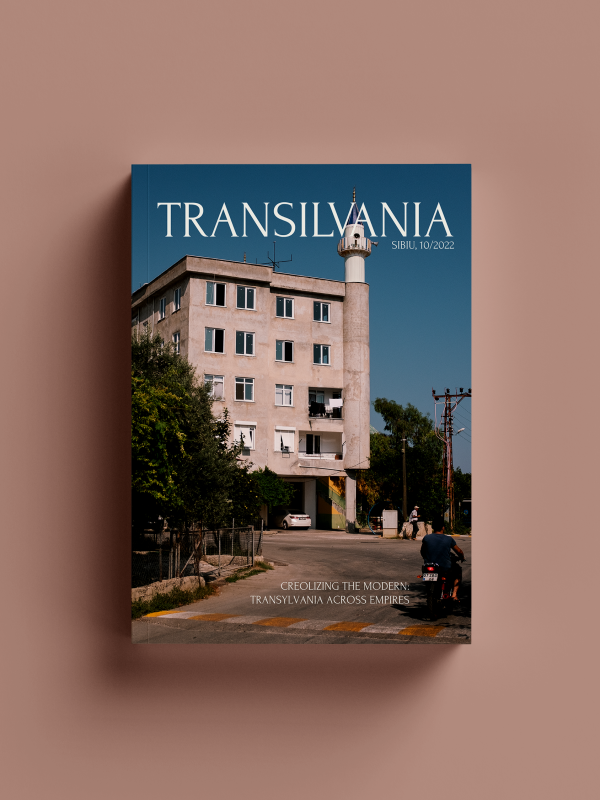
Transilvania featured 10.2022
Revista: 10 / 2022
Anul Publicarii:2022
Print ISSN: 0255-0539

Științe socio-umane

Arte vizuale

Filozofie și studii sociale

Antropologie și etnologie

Sociologie

Științe politice & juridice

Istorie & Antropologie

Studii culturale

Autor: Bogdan POPA
Email: george.popa@unitbv.ro

The Artist as Realist: Jean Mihail and the De-Alienating Effects of Socialist Film

Abstract: This article offers a discussion of the aesthetics of realism, which represents a central analytic category in post-socialist debates about Romanian cinema. While many disagreements have concentrated on realism as a technique for either documenting reality or disenchantment, I deploy realism as a dialectical method to understand the work of a pioneer of Romanian cinema, Jean Mihail. In criticising current models of realism, I draw on Georg Lukács’ Marxist theory to argue that realism offers not only a strong account of historical changes but also that it provides the basis of an anti-capitalist critique. Because a materialist method can illuminate shifts in film aesthetics in their social context, I concentrate on Mihail’s evolution from his 1925 social realist film Manasse (Romania) to his corporatist works at the end of the 1930s to his 1949 socialist realist documentary Orașul nu doarme niciodată [The City That Never Sleeps] (Romania). Also, I argue that realism goes beyond rethinking cinema as a technique of defamiliarisation by insisting on the de-alienating effects of cinema. In contrast to recent reformulations of realism (Christian Ferencz-Flatz) inspired by Walter Benjamin, I show that Mihail’s films constitute an important starting point to rethink a socially conscious realism.

Keywords: Jean Mihail; Georg Lukács; Walter Benjamin; Romanian cinema; socialism; realism; materialism; Marxism; alienation; socially conscious cinema.

Citation suggestion: Popa, Bogdan. “The Artist as Realist: Jean Mihail and the De-Alienating Effects of Socialist Film” Transilvania, no. 10 (2022): 78-89. https://doi.org/10.51391/trva.2022.10.10.

Bibliography

Aitken, Ian. Lukácsian Film Theory and Cinema. Manchester,  2012.

Benjamin, Walter. “The Author as Producer”. In Selected Writings, vol. 2, part 2, 1931-1934, edited by Michael W. Jennings, Howard Eiland, Gary Smith, translated by Rodney Livingstone and Others, 768-782. Cambridge, MA: Harvard University Press, 1999.

Borza, Cosmin. “The Faces of Rural Modernity in the Romanian Novel of Agricultural Collectivization.” In Beyond the Iron Curtain. Revisiting The Literary System of Communist Romania, edited by Ștefan Baghiu, Ovio Olaru, Andrei Terian. Berlin: Peter Lang, 2021.

Căliman, Călin. Jean Mihail. Bucharest: Meridiane, 1997.

Chukhrov, Keti. Practicing the Good: Desire and Boredom in Soviet Socialism. Minneapolis: University of Minnesota Press, 2020.

Filippi, Gabriela. “Jean Mihail, Un cineast in contratimp”. Cine Club, 2021.  https://cineclub.sahiavintage.ro/2021/12/01/jean-mihail-un-cineast-in-contratimp/.

Foster, Hal. The Return of the Real, The Avant-garde at the End of the Century. Cambridge, MA: MIT Press, 1996.

Fulger, Mihai. “Jean Mihail, Lia și Lilly.” Film 1 (2020): 68-71.

Goldiș Alex. Critica în tranșee. De la realismul socialist la autonomia esteticului [Criticism in Tranches: From Socialist Realism to the Autonomy of the Aesthetics]. Bucharest: Cartea Românească, 2011.

Gorzo, Andrei, and Veronica Lazăr. “The New Romanian Cinema and Beyond: The Films of Radu Jude.” Transilvania, no. 3 (2022): 1-9.

Love, Joseph. Crafting the Third World, Theorizing Underdevelopmnet in Brazil and Romania. Stanford: Stanford University Press, 1996.

Lovinescu, Eugen. Istoria literaturii române contemporane, vol.1 [1926]. Bucharest, 1973.

Lukács, Georg. “Preface to the new edition (1967)”. In History and Class Consciousness: Studies in Marxist Dialectics, ix-xli. Cambridge, MA: MIT Press, 1968.

Lukács, Georg. The Historical Novel. Lincoln and London, 1983.

Lukács, Georg. Writer & Critic and other Essays. New York: Grosset & Dunlop, 1970.

Matei, Alexandru. “Realism socialist—înapoi la locul crimei.” Observator Cultural 890 (2017). https://www.observatorcultural.ro/articol/realism-socialist-inapoi-la-locul-crimei/.

Mazierska, Ewa, and Renata Sukaityte. “Representation of Poverty in Polish, Lithuanian, and Latvian Documentary Films of the Postcommunist Period.” Studies in Eastern European Cinema 11, no. 1 (2020): 67-81.

Mihail, Jean. Filmul Românesc de altădată. Bucharest: Meridiane, 1966.

Montias, John Michael. Economic Development in Romania. Cambridge, MA: MIT Press, 1967.

Popa, Bogdan. “What’s Wrong with the Romanian New Wave? Auteur Cinema, the Communist, and the Production of the Violent Working Class. Studies in Eastern European Cinema 9, no. 1 (2018): 89-102.

Sedgwick, Eve. 2003. Touching Feeling: Affect, Performativity and Pedagogy. Durham, NC.

Szel, Ana, and Andrei Rus. Introduction for “Jean Mihail-programul 3.” Cineclub, 2022. https://cineclub.sahiavintage.ro/programe/programul-3-jean-mihail/.

Szel, Ana, Andrei Rus, Gabriela Filippi, and Mihai Burcea. “Jean Mihail și filmul Documentar în perioada 1935-1949.” CineClub, 2021. https://cineclub.sahiavintage.ro/2021/11/15/jean-mihail-si-filmul-documentar-in-perioada-1935-1949/.

Terian, Andrei. “Socialist Modernism as Compromise: A Study of the Romanian Literary System.” Primerjalna knjizevnost 42, no. 1 (2019): 133-147.

Tihanov Galin. “Revisiting Lukács’ Theory of Realism.” Thesis Eleven 159, no. 1 (2020): 57-63.

Weeks, Harry. “Re-cognizing the post-Soviet Condition: The Documentary Turn in Contemporary Art in the Baltic States.” Studies in Eastern European Cinema 1 (2010): 57-70.


Filmography:


Aleksandrov, Grigorii. 1949. Vstrecha na El’be / The Meeting on the Elbe. Mosfilm.

Călinescu, Paul. 1940. Uzinele Malaxa / Malaxa’s factories. ONC.

Ciorniuc, Radu. 2020. Acasă / My Home. Manifest Film, HBO Europe, HBO Romania, Corso Film, Yle to 1 Finland.

Lungu, Ana. 201. Un prinț și jumătate / One and a Half Prince. Mandragora

Mihail, Jean. 1923. Țigăncușa de la iatac / The Gypsy in the Bedroom. „Spera Film” (Berlin),

„Rador Film” (Bucureşti-Haga).

Mihail, Jean. 1924. Păcat / The Sin. „Național Film” (Vasile Gociu – Jean Mihail – George Aurelian).

Mihail, Jean. 1927. Manasse. „Național Film” (Vasile Gociu – Jean Mihail – George Aurelian).

Mihail, Jean. 1927. Lia. Indro Film București.

Mihail, Jean. 1928. Povara / The Weight. Panfilm, Sapho-Film.

Mihail, Jean. 1935. România 1934. Indro Film București.

Mihail, Jean. 1939. CFR- O simfonie a muncii / CFR- A symphony of work. Căile Ferate Române.

Mihail, Jean. 1949. Orașul nu doarme niciodată / The City That Never Sleeps. Oficiul Național Cinematografic.

Mladenović, Ivana. 2020. Ivana cea groaznică / Ivana the Terrible. MicroFILM, Dunav 84.

Olteanu, Bogdan Theodor. 2020. Mia își ratează răzbunarea / Mia Misses Her Revenge. Tangaj Production, SUB25, Papillon Film.

Porumboiu, Corneliu. 2009. Polițist, Adjectiv / Police, Adjective. 42 Km Film.

Puiu, Cristi. 2010. Aurora. Mandragora, Bord Cadre films, Coproduction Office, Essential Film Produktion.

Ruttmann, Walter. 1927. Berlin: Die Sinfonie der Großstadt / Berlin: Symphony of a Great City. Les Productions Fox Europa, Deutsche Vereins-Film.
Vertov, Dziga. 1929. Chelovek s kinoapparatom / Man with a Movie Camera.

Vdovii, Lina, Radu Ciorniciuc, and Mircea Topolean “Acasă, my home.” Interview by Laura Mușat, Films in Frame, 2020, online at https://www.filmsinframe.com/en/interviews/interview-acasa-my-home/.

Autor: Emanuel MODOC, Daiana GÂRDAN
Email: ermodoc@gmail.com

From Reading Books to Reading Data: Paradigm Shifts in Literary Studies after the Digital Turn

Abstract: Employed in the study of national or transnational literatures, the relevance of digital humanities, computational analyses, and quantitative sociology can no longer be ignored. In this paper, we aim to argue that, in spite of it still being seen as a niche endeavor, the digital or quantitative study of literature generates paradigmatic shifts in literary scholarship, both in literary criticism and comparative studies. In order to demonstrate this statement, the following study will illustrate how three core principles of digital humanities are actively shaping humanities as we know it. These principles – openness, replicability, and collaboration – challenge the way we understand the role of the literary historian and their „traditional” tasks. To consolidate this argumentation further, we will briefly present an example of how digital humanities start changing the dominant narrative in Romania.

Keywords: systems analysis, digital humanities, literary history, 19th century Romanian novel, open science

Citation suggestion: Gârdan, Daiana, and Emanuel Modoc. “De la cărți la date. Schimbări paradigmatice în studiile literare după turnura digitală.” Transilvania, no. 10 (2022): 90-96. https://doi.org/10.51391/trva.2022.10.11.

Baghiu, Ștefan, and Emanuel Modoc. “Compensation and Kin Selection in the Long Nineteenth Century Translationscapes.” Metacritic Journal for Comparative Studies and Theory 8, no. 1 (2022): 216-229.

Baghiu, Ștefan, Andrei Terian, Vlad Pojoga, Snejana Ung, Bianca Crăciun, and Ovio Olaru. “Geografia romanului românesc (1933-1947): străinătatea” [The Geography of the Romanian Novel (1933-1947): Spaces from Abroad]. Transilvania, no. 9 (2021).

Baghiu, Ștefan, Andrei Terian, Vlad Pojoga, Teodora Susarenco, Iunis Minculete, and Ovio Olaru. “Geografia romanului românesc (1901-1932): străinătatea” [The Geography of the Romanian Novel (1901-1932): Spaces from Abroad]. Transilvania, no. 10 (2020): 1-11.

Baghiu, Ștefan, et al. “Geografia internă a romanului românesc în secolul al XIX-lea” [The Internal Geography of the Romanian Novel in the 19th Century]. Transilvania, no. 10 (2019): 29-43.

Bode, Katerine. A World of Fiction. Digital Collections and the Future of Literary History. University of Michigan Press, 2018.

Borza, Cosmin. “How to Populate a Country. A Quantitative Analysis of the Rural Novel from Romania (1900-2000).” In Ruralism and Literature in Romania, edited by Ștefan Baghiu, Vlad Pojoga, Maria Sass, 21-40. Berlin: Peter Lang, 2019.

Borza, Cosmin. “Literatura rurală” [Rural Literature]. In Enciclopedia imaginariilor din România, vol. I, Imaginar literar, edited by Corin Braga, 191-210. Iași: Polirom, 2020.

Borza, Cosmin. “The National No Manʼs Land. Imagining Rurality in The Romanian Literary Histories.” Dacoromania litteraria VI (2019): 170-180.

Coroian-Goldiș, Andreea et al. “Arhivele romanului românesc și posibilități de digitizare” [The Archives of the Romanian Novels and Digital Possibilities]. Transilvania, no. 10 (2019): 1-8.

Da, Nan Z. “The Computational Case against Computational Literary Studies.” Critical Inquiry 45 (2019): 601-639.

Drake, Alex Francis. The Making of Modern Romanian Culture: Literacy and the Development of National Identity. London, New York: Tauris Academic Studies, 2006.

Eve, Martin Paul. Close reading with computers: Textual Scholarship, Computational Formalism, and David Mitchell’s Cloud Atlas. Stanford: Stanford University Press, 2019.

Gârdan, Daiana. “What Makes a Socialist-Realist Novel? Style, Topics, and Development in Romania (1948-1964).” In Beyond the Iron Curtain: Revisiting the Literary System of Communist Romania, edited by Ștefan Baghiu, Andrei Terian, and Ovio Olaru, 45-60. Berlin: Peter Lang, 2021.

Jockers, Matthew L. Macroanalysis: Digital Methods and Literary History. Champaign: Univeristy of Illinois Press, 2013.

Modoc, Emanuel, and Alex Goldiș. “Nationalizing International Prestige: Foreign Literatures in Romanian Interwar Periodicals.” Transilvania, no. 4 (2022): 30-39.

Modoc, Emanuel, Daiana Gârdan, Ștefan Baghiu, Andreea Coroian-Goldiș, Radu Vancu, and Vlad Pojoga. “Geografia romanului românesc (1901-1932): arealul național” [The Geography of the Romanian Novel (1901-1932): the National Areal]. Transilvania, no. 10 (2020): 12-21.

Modoc, Emanuel, Nicoleta Strugari, Mihnea Bâlici, Ștefan Baghiu, and Vlad Pojoga. “Geografia romanului românesc (1933-1947): arealul național” [The Geography of the Romanian Novel (1933-1947): the National Areal]. Transilvania, no. 9 (2021).

Modoc, Emanuel. “Transnational Networks, Translational Canons: Foreign Literatures in the Romanian Interwar Periodical Culture.” In Translations and Semi-Peripheral Cultures: Worlding the Romanian Novel in the Modern Literary System, edited by Alex Goldiș and Ștefan Baghiu, 75-93. Berlin: Peter Lang, 2022.

Moretti, Franco. Grafice, arbori, hărți. Literatura văzută de departe. Cluj-Napoca: Tact, 2016.

Piper, Andrew. “Send Us Your Null Results.” Journal of Cultural Analytics 5, no. 1 (2020): 1-4.

Piper, Andrew. “There Will Be Numbers.” Journal of Cultural Analytics 1, no. 1 (2016): 1-10.

Pojoga, Vlad et al. “Tehnici digitale pentru analiza romanului românesc.” Transilvania, no. 10 (2019): 9-16.

Terian, Andrei et al. “Genurile romanului în românesc în secolul al XIX-lea.” Transilvania, no. 10 (2019): 17-28.

Terian, Andrei, Daiana Gârdan, Emanuel Modoc, Cosmin Borza, Dragoș Varga, Ovio Olaru, and David Morariu. “Genurile romanului românesc (1901-1932). O analiză cantitativă” [The Genres of the Romanian Novel (1901-1932). A Quantitative Analysis]. Transilvania, no. 10 (2020): 53-64.

Terian, Andrei, Teona Farmatu, Cosmin Borza, Dragoș Varga, Alex Văsieș, and David Morariu. “Genurile romanului românesc (1933-1947). O analiză cantitativă” [The Genres of the Romanian Novel (1933-1947). A Quantitative Analysis]. Transilvania, no. 9 (2021).

Biblioteconomie

Științele limbii

Științele economice

Antropologie. Studii filozofice

Teologie

Studii literare

Autor: Maria CHIOREAN
Email: chiorean.r.maria@gmail.com

Adapting to Survive: Postcolonial Studies Today and the Emergence of the Inter-imperial Reading Method

Abstract: This paper discusses Manuela Boatcă and Anca Parvulescu’s recent volume, Creolizing the Modern, in relation to the debates surrounding the adequacy of the postcolonial framework for the analysis of East European and, more specifically, Romanian literature. It argues that the authors manage to signal, introduce and put into practice some of the most important methodological updates in the fields of postcolonialism, dependency studies and World Literature. Through a discussion of each of these milestones, Boatcă and Parvulescu’s inter-imperial reading method is shown to provide a highly rigorous and productive world-systemic perspective on modern canonical literature.

Keywords: inter-imperiality, creolization of theory, (post)colonialism and (post)coloniality, modernity, Eastern Europe

Citation suggestion: Chiorean, Maria. “Adapting to Survive: Postcolonial Studies Today and the Emergence of the Inter-imperial Reading Method.” Transilvania, no. 10 (2022): 1-14. https://doi.org/10.51391/trva.2022.10.01.

Bibliography:

Baghiu, Ștefan. “Geocritique: Siting, Poverty, and the Global Southeast.” In Theory in the “Post” Era: A Vocabulary for the Twenty-First-Century Conceptual Commons, edited by Alexandru Matei, Christian Moraru and Andrei Terian, 235-250. New York: Bloomsbury, 2022.

Ban, Cornel. “Inter-imperiality: A Political Economy Reading.” Transilvania, no, 10 (2022).

Balázs, Imre József. “New Scales for Regional Studies in Creolizing the Modern: Transylvania across Empires.” Transilvania, no. 10 (2022).

Bhabha, Homi K. “Difference, Discrimination, and the Discourse of Colonialism.” In The Politics of Theory, edited by F. Barker, P. Hulme, M. Iversen and D. Loxley, 194–211. Colchester: University of Essex Press, 1983.

Bhabha, Homi K. The Location of Culture. London & New York: Routledge, 1994.

Bjelić, Dušan. “Introduction: Blowing Up the ‘Bridge’.” In Balkan as Metaphor: Between Globalization and Fragmentation, edited by Dušan Bjelić and Obrad Savić, 1-23. Cambridge, MA: The MIT Press, 2002.

Boatcă, Manuela, and Anca Parvulescu. “Creolizing Transylvania: Notes on Coloniality and Inter-Imperiality.” History of the Present. A Journal of Critical History 10, no. 1 (2020): 9-27.

Boatcă, Manuela. Laboratoare ale modernității. Europa de Est și America Latină în (Co)relație. Cluj: Idea, 2019.

Burns, Lorna. Postcolonialism after World Literature: Relation, Equality, Dissent. New York: Bloomsbury Publishing, 2019.

Carey, Henry F., and Rafal Raciborski. “Postcolonialism: A Valid Paradigm for the Former Sovietized States and Yugoslavia?.” East European Politics and Societies 18, no. 2 (2004): 191-235.

Cistelecan, Alex. “Critica rațiunii decoloniale.” CriticAtac, April 5, 2016, https://www.criticatac.ro/critica-ratiunii-decoloniale/.

Cosma, Valer Simion. “Virtus Romana Rediviva: Latinitatea naționalismului ardelean între identitate națională, strategie politică și loialitate dinastică.” Transilvania, no. 10 (2022).

Doyle, Laura. Inter-imperiality: Vying Empires, Gendered Labor and the Literary Arts of Alliance. Durham & London: Duke University Press, 2020.

Friedman, Susan Stanford. “Periodizing Modernism: Postcolonial Modernities and the Space/Time Borders of Modernist Studies.” Modernism/Modernity 13, no. 3 (2006): 425-443.

Glissant, Édouard. Poetics of Relation. Translated by Betsy Wing. Ann Arbor: University of Michigan Press, 2010.

Goldiș, Alex. “Eastethics: The Ideological Shift in Narratology.” In Theory in the “Post” Era: A Vocabulary for the Twenty-First-Century Conceptual Commons, edited by Alexandru Matei, Christian Moraru, and Andrei Terian, 73-91. Bloomsbury, 2022.

Gyémánt, Ladislau. Evreii din Transilvania în epoca emancipării [The Jews of Transylvania in the Age of Emancipation (1790–1867)]. Bucharest: Editura Enciclopedică, 2000.

Hall, Stuart. “Créolité and the Process of Creolization.” In The Creolization Reader: Studies in Mixed Identities and Cultures, edited by Robin Cohen and Paola Toninato, 26–38. London: Routledge, 2010.

Jameson, Fredric. A Singular Modernity: Essay on the Ontology of the Present. London and New York: Verso, 2000.

Krishnaswamy, Revathi. “Towards World Literary Knowledges: Theory in the Age of Globalization.” Comparative Literature 62, no. 4 (2010): 399-419.

Lionnet, Françoise, and Shu-mei Shih, eds. The Creolization of Theory. Durham, NC: Duke University Press, 2011.

Loomba, Ania. Colonialism/Postcolonialism. London & New York: Routledge, 1998.

Mignolo, Walter D., and Catherine E. Walsh. On Decoloniality. Concepts, Analytics, Praxis. Durham & London: Duke University Press, 2018.

Mignolo, Walter. Dezobediența epistemică. Retorica modernității, logica colonialității și gramatica decolonialității, translated by Ovidiu Țichindeleanu. Cluj: Idea, 2015.

Moore, David Chioni. “Is the Post- in Postcolonial the Post- in Post-Soviet? Toward a Global Postcolonial Critique.” PMLA 116, no. 1 (2001): 111-128.

Nigam, Aditya. Decolonizing Theory: Thinking across Traditions. New York: Bloomsbury, 2021.

Owczarzak, Jill. “Introduction: Postcolonial Studies and Postsocialism in Eastern Europe.” Journal of Global and Historical Anthropology, no. 53 (2009): 3-19.

Parvulescu, Anca, and Manuela Boatcă. Creolizing the Modern: Transylvania Across Empires. Ithaca & London: Cornell University Press, 2022.

Pynsent, Robert B. “Czech Feminist Anti-Semitism: The Case of Božena Benešová.” In History of the Literary Cultures of East-­Central Europe, vol. IV, edited by Marcel Cornis-Pope and John Neubauer, 344-366. Amsterdam: John Benjamins Publishing, 2010.

Retamar, Roberto Fernández. “Caliban, Notes Towards a Discussion of Culture in Our America.” Massachusetts Review 15 (1974): 7-72.

Slavici, Ioan. Mara. Budapest: Luceafărul, 1906.

Slavici, Ioan. Novele. Vol. 2: O viață pierdută; Moara cu noroc; Norocul; Comoara. Bucharest: Editura Librăriei Socec, 1896.

Spivak, Gayatri Chakravorty. “In Memoriam: Edward W. Said.” Comparative Studies of South Asia, Africa and the Middle East 23, no. 1-2 (2003): 6-7.

Terian, Andrei. “Cultural Triangulation in Romanian Travelogues to China under Communism.” World Literature Studies 11, no. 2 (2019): 16-30.

Terian, Andrei. “From Frontier Orientalism to Transnational Communities: Images of the Tatars in Modern Romanian Literature.” World Literature Studies 10, no. 1 (2017): 50-62.

Terian, Andrei. “Is There an East-Central European Postcolonialism? Towards a Unified Theory of (Inter)Literary Dependency.” World Literature Studies 4, no.3 (2012): 21-36.

Todorova, Maria. Scaling the Balkans: Essays on Eastern European Entanglements. Leiden & Boston: Brill, 2019.

Todorova, Maria. Imagining the Balkans. Oxford: Oxford University Press, 2009.

Tötösy de Zepetnek, Stephen. Comparative Literature: Theory, Method, Application. Amsterdam & Atlanta: Rodopi, 1998.

Ung, Snejana. “Rethinking Romanian Literature Collectively: The Inter-imperial Modern Novel.” Transilvania, no. 10 (2022).

Vaughan, Megan. “Colonial Discourse Theory and African History, or Has Postmodernism Passed Us By?” Social Dynamics 20, no. 2 (1994): 1-23.

Verdery, Katherine. “Nationalism, Postsocialism, and Space in Eastern Europe.” Social Research 63, no. 1 (1996): 77–95.

WReC. Combined and Uneven Development: Towards a New Theory of World-Literature. Liverpool: Liverpool University Press, 2015.

Autor: Cornel BAN
Email: cba.ioa@cbs.dk

Inter-imperiality: A Political Economy Reading

Abstract: The concepts of “creolization” and “inter-imperiality” proposed in Anca Parvulescu and Manuela Boatcă’s Creolizing the Modern are superb interventions in the study of society in Europe’s semi-peripheries. These concepts usefully complicate conventional readings in orthodox, decolonial and postcolonial studies at both the conceptual and methodological level. From a historically-minded political economy approach, the book is an opportunity to ask further questions about the scope of inter-imperiality in early 20th century Transylvania, the paucity of analysis of the British-managed Gold Standard finance in shaping the political economy of late Habsburg Transylvania and the ambiguous foundations of ethnic and class relations in this part of Europe.

Keywords: Transylvania, Habsburg Empire, Gold Standard, Saxons, Hungarians, Romanians

Citation suggestion: Ban, Cornel. “Inter-imperiality: A Political Economy Reading.” Transilvania, no. 10 (2022): 15-22. https://doi.org/10.51391/trva.2022.10.02.

Baghiu, Ștefan. “Liviu Rebreanu și Sofia Nădejde ca world literature: geopolitică, interimperialitate și descoperirea lumii în romanul modern” [Liviu Rebreanu and Sofia Nădejde as World Literature: Geopolitics, Inter-imperiality, and the Discovery of the World in the Modern Novel]. Transilvania, no. 10 (2022).

Ban, Cornel. “Organizing Economic Growth: Romania and Transylvania on the Eve of the Great War.” Acta Musei Porolissensis 42 (2020): 16-30.

Beller, Steven. The Habsburg Monarchy 1815–1918, vol. 55. Cambridge: Cambridge University Press, 2018.

Berecz, Ágoston. “The Languages of Village Governments in the Eastern Stretches of Dualist Hungary: Rights and Practices.” The Slavonic and East European Review 99, no. 1 (2021): 1-30.

Bryan, Steven. The Gold Standard at the Turn of the Twentieth Century: Rising Powers, Global Money, and the Age of Empire. New York: Columbia University Press, 2010.

Chiorean, Maria. “Adapting to Survive:  Postcolonial Studies Today and the Emergence of the Inter-imperial Reading Method.” Transilvania, no. 10 (2022).

Cosma, Valer Simion. “Imaginea ‘neamţului’ în sensibilitatea intelectualităţii năsăudene” [Imagining the German in Năsăud Intellectuals’ Sensibility] Caiete de Antropologie Istorică 12-13 (2008): 187-207.

Cosma, Valer Simion. “Virtus Romana Rediviva: Latinitatea naționalismului ardelean între identitate națională, strategie politică și loialitate dinastică.” Transilvania, no. 10 (2022).

Custred, Glynn. “Voluntary Associations and Ethnic Survival among the Saxons of Transylvania.” Anthropology of East Europe Review 9, no. 2 (1990): 47-55.

Eichengreen, Barry J. Golden Fetters: The Gold Standard and the Great Depression, 1919-1939. NBER series on long-term factors in economic development, 1996.

Gündisch, K., and M. Beer. Siebenbürgen und die Siebenbürger Sachsen. Bonn: Langen-Müller, 1998.

Jobst, Clemens. “Market Leader: The Austro-Hungarian Bank and the Making of Foreign Exchange Intervention, 1896–1913.” European Review of Economic History 13, no. 3 (2009): 287-318.

Judson, Pieter M. The Habsburg Empire: A New History. Cambridge, MA: Harvard University Press, 2016.

Mitu, Sorin. “Local Identities from Transylvania in the Modern Epoch.” Transylvanian Review XXII, Supplement no. 2 (2013): 239-250.

Morys, Matthias. “Discount Rate Policy under the Classical Gold Standard: Core Versus Periphery (1870s–1914).” Explorations in Economic History 50, no. 2 (2013): 205-226.

Nagy, Levente. Reforma la români. Un fenomen de transfer cultural în secolele XVI-XVII [The Reform for Romanians: A Cultural Transfer Phenomenon in the 16th and 17th Centuries]. Bucharest: Ratio et revelatio, 2021.

Parvulescu, Anca, and Manuela Boatcă. “Creolizarea modernității” [Creolizing the Modern]. Transilvania, no. 5 (2022): 53-56. https://doi.org/10.51391/trva.2022.05.07.

Parvulescu, Anca, and Manuela Boatcă. Creolizing the Modern: Transylvania Across Empires. Ithaca & London: Cornell University Press, 2022.

Prodan, David. “The origins of Serfdom in Transylvania.” Slavic Review 49, no. 1 (1990): 1-18.

Rigó, Máté. Capitalism in Chaos. Ithaca & London: Cornell University Press, 2022.

Rogozanu, Costi. “Rebreanu, creatorul reprezentării literare mic-burgheze a țărănimii” [Rebreanu, the Creator of the Petit Bourgeois Literary Representation of Peasantry]. Transilvania, no. 10 (2022).

Wolff, Larry. Woodrow Wilson and the Reimagining of Eastern Europe. Stanford, CA: Stanford University Press, 2020.

Autor: Imre József BALÁZS
Email: lutraro@yahoo.com

New Scales for Regional Studies in Creolizing the Modern: Transylvania across Empires

Abstract: This review article tries to formulate some general remarks about the most innovative elements of Creolizing the Modern: Transylvania across Empires, published by Anca Parvulescu and Manuela Boatcă in 2022 at Cornell University Press, findings that most probably will open up for future research new directions in conceptualizing Transylvanian identities. It also tries to identify some of the problematic aspects of the overview offered by the volume. ‘Worlding’ Transylvania is a double-edged strategy that may edit out nuances that could be important for local communities.

Keywords: inter-imperiality, Transylvania, Romanian literature, Hungarian literature, modernism.

Citation suggestion: Baláz, Imre József. “New Scales for Regional Studies in Creolizing the Modern: Transylvania across Empires.” Transilvania, no. 10 (2022): 23-25. https://doi.org/10.51391/trva.2022.10.03.

Bibliography:

Parvulescu, Anca, and Manuela Boatcă. Creolizing the Modern: Transylvania across Empires. Ithaca and London: Cornell University Press, 2022.

Szabó, Levente T. “International Exhibitions, Literary Capitalism, and the Emergence of Comparative Literature.” Journal of World Literature 7, no. 3 (2022): 332-347.

Szabó, Levente T. “Negotiating the Borders of Hungarian National Literature the Beginnings of the Acta Comparationis Litterarum Universarum and the Rise of Hungarian Studies (Hungarologie).” Transylvanian Review 22 (2013): 47-61.

Autor: Valer Simion COSMA
Email: simion.cosma@ulbsibiu.ro

Virtus Romana Rediviva: The Latinity of the Ardeal Nationalism between National Identity, Political Stratedy, and Dynastic Loyalty

Abstract: This article discusses the ways in which the elites of Transylvanian Romanians living in the Habsburg Empire deployed claims to Roman heritage as both a key ingredient of nation building processes as well as a political instrument to secure political rights in a state in which Roman heritage enjoyed high symbolic value. Specifically, the article shows that several generations of intellectuals initially institutionalized in the Uniate (Greek-Catholic) Church, a politically well-situated institution, emphasized Romanians’ Roman (rather than Dacian) heritage to define the boundaries of the nation. Furthermore, they used the same ethnogenesis story to highlight Romanians’ prestigious status in the geocultural hierarchies of the empire following centuries of marginalization formulated in “civilizational” terms. At the same time, the choice for the Roman heritage also made sense from the perspective of political mobilization strategies to claim political rights denied to Romanians by the imperial status quo while expressing loyalty to the same imperial state itself until the moment it collapsed in the fall of 2018. In short, claims to Roman heritage were instrumentalized to serve nation building, political emancipation, and dynastic loyalty.

Keywords: Roman heritage, nation building, Transylvanian nationalism, inter-imperiality, peasants, Romanians, nationalist elites

Citation suggestion: Cosma, Valer Simion. “Virtus Romana Rediviva: Latinitatea naționalismului ardelean între identitate națională, strategie politică și loialitate dinastică.” Transilvania, no. 10 (2022): 26-39. https://doi.org/10.51391/trva.2022.10.04.

Bibliography:


Ambruster, Adolf. Romanitatea românilor. Istoria unei idei [The Romanity of Romanians: The History of an Idea]. Bucharest: Editura Enciclopedică, 1993.

Andrei, Mirela. “Aspecte privind mitul ‘Bunului Împărat’ în sensibilitatea colectivă țărănească din Ardeal la 1848” [Some Aspects Concerning the Myth of the “Good Emperor” in the Collective Peasants’ Sensibility in Ardeal at 1848]. In Identitate și Alteritate. Studii de imagologie, edited by Nicolae Bocșan and Valeriu Leu. Reșița: Banatica, 1996.

Andrei, Mirela. La granița Imperiului. Vicariatul Rodnei. Cluj-Napoca: Editura Argonaut, 2006.

Ban, Cornel. “Inter-imperiality: A Political Economy Reading.” Transilvania, no, 10 (2022).

Ben-Amos, Dan. “The Idea of Folklore: An Essay.” In Folklore, vol. 1, From Definition to Discipline, edited by Alan Dundes. London and New York: Routledge, 2005.

Bernath, Mathias. Habsburgii și începuturile formării națiunii române [The Habsburgs and the Beginnings of the Formation of the Romanian Nation]. Cluj-Napoca: Dacia, 1994.

Bichigean, Vasile. “Poëmation de secundae legione Valachica.” Arhiva Someșană, no. 2-3 (1925): 13-19; 39-65.

Bîrlea, Octavian. Istoria folcloristicii românești [The History of Romanian Folkloristics]. Bucarest: Editura Enciclopedică Română, 1974.

Boatcă, Manuela, and Anca Parvulescu. “Creolizing Transylvania: Notes on Coloniality and Inter-imperiality” in History of the Present: A Journal of Critical History 10, no. 1 (2020).

Boatcă, Manuela. “Multiple Europes and the Politics of Difference Within.” In Uneasy Postcolonialisms: Worlds and Knowledges Otherwise 3, no. 3 (Durham Center for Global Studies and the Humanities, Duke University), 2013, https://globalstudies.trinity.duke.edu/projects/wko-uneasy-postcolonialisms.

Burke, Peter. O istorie socială a cunoașterii [A Social History of Knowledge]. Iași: Institutul European, 2004.

Câmpeanu, Remus. Elitele românești din Transilvania veacului al XVIII-lea [Romanian Elites in Transylvania during 18th Century]. Cluj-Napoca: Presa Universitară Clujeană, 2008.

Cârjă, Ion. “Românii ardeleni și puterea imperială austriacă în perioada 1849-1851. Considerații privind ideologia mișcării petiționare românești” [Romanians in Ardeal and Imperial Power Between 1849-1851]. In Identitate și alteritate. Studii de imagologie II, edited by Nicolae Bocșan, Sorin Mitu, and Toader Nicoară. Cluj-Napoca: Presa Universitară Clujeană, 1998.

Constantinescu, Grigore. Preoți și învățători folcloriști și contribuția lor la dezvoltarea folcloristicii românești (rezumat teză de doctorat), București, 1998.

Cornea, Paul. Originile romantismului românesc [The Origins of Romanian Romanticism] Bucharest: Editura Minerva, 1972.

Cosma, Valer Simion. “‘Rădicarea din întunecata prostie’. Imaginea neamțului la nivelul clerului năsăudean în prima jumătate a secolului al XIX-lea” [“Rising from the Dark Dumbness”]. In Arhiva Someșană VII, no. 3 (2008).

Cosma, Valer Simion. “El nacimiento de la Nación Rumana Reexaminado. Una Mirada Decolonial.” In Decolonizando Identitades. Pertencia y Rechazo de/desde el Sur Global, edited by Chiara Olivieri, and Antonio Ortega Santos. Granada: Universidad de Granada/Instituto de Migraciones, 2017.

Cosma, Valer Simion. “Imaginea neamțului în sensibilitatea intelectualității năsăudene” [The Image of the German in the Intellectual Sensibility]. Caiete de Antropologie Istorică VII, no. 1-2 (2008): 187-207.

Cosma, Valer Simion. “Inventing the Romanian Peasant in Transylvania during the Nineteenth Century.” In Ruralism and Literature in Romania, edited by Ștefan Baghiu, Vlad Pojoga, and Maria Sass, 165-190. Berlin: Peter Lang, 2019.

Cosma, Valer Simion. “Népismeret a társadalomszabályozás folyamata és a nacionalizmus között. A román klerikusok és a néprajzkutatás kezdetei a 19. századi Erdélyben.” In Kriza János Néprajzi Társaság Évkönyve 22: Néprajzi intézmények, kutatások, életpályák, edited by Keszeg Vilmos, Szász István Szilárd, and Zsigmond Júlia, 163-184. Kolozsvár/Cluj-Napoca, 2014.

Cotore, Gheorghe Gherontie. Despre articulușurile ceale de price [About the Articles Responsible] [1746]. Alba Iulia, 2000.

Cotore, Gheorghe Gherontie. Istoria despre schismăticia grecilor [History of the Schism of the Greeks] [1746]. Cluj-Napoca: Argonaut, 2008.

Doyle, Laura. “Modernist Studies and Inter-imperiality in the Longue Durée.” In The Oxford Handbook of Global Modernisms, edited by Mark Wollaeger, 669-96. Oxford: Oxford University Press, 2012.

Drace-Francis, Alex. The Making of Modern Romanian Culture: Literacy and the Development of National Identity. London & New York: Tauris Academic Studies, 2006.

Drace-Francis, Alex. The Tradition of Invention: Romanian Ethnic and Social Stereotypes in Historical Context. London & Boston: Brill, 2013.

Duțu, Alexandru. Coordonate ale culturii românești în secolul al XVIII-lea (1700-1821) [Coordinates of the Romanian Culture in the 18th Century]. Bucharest: Editura pentru Literatură, 1968.

Florea, Virgiliu. Folcloriști ardeleni. Colecții inedite de folclor [Folklorists from Ardeal]. Cluj-Napoca: Transilvania Press, 1994.

Furtună, Dumitru. Preoțimea românească în secolul al XVIII-lea. Starea ei culturală și material [Romanian Preasts in the 18th Century]. Vălenii de Munte, 1915.

Georgeta Filitti, ed. Călători străini despre țările române în secolul al XIX-lea [Foreign Travelers about the Romanian States in XIXth Century], vol. I. Bucharest: Editura Academiei Române, 2004.

Grancea, Mihaela. Călători străini prin Principatele dunărene, Transilvania și Banat (1683-1789). Identitate și alteritate [Foreign Travelers in the Danube Principalities, Transylvania, and Banat (1863-1789): Identity and Alterity]. Sibiu: Editura ULBS, 2002.

Heitmann, Klaus. Imaginea românilor în spațiul lingvistic german [The Image of the Romanians in the German Linguistic Space]. Bucharest: Editura Univers, 1995.

Herța, Andrei, and Valer Simion Cosma. “Extragere, transformare și comodificare a naturii în context imperial și post-imperial. Incursiuni preliminare în istoria căii ferate Salva-Vișeu” [Extraction, Transformation, and Commodification of Nature in Imperial and Post-Imperial Context]. Acta Musei Porolissensis XLII (2020): 53-67.

Hitchins, Keith. A Nation Discovered: Romanian Intellectuals in Transylvania and the Idea of Nation 1700-1848. Bucharest: The Encyclopedic Publishing House, 1999.

Hitchins, Keith. Românii 1774-1866 [The Romanians 1774-1866]. Bucharest: Humanitas, 2013.

Iorga, Nicolae. Istoria Bisericii Românești și a vieții religioase a românilor [The History of Romanian Church and Religios Life of Romanians], vol. II. Bucharest: Saeculum, 2012.

Iorga, Nicolae. Sate și preoți din Ardeal [Villages and Priests in Ardeal]. Bucharest, 1902.

Judson, Pieter. The Habsburg Empire: A New History. Cambridge MA: Harvard University Press, 2016.

Lendvai, Paul. Ungurii [The Hungarians]. Bucharest: Humanitas, 2013.

Maior, Liviu. Habsburgi și Români. De la loialitatea dinastică la identitatea națională [Habsburgs and Romanians: From Dynastic Loyalty to National Identity]. Bucharest: Editura Enciclopedică, 2006.

Maior, Liviu. Românii în armata habsburgică. Soldați și ofițeri uitați [Romanians in the Habsgurg Army: Forgotten Soldiers and Officers]. Bucharest: Editura Enciclopedică, 2004.

Marica, George M. Studii de istoria și sociologia culturii române ardelene din secolul al XIX-lea [Studies of History and Sociology of Romanian Culture in Ardeal during the 19th Century], vol. I. Cluj-Napoca: Dacia, 1977.

Marino, Adrian. Pentru Europa. Integrarea României. Aspect ideologice și culturale [For Europe: The Romanian Integration: Ideological and Cultural Aspects]. Iași: Polirom, 2005.

Matei, Sorin Adam. Boierii minții. Intelectualii români între grupurile de prestigiu și piața liberă a ideilor [The Boyars of the Mind: Romanian Intellectuals Between Prestige Groups and the Free Market of Ideas]. Bucharest: Compania, 2004.

Mignolo, Walter. Dezobediența epistemică. Retorica modernității. Logica colonialității și gramatica decolonialității [Desobediencia epistémica]. Cluj-Napoca: Idea, 2016.

Miron, Greta-Monica. Biserica greco-catolică din Transilvania. Cler și enoriași (1697-1782) [The Greek-Catholic Church in Transylvania (1697-1782)]. Cluj-Napoca: Presa Universitară Clujeană, 2004.

Mitu, Sorin. Imagini europene și mentalități românești din Transilvania la începutul epocii moderne [European Images and Romanian Mentalities in Early Modern Transylvania]. Cluj-Napoca: Presa Universitară Clujeană, 2000.

Mitu, Sorin. Transilvania mea. Istorii, mentalități, identități [My Transylvania: Histories, Mentalities, Identities]. Iași: Polirom, 2013.

Moisil, Iuliu. “Biografia lui Anton Cosimelli” [Anton Cosimelli’s Biography]. Arhiva Someșană, no. 25, Năsăud, October 1938 – March 1939.

Neagotă, Bogdan. “Ideea romană și comparatismul genetic latinizant în studiile de folclor românesc” [The Roman Idea and Latinizing Genetic Comparatism in Romanian Floklore Studies]. ORMA. Revistă de studii etnologice și istorico-religioase, no. 16 (2011).

Neumann, Victor. Tentația lui homo europaeus. Geneza ideilor moderne în Europa Centrală și de Sud-Est [The Temptation of Homo Europaeus: The Genesis of Modern Ideas in Central and Southeast Europe]. Iași: Polirom, 2006.

Onofreiu, Adrian, and Ioan Bolovan. Contribuții documentare privind istoria regimentului grăniceresc năsăudean [Documentary Contributions in respect to the History of the Border Regiment in Năsăud]. Bucharest: Editura Enciclopedică, 2006.

Onofreiu, Adrian. “Aportul districtului Năsăud la mișcarea națională românească din Transilvania (1861-1876)” [The Importance of the Năsăud District in the Romanian National Movement in Transylvania (1861-1876)]. Arhiva Someșană IV, Cluj-Napoca, 2005.

Pâclișanu, Zenovie. Biserica și românismul [1910] [The Church and Romanianness]. Târgu-Lăpuș: Galaxia Gutenberg2005.

Pál, Judit, “Integrarea Transilvaniei în Imperiul Habsburgic la sfârșitul secolului al XVII-lea” [The Integration of Transylvania in the Habsburg Empire at the End of the 17th Century]. In Austrian Influences and Regional Identities, edited by François Bréda, Valentin Trifescu, Luminița Ignat-Coman, and Giordano Altarozzi. Bratislava: Ab Art, 2012.

Parvulescu, Anca, and Manuela Boatcă. Creolizing the Modern: Transylvania across Empires. Ithaca & London: Cornell University Press, 2022.

Pascu, Ștefan. Bobîlna. Bucharest: Editura Științifică, 1963.

Pop, Ioan-Aurel. Biserică, societate și cultură în Transilvania secolului al XVI-lea. Între acceptare și excludere [Church, Society, and Culture in 16th Century Transylvania: Between Acceptance and Exclusion]. Bucharest: Editura Academiei Române, 2012.

Prodan, David. Problema iobăgiei în Transilvania 1700-1848 [The Problem of Serfdom in Transylvania 1700-1848]. Bucharest: Editura Științifică și Enciclopedică, 1989.

Prodan, David. Supplex Libellus Valachorum. Bucharest, 1967.

Quiroga, Alejandro. “La nacionalización en España. Una propuesta teórica.” Ayer. Revista de Historia Contemporánea 90, no. 2 (2013).

Sabău, Septimia Claudia. „Și ne-au făcut din grănițeri, țărani…” Mentalități colective în satele năsăudene foste grănicerești în a doua jumătate a secolului al XIX-lea [Collective Mentalities in Năsăud Border Villages in the Second Half of the 19th Century]. Cluj-Napoca, Editura Mega, 2015.

Șaguna, Andrei. Istoria bisericei ortodoxe resaritene universale [The History of the Universal Eastern Orthodox Church]. Olmutz, 1860.

Said, Edward. Orientalism. New York: Vintage Books, 1979.

Șăineanu, Lazăr. Istoria filologiei române, cu o privire retrospectivă asupra ultimelor decenii (1870-1895): Studii critice [The History of Romanian Philology]. Bucharest: Editura Librăriei Socec & Co., 1895.

Scott, James C. În numele statului. Modele eșuate de îmbunătățire a condiției umane, translated by Alina Pelea. Iași: Polirom, 2007.

Șotropa, Virgil, and Nicolae Drăganu. Istoria școalelor năsăudene: scrisă cu prilejul jubileului de 50 de ani de existență (1863-1913) a gimnaziului superior fundațional din Năsăud [The History of Năsăud Schools]. Năsăud, 1913.

Șotropa, Virgil. “Regimentul Grăniceresc Năsăudean” [The Năsăud Border Regiment]. Arhiva Someșană, no. 2, Năsăud (1925): 1-11.

Țichindeleanu, Ovidiu. “Prefață” [Preface]. In Walter Mignolo, Dezobediența epistemică. Retorica modernității. Logica colonialității și gramatica decolonialității [Desobediencia epistémica]. Cluj-Napoca: Idea, 2016.

Todorova, Maria. Imagining the Balkans. Oxford & New York: Oxford University Press, 1997.

Tóth, Zoltán I. Primul secol al naționalismului românesc ardelean (1697-1792) [The First Century of Romanian Nationalism from Ardeal]. Bucharest, 2001.

Turnock, D. “Transport for Romania’s Carpathian Forests: Improved Accessibility through Technological Change.” GeoJournal 22, no. 4 (1990): 409-428.

Verdery, Katherine. Transylvanian Villagers: Three Centuries of Political, Economic, and Ethnic Change. Los Angeles: University of California Press, 1983.

Wolf, Larry. Inventing Eastern Europe: The Map of the Civilization on the Mind of the Enlightenment. Stanford, CA: Stanford University Press, 1994.

Autor: Costi ROGOZANU
Email: costel.rogozanu@ulbsibiu.ro

Rebreanu, the Creator of the Petit Bourgeois Literary Representation of Peasantry

Abstract: Anca Parvulescu and Manuela Boatcă’s Creolizing the Modern: Transylvania Across Empires provides a restructured reading grille for the canonical novel Ion by modernist-realist Romanian writer Liviu Rebreanu. Overall, the inter-imperial theoretical frame and method put forth by Parvulescu and Boatcă is fit to the task of decoding relevant aspects of the social representations of the peasantry in late Habsburg Transylvania. However, there are good reasons to suggest that “peripheral realism” would have been a more effective analytical tool. While some of the claims of the book have been discussed by literary critics at the time of publication of the novel, a re-reading of the novel in inter-imperial context lends those claims the comparative dimension that was conspicuously absent in the literary analysis of the novel following its publication.

Keywords: romanian literature, literary realism, class representation, Rebreanu.

Citation suggestion: Rogozanu, Costi. “Rebreanu, creatorul reprezentării literare mic-burgheze a țărănimii.” Transilvania, no. 10 (2022): 40-45. https://doi.org/10.51391/trva.2022.10.05.

Bibliography:


Bâlici, Mihnea. “Conceptul de inter-imperialiate în periferie: Modelul Wallerstein și cazul romanului Adam și Eva de Liviu Rebreanu” [The Concept of Inter-imperiality in the Periphery: The Wallerstein Model and the Case of the Novel Adam și Eva by Liviu Rebreanu]. Transilvania, no. 10 (2022).

Chiorean, Maria. “Adapting to Survive: Postcolonial Studies Today and the Emergence of the Inter-imperial Reading Method.” Transilvania, no. 10 (2022).

Corbea, Andrei. “‘Dezertorul’ Ițic Ștrul. Comentarii pe marginea nuvelei lui Liviu Rebreanu” [The “Deserter” Ițic Ștrul: Comments on Liviu Rebreanu’s Novella]. Revista de istorie a evreilor din România 4-5, no. 20-21 (2019-2020): 228-246.

Dumitru, Teodora. “Conceptul lovinescian de ‘intelectualizare’ a literaturii față cu ipoteza postbelică a țăranului ‘intelectualizat’” [Lovinescu’s Concept of Literature “Intellectualization” Against the Post-War Hypothesis of the “Intellectualized” Peasant]. Transilvania, no. 2 (2021): 31-50.

Gheran, Niculae. Tânărul Rebreanu [The Young Rebreanu]. Bucharest: Albatros, 1986.

Parvulescu, Anca, and Manuela Boatcă. “The longue durée of Enslavement: Extracting Labor from Romani Music in Liviu Rebreanu’s Ion.” Literature Compass 17, no. 1-2 (2020).

Parvulescu, Anca, and Manuela Boatcă. Creolizing the Modern: Transylvania across Empires. Ithaca: Cornell University Press, 2022.

Parvulescu, Anca, and Manuela Boatcă. Transilvania între imperii. Rebreanu și modernitatea in Ion. Cluj-Napoca: Idea, forthcoming.

Parvulescu, Anca, and Manuela Boatcă. “Creolizarea modernității” [Creolizing the Modern]. Transilvania, no. 5 (2022): 53-56. https://doi.org/10.51391/trva.2022.05.07.

Pojoga, Vlad, Daiana Gârdan, Ștefan Baghiu, Cosmin Borza, Iunis Minculete, and Denisa Frătean. “Diversitate identitară în romanul românesc (1844-1932)” [Diversity and Identity in the Romanian Novel (1844-1932)]. Transilvania, no. 10 (2020): 33-44.

Pojoga, Vlad, et al. “The Character Network in Liviu Rebreanu’s Ion: A Quantitative Analysis of Dialogue.” Metacritic Journal for Comparative Studies and Theory 6, no. 2 (2020): 23-47.

Rebreanu, Liviu. Opere [Works], vol. 21. Corespondență de familie 1900-1943. Bucharest: Academia Română, 2002.

Rebreanu, Liviu. Opere [Works], vol. 23. Bucharest: Academia Română, 2002.

Rogozanu, Costi. “The Socialist Realist Structure of Marin Predaʼs Moromeții.” Transilvania, no. 5 (2022): 76-80.

Vianu, Tudor. Opere [Works], vol. 3. Bucharest: Minerva 1973.

Zaciu, Mircea. Liviu Rebreanu după un veac [Liviu Rebreanu after a Century]. Cluj-Napoca: Dacia, 1985.

Autor: Ștefan BAGHIU
Email: stefan.baghiu@ulbsibiu.ro

Liviu Rebreanu and Sofia Nădejde as World Literature: Geopolitics, Inter-imperiality, and the Discovery of the World in the Modern Novel

Abstract: The article analyzes the way in which explicit inter-imperial debates are incorporated through narrative discourse and characters’ discourse in two Romanian novels. Drawing on Anca Parvulescu and Manuela Boatcă’s recently published book Creolizing the Modern: Transylvania across Empires (Cornell University Press, 2022), Baghiu re-reads Liviu Rebreanu’s 1920 Ion and Sofia Nădejde’s 1903 Patimi in a world system frame. The analysis shows that Liviu Rebreanu’s novel features a form of static inter-imperiality, while Sofia Nădejde’s novel engages forms of exploratory inter-imperiality. This is due to the fact that Sofia Nădejde’s novel is set in Moldavia, a region of Romania that lies precisely at the intersection of the Austro-Hungarian, Ottoman, and Tsarist empires, while Rebreanu’s novel is set in Transylvania, a region that can be read in both inter-imperial and intra-imperial keys (since it is very dependent on the Austro-Hungarian empire). The two models show that the first feminist novel in Romanian literature is also an exploratory inter-imperial novel (Patimi), while the first modernist novel is a static inter-imperial novel (Ion).

Keywords: static inter-imperiality, exploratory inter-imperiality, Romanian literature, modern novel, Sofia Nădejde, Liviu Rebreanu.

Bibliography:

Ahmad, Aijaz. “Jameson’s Rhetoric of Otherness and the ‘National Allegory’.” Social Text, no. 17 (1987): 4.

Apter, Emily. Against World Literature: On the Politics of Untranslatability. London & New York: Verso, 2013.

Baghiu, Ștefan, et al. “Geografia romanului românesc (1901-1932): străinătatea” [The Geography of the Romanian Novel (1901-1932): Foreign Countries]. Transilvania, no. 10 (2020): 1-11.

Baghiu, Ștefan. “Romancierele: traducerile de romane scrise de femei în cultura română (1841-1918)” [The Women Novelists: Translations of Novels Written By Women in Romanian Culture (1841-1918)]. Transilvania, no. 6 (2021): 11-21.

Ban, Cornel. “Inter-imperiality: A Political Economy Reading.” Transilvania, no. 10 (2022).

Ban, Cornel. Dependență și dezvoltare. Economia politică a capitalismului românesc [Dependency and Development: The Political Economy of Romanian Capitalism], translated by Ciprian Șiulea. Cluj-Napoca: Tact, 2014.

Boatcă, Manuela. “Semiperipheries in the World-System: Reflecting Eastern European and Latin American Experiences.” Journal of World-Systems Research (2006): 321-346.

Boatcă, Manuela. “Thinking Europe Otherwise: Lessons from the Caribbean.” Current Sociology 69, no. 3 (2021): 389-414.

Boatcă, Manuela. “Unequal Institutions in the Longue Durée: Citizenship Through a Southern Lens.” Third World Quarterly 42, no. 9 (2021): 1982-2000.

Boatcă, Manuela. Laboratoare ale modernității: Europa de Est și America Latină în (co)relație [Laboratories of Modernity: Eastern Europe and Latin America in Correlation]. Cluj-Napoca: Idea Design & Print, 2019.

Cernat, Maria. “Patimi – un roman despre patimi sociale!” [Patimi – a novel on social passion]. Baricada, April 24, 2021. Online: https://ro.baricada.org/patimi/. Accessed September 15, 2022.

Chiorean, Maria. “Adapting to Survive: Postcolonial Studies Today and the Emergence of the Inter-imperial Reading Method.” Transilvania, no. 10 (2022).

Cohen, Margaret. The Sentimental Education of the Novel. Princeton: Princeton University Press, 1999.

Damrosch, David. What is World Literature?. Princeton & Oxford: Princeton University Press, 2003.

Gârdan, Daiana. “The Great Female Unread. Romanian Women Novelists in the First Half of the Twentieth Century: A Quantitative Approach.” Metacritic Journal for Comparative Studies and Theory 4, no. 1 (2018): 109-124.

Goldiș, Alex. “Beyond Nation Building: Literary History as Transnational Geolocation.” In Romanian Literature as World Literature, edited by Mircea Martin, Christian, Christian Moraru, and Andrei Terian, 95-114. New York & London: Bloomsbury Academic, 2018.

Juvan, Marko. Worlding a Peripheral Literature. Singapore: Palgrave Macmillan, 2019.

Manolescu, Nicolae. Arca lui Noe: Eseu despre romanul românesc. Bucharest: 1001 Gramar, 1998.

Martin, Mircea, Christian Moraru, and Andrei Terian, eds. Romanian Literature as World Literature. New York: Bloomsbury, 2018.

Mihăilă, Ramona. “Domestic Individualism and Public Stage: Rosa Mayreder and Sofia Nădejde.” In Gender Studies: Woman Inside And Outside The Box, edited by Ruxandra Teodorescu, Ramona Mihăilă, and Onorina Botezat, 18-29. Bucharest: Printech, 2013.

Milkova, Stiliana. Elena Ferrante as World Literature. New York: Bloomsbury, 2021.

Moretti, Franco. “Conjectures on World Literature.” New Left Review, no. 1 (2000): 54-68.

Moretti, Franco. “The Slaughterhouse of Literature.” Modern Language Quarterly 61, no. 1 (2000): 207-227.

Nădejde, Sofia. Despre creierul femeii și alţi demoni. Antologia textelor publicistice [About Women’s Brain and Other Demons: The Anthology of Publicistic Texts], edited by Maria Cernat and Adina Mocanu. Pitești: Editura Paralela 45, 2019.

Nădejde, Sofia. Părinți și copii [Parents and Children], 2nd edition, preface by Ștefan Baghiu. Bucharest: Publisol, 2022.

Nădejde, Sofia. Patimi [Passions], 2nd edition, preface by Ștefan Baghiu. Bucharest: Publisol, 2021.

Parvulescu, Anca, and Manuela Boatcă. Creolizing the Modern: Transylvania across Empires. Ithaca & London: Cornell University Press, 2022.

Parvulescu, Anca, and Manuela Boatcă. Transilvania între imperii. Rebreanu și modernitatea in Ion. Cluj-Napoca: Idea, forthcoming.

Parvulescu, Anca, and Manuela Boatcă. “Creolizarea modernității” [Creolizing the Modern]. Transilvania, no. 5 (2022): 53-56. https://doi.org/10.51391/trva.2022.05.07.

Pojoga, Vlad, et al. “The Character Network in Liviu Rebreanu’s Ion: A Quantitative Analysis of Dialogue.” Metacritic Journal for Comparative Studies and Theory 6, no. 2 (2020): 23-47.

Purcaru, Alina. “Patimile după Sofia Nădejde” [Patimi after Sofia Nădejde]. Observator cultural, no. 1066, June 18, 2021. Online: https://www.observatorcultural.ro/articol/patimile-dupa-sofia-nadejde/. Accessed June 15, 2021.

Rebreanu, Liviu. Ion. București: Editura Eminescu, 1970.

Rogozanu, Costi. “Rebreanu, creatorul reprezentării literare mic-burgheze a țărănimii.” Transilvania, no. 10 (2022).

Terian, Andrei. “Writing Transnational Histories of ‘National’ Literatures: Baudelaire and Proust as Romanian Authors.” In Translations and Semi-Peripheral Cultures: Worlding the Romanian Novel in the Modern Literary System, edited by Alex Goldiș and Ștefan Baghiu, 45-57. Berlin: Peter Lang, 2022.

Terian, Andrei. Critica de export. Teorii, contexte, ideologii [Export Criticism: Theories, Contexts, Ideologies]. Bucharest: Editura Muzeul Literaturii Române, 2013.

Ung, Snejana. “Rethinking Romanian Literature Collectively: The Inter-imperial Modern Novel.” Transilvania, no. 10 (2022).

Wallerstein, Immanuel. The Modern World-System III: The Second Era of Great Expansion of the Capitalist World-Economy, 1730s–1840s. Berkeley: University of California Press, 2011.

WReC. Combined and Uneven Development: Towards a New Theory of World Literature. Liverpool: Liverpool University Press, 2015.

Autor: Snejana UNG
Email: snejana.ung@ulbsibiu.ro

Rethinking Romanian Literature Collectively: The Inter-imperial Modern Novel

Abstract: The present essay aims at discussing the recent volume Creolizing the Modern: Transylvania across Empires (2022) by Anca Parvulescu and Manuela Boatcă as a significant contribution to the recent attempts at rethinking Romanian literature. In this regard, the examination of the volume is constantly reckoned in dialogue with some of the previously undertaken projects. The dialogic approach highlights two significant aspects, related to both the volume and the context in which it is received. On the one hand, it shows that the theoretical and methodological framework deployed in the volume can constitute the ground for future studies. On the other hand, it draws attention to the fact the rethinking of Romanian literature has been a collective and gradual endeavor.

Keywords: inter-imperiality, Transylvania, modern/ modernity, world literature, Romanian literature.

Citation suggestion: Ung, Snejana. “Rethinking Romanian Literature Collectively: The Inter-imperial Modern Novel.” Transilvania, no. 10 (2022): 55-61. https://doi.org/10.51391/trva.2022.10.07.

Bibliography:

Baghiu, Ștefan, Ovio Olaru, and Andrei Terian, eds. Beyond the Iron Curtain: Revisiting the Literary System of Communist Romania. Berlin: Peter Lang, 2021.

Baghiu, Ștefan, Vlad Pojoga, and Maria Sass, eds. Ruralism and Literature in Romania. Berlin: Peter Lang, 2019.

Baghiu, Ștefan. “Liviu Rebreanu și Sofia Nădejde ca world literature: geopolitică, interimperialitate și descoperirea lumii în romanul modern” [Liviu Rebreanu and Sofia Nădejde as World Literature: Geopolitics, Inter-imperiality, and the Discovery of the World in the Modern Novel]. Transilvania, no. 10 (2022).

Bâlici, Mihnea. “Conceptul de inter-imperialiate în periferie: Modelul Wallerstein și cazul romanului Adam și Eva de Liviu Rebreanu” [The Concept of Inter-imperiality in the Periphery: The Wallerstein Model and the Case of the Novel Adam și Eva by Liviu Rebreanu]. Transilvania, no. 10 (2022).

Bâlici, Mihnea. “World-Literature and the Bessarabian Literary System: Combined and Uneven Development in the Semiperiphery.” Metacritic Journal 8, no. 1 (2022): 84-104.

Boatcă, Manuela. “The Eastern Margins of the Empire: Coloniality in the 19th century Romania.” Cultural Studies 21, no. 2-3 (2007): 368-384.

Boatcă, Manuela. Laboratoare ale modernității: Europa de Est și America Latină în (co)relație [Laboratories of Modernity: Eastern Europe and Latin America in (Co)Relation]. Cluj-Napoca: Idea Design & Print, 2019.

Borza, Cosmin, Daiana Gârdan, and Emanuel Modoc. “The Peasant and the Nation Plot: A Distant Reading of the Romanian Rural Novel from the First Half of the Twentieth Century.” Rural History (2022): 1-17. https://doi.org/10.1017/S0956793322000140.

Chiorean, Maria. “Adapting to Survive: Postcolonial Studies Today and the Emergence of the Inter-imperial Reading Method.” Transilvania, no. 10 (2022).

Gârdan, Daiana. “The Great (Female) Unread: Romanian Women Novelists in the First Half of the Twentieth Century.” Metacritic Journal 4, no. 1 (2018): 109-124. https://doi.org/10.24193/mjcst.2018.5.07.

Goldiș, Alex, and Ștefan Baghiu, eds. Translations and Semi-Peripheral Literatures: Worlding the Romanian Novel in the Modern Literary System. Berlin: Peter Lang, 2022.

Goldiș, Alex. “Beyond Nation Building: Literary History as Transnational Geolocation.” In Romanian Literature as World Literature, edited by Mircea Martin, Christian Moraru, and Andrei Terian, 95-113. New York: Bloomsbury, 2018.

Martin, Mircea, Christian Moraru, and Andrei Terian, eds. Romanian Literature as World Literature. New York: Bloosmbury, 2018.

Matei, Alexandru, Christian Moraru, and Andrei Terian, eds. Theory in the ‘Post’ Era: A Vocabulary for the 21st-Century Conceptual Commons. New York: Bloomsbury, 2022.

Modoc, Emanuel. “The Digital Curation of the Romanian Interwar Novel (1920-1940).” Metacritic Journal of Comparative Studies and Theory 4, no. 1 (2018): 126-136. https://doi.org/10.24193/mjcst.2022.13.07.

Moraru, Christian and Terian, Andrei. “Introduction: The Worlds of Romanian Literature and the Geopolitics of Reading”. In Romanian Literature as World Literature, edited by Mircea Martin, Christian Moraru, and Andrei Terian, 1-32. New York: Bloomsbury, 2018.

Niblett, Michael. “‘The vision of these monstrous deformities’: Rurality, Peripheral Capitalism, and Narrative Voice in Brazilian Fiction.” Transilvania, no. 5 (2022): 57-64. https://doi.org/10.51391/trva.2022.05.08.

Olaru, Ovio. “From Capitalist Aspirations to the National Project: The Inter-imperial Transylvanian Compromise.” Metacritic Journal for Comparative Studies and Theory 8, no. 1 (2022): 137-150. https://doi.org/10.24193/mjcst.2022.13.08.

Parvulescu, Anca and Boatcă, Manuela. Creolizing the Modern: Transylvania across Empires. Ithaca and London: Cornell University Press, 2022.

Parvulescu, Anca. “Istanbul, Capital of Comparative Literature.” MLN 135, no. 5 (2020): 1232-1257.

Rădescu, Cătălina et al. “Precaritate și cosmopolitism în romanul românesc (1845-1947): Muncă, hrană, sănătate, îmbrăcăminte, mondenitate [Precarity and Cosmopolitism in the Romanian Novel (1845-1947): Work, Food, Health, Clothing, Fashion], Transilvania, no. 9 (2021): 63-74. https://doi.org/10.51391/trva.2021.09.08.

Szabó, Levente T. “International Exhibitions, Literary Capitalism, and the Emergence of Comparative Literature.” Journal of World Literature 7, no. 3 (2022): 332-347.

Szabó, Levente T. “Negotiating the Borders of Hungarian National Literature the Beginnings of the Acta Comparationis Litterarum Universarum and the Rise of Hungarian Studies (Hungarologie).” Transylvanian Review 22 (2013): 47-61.

Terian, Andrei. “Romanian literature for the world: a matter of property”. World Literary Studies, no. 2, vol. 7 (2015): 3-14.

Ungureanu, Delia and Pavel, Thomas. “Romanian Literature in Today’s World: Introduction.” Journal of World Literature, no. 3 (2018): 1-9.

WReC. Combined and Uneven Development: Towards a New Theory of World Literature. Liverpool: Liverpool University Press, 2015.

Autor: Alina BAKO
Email: alina.bako@ulbsibiu.ro

Modern/Colonial Perspective, Self-Identity, and Counter-Mapping in Slavici’s Fiction

Abstract: The present study addresses a set of key questions arising from the direct observation of the relationship between literature and knowledge, considering that the Transylvanian space that generated Romanian literature may be ascribed to the wider context of the modern/colonial world system. The present discussion focuses on the analysis of two of Slavici’s less-known novels, and identifies within the narration hypostases of colonial discourse, the roots of modernity reflected by social evolution, aspects regarding work relations and the circuits of raw materials in Transylvania and the Principalities in the second half of the nineteenth century.

Keywords: Romanian novel, Slavici, inter-imperiality, colonial, knowledge, counter-mapping.

Citation suggestion: Bako, Alina. “Modern/Colonial Perspective, Self-Identity, and Counter-Mapping in Slavici’s Fiction.” Transilvania, no. 10 (2022): 62-69. https://doi.org/10.51391/trva.2022.10.08.

Bibliography:

Acosta, Alberto. “Extractivism and Neoextractivism: Two Sides of the Same Curse.” In Beyond Development: Alternate Visions from Latin America, edited by M. Lang and D. Mokrani, 61-86. Amsterdam: Transnational Institute and Rosa Luxemburg Foundation, 2013.

Bako, Alina. “Geocritical Readings of Romanian Literature: Maps and Cartography in Rebreanu’s Canonical Fiction.” The Slavonic and East European Review 99, no. 2 (2021): 230-255.

Călinescu, G. Istoria literaturii române de la origini până în prezent, second edition [A History of Romanian LIterature from Its Beginnings to the Present]. Bucharest: Minerva, 1981.

Dobrescu, Caius. “‘Soft’ Commerce and the Thinning of Empires: Four Steps toward Modernity Caius.” In Romanian Literature as World Literature, edited by Mircea Martin, Christian Moraru, and Andrei Terian, 77-95. New York: Bloomsbury, 2018.

Fanon, Frantz. The Wretched of the Earth. London: Mcgibbon & Kee, 1961.

Stahl, Henri H., Les anciennes communautés villageoises roumaines; asservissement et pénétration capitaliste. Bucharest / Paris: Ėditions de l’Académie de la Républica socialiste de Roumanie & CNRS, 1969.

Mignolo, Walter D. “Epistemic Disobedience, Independent Thought and De-colonial Freedom.” Theory, Culture & Society 26, no.7-8 (2009): 1-23.

Mignolo, Walter D. The Darker Side of Western Modernity: Global Futures, Decolonial Options. Durham and London: Duke University Press, 2011.

Mignolo, Walter D. “The Geopolitics of Knowledge and the Colonial Difference.” South Atlantic Quarterly 101, no. 1 (2002): 57-96.

Peluso, Nancy Lee. “Whose Woods Are These? Counter-mapping Forest Territories in Kalimantan, Indonesia.” Antipode 274 (1995): 383-406.

Parvulescu, Anca, and Manuela Boatcă. Creolizing the Modern. Transylvania across Empires. Ithaca: Cornell University Press, 2022

Piru, Al. Varia. Studii și observații critice [Critical Studies and Observations]. Bucharest: Eminescu, 1973.

Quijano, Anibal. “Coloniality of Power, Ethnocentrism, and Latin America.” Nepantla 1, no. 3 (2000): 533-580.

Quijano, Anibal. “Coloniality and Modernity/Rationality.” Cultural Studies 21, no. 2-3 (2007): 168-178.

Micu, Dumitru. “Un Balzac al satului ardelean” [A Balzac of the Transylvanian Village]. Convorbiri literare 15 (1972): 5.

Slavici, Ioan. Opere. IV. Din două lumi. Cel din urmă Armaș. Corbei. Din păcat în păcat / [Works. IV. From two different worlds. The last governor. Corbei. From sin to sin]. Bucharest: Editura Academiei, Univers Enciclopedic, 2003.

Vighi, Daniel. Onoarea şi Onorariul [Honor and Honorarium]. Bucharest: Editura Cartea Românească, 2007.

Autor: Mihnea BÂLICI
Email: mihnea.balici@yahoo.com

The Concept of Inter-imperiality in the Periphery: The Wallerstein Model and the Case of the Novel Adam și Eva by Liviu Rebreanu

Abstract: The aim of this article is to demonstrate that the concept of “inter-imperiality” elaborated by Anca Parvulescu and Manuela Boatcă can be more useful for analyzing East European narratives than Laura Doyle’s initial concept of “inter-imperiality.” The reason for this differentiation is the fact that Doyle operates with a descriptive deep time model, reminiscent of Wai Chee Dimock’s method, while Parvulescu and Boatcă use a critical model influenced by world-system studies (Immanuel Wallerstein) to portray capitalist modernity. In order to prove the latter’s actuality, this study analyzes the novel Adam și Eva [Adam and Eve] by Liviu Rebreanu from an inter-imperial perspective, portraying its trans-imperial universalism as a symptom of its peripherality.

Keywords: inter-imperiality, modernism, Liviu Rebreanu, Adam și Eva, peripherality, world-systems analysis, deep time.

Citation suggestion: Bâlici, Mihnea. “Conceptul de inter-imperialiate în periferie: modelul Wallerstein și cazul romanului Adam și Eva de Liviu Rebreanu.” Transilvania, no. 10 (2022): 70-77. https://doi.org/10.51391/trva.2022.10.09.

Abu-Lughod, Janet. Before European Hegemony. The World System A.D. 1250-1350. New York and Oxford: Oxford University Press, 1989.

Baghiu, Ștefan, Andrei Terian, Vlad Pojoga, Snejana Ung, Bianca Crăciun, and Ovio Olaru. “Geografia romanului românesc (1933-1947): străinătatea” [The Geography of the Romanian Novel (1933-1947): Spaces from Abroad]. Transilvania, no. 9 (2021): 1-9.

Bako, Alina. “Geocritical Readings of Romanian Literature: Maps and Cartography in Rebreanu’s Canonical Fiction.” Slavonic and East European Review 99 no. 2 (2021): 230-255.

Ban, Cornel. Dependență și dezvoltare. Economia politică a capitalismului românesc [Dependency and Development: The Political Economy of Romanian Capitalism]. Cluj-Napoca: Tact, 2019.

Boatcă, Manuela, and Anca Parvulescu. “Creolizing Transylvania: Notes on Coloniality and Inter-imperiality.” History of the Present 10, no.1 (2020): 9-27.

Parvulescu, Anca, and Manuela Boatcă. “The longue durée of Enslavement: Extracting Labor from Romani Music in Liviu Rebreanu’s Ion.” Literature Compass 17, no.1-2 (2020).

Burke, Peter. The French Historical Revolution: The Annales School, 1929-89. Cambridge: Polity Press, 1990.

Casanova, Pascale. The World Republic of Letters. London and Cambridge MA: Harvard University Press, 2004.

Călinescu, G. Istoria literaturii române de la origini până în prezent [The History of Romanian Literature from Its Origins to Present Times]. Bucharest: Fundația Regală pentru Literatură și Artă, 1941.

Chiorean, Maria, Mihnea Bâlici, Cătălina Stanislav, Andreea Mîrț, Ovio Olaru, and Vlad Pojoga. “Locuire și spațiu în romanul românesc (1845-1947)” [Living and Space in the Romanian Novel (1845-1947)]. Transilvania, no. 9 (2021): 75-85.

Dimock, Wai Chee. Through Other Continents: American Literature Across Deep Time. Princeton and Oxford: Princeton University Press, 2006.

Doyle, Laura. Inter-Imperiality: Vying Empires, Gendered Labor, and the Literary Arts of Alliance. Durham and London: Duke University Press, 2020.

Dumitru, Teodora. “Conceptul lovinescian de ‘intelectualizare’ a literaturii față cu ipoteza postbelică a țăranului ‘intelectualizat” [Lovinescu’s Concept of Literature “Intellectualization”Against the Post-War Hypothesis of the “Intellectualized” Peasant]. Transilvania, no. 2 (2021): 31-50.

Lovinescu, Eugen. Istoria literaturii române contemporane [History of Contemporary Romanian Literature] [1926-1929/ 1937]. Chișinău: Litera, 1998.

Manolescu, Nicolae. Istoria critică a literaturii române. 5 secole de literatură [The Critical History of Romanian Literature: Five Centuries of Literature]. Pitești: Paralela 45, 2008.

Moretti, Franco. Distant Reading. London and New York: Verso, 2013.

Parvulescu, Anca, and Manuela Boatcă. “The Inter-Imperial Dowry Plot: Modernist Naturalism in the Periphery of European Empires.” Interventions 23, no. 4 (2021): 570-595.

Parvulescu, Anca, Manuela Boatcă. “Creolizing Transylvania: notes on coloniality and inter-imperiality.” History of the Present 10, no. 1 (2020): 9-27.

Parvulescu, Anca, Manuela Boatcă. Creolizing the Modern: Transylvania across Empires. Ithaca and London: Cornell University Press, 2022.

Pojoga, Vlad et al. “The Character Network in Liviu Rebreanu’s Ion: A Quantitative Analysis of Dialogue.” Metacritic Journal for Comparative Studies and Theory 6, no. 2 (2020): 23-47.

Rebreanu, Liviu. Ion. Bucharest: Eminescu, 1970.

Rebreanu, Liviu. Adam și Eva [Adam and Eve]. Bucharest: Eminescu, 1970.

Rebreanu, Liviu. Adam și Eva [Adam and Eve], preface by Maria Chiorean. Bucharest: Publisol, 2021.

Terian, Andrei. “Liviu Rebreanu: Zoopoetics in a Rural Environment.” In Ruralism and Literature in Romania, edited by Ștefan Baghiu, Vlad Pojoga and Maria Sass, 41-56. Berlin: Peter Lang, 2019.

Terian, Andrei. “Căldură mare. Temperatura pasiunilor în Ion de Liviu Rebreanu” [Big Heat: The Temperature of Passions in Liviu Rebreanu’s Ion]. Transilvania, no. 11-12 (2021): 35-44.

Ung, Snejana. “Rethinking Romanian Literature Collectively: The Inter-imperial Modern Novel.” Transilvania, no. 10 (2022).

Wallerstein, Immanuel. The Modern World-System: Capitalist Agriculture and the Origins of the European World Economy in the Sixteenth Century. New York: Academic Press, 1974.

Warwick Research Collective. Combined and Uneven Development: Towards a New Theory of World-Literature. Liverpool: Liverpool Press, 2015.

Westphal, Bertrand. Geocriticism: Real and Fictional Spaces. Basingstoke: Palgrave Macmillan, 2007.

Științe vizuale

Dosar

Istorie si studii culturale

Istorie

Științele educației

Filozofie și studii politice

Stiintele comunicarii

Etnografie si folclor

Fizica speculativa

Recenzii

Economie

Artele spectacolului

Eveniment