
Search our journals and articles

nr. 10 / 2021

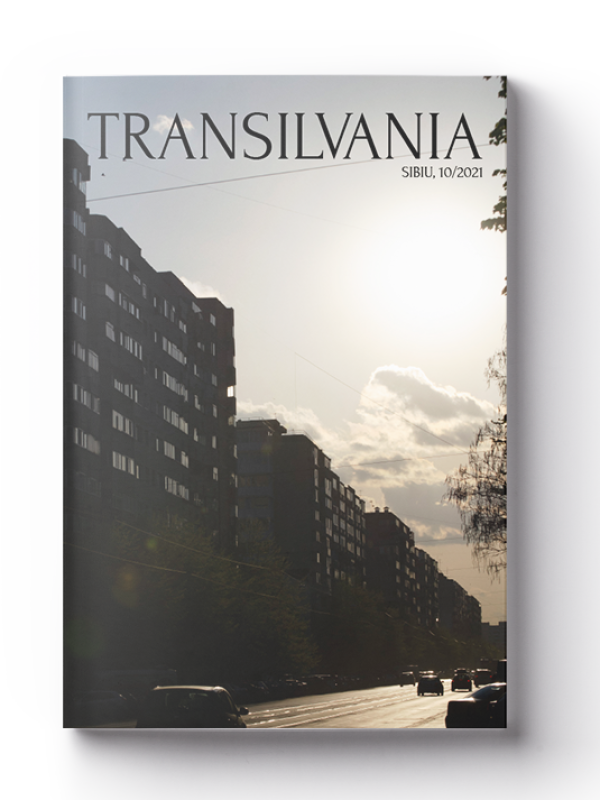
cover site Transilvania 10.2021
Revista: Transilvania
Anul Publicarii:2021
Print ISSN: 0255-0539

Științe socio-umane

Arte vizuale

Filozofie și studii sociale

Antropologie și etnologie

Sociologie

Științe politice & juridice

Istorie & Antropologie

Studii culturale

Biblioteconomie

Științele limbii

Științele economice

Antropologie. Studii filozofice

Teologie

Studii literare

Autor: Ciprian STREZA
Email: ciprian_streza@yahoo.com

“tὴν ἀρχαίαν ἐπιζητοῦμεν πατρίδα”: Christians in Search of the Ancient Homeland – Attempts to Define a Theology of Migration

Abstract: Migration, as the displacement of peoples, triggered throughout the centuries by wars, natural disasters, political oppression, poverty and famine, religious persecution is a profound human experience and an intimate part of the biblical saga from the beginning, along with the social, anthropological and spiritual issues it raises. The history of Israel is rooted in migration and the Jewish Diaspora is the most extensive and well documented migrations in antiquity. The wandering of the patriarchs, the Exodus, the exile, the dispersion and the return to Jerusalem are embedded in the consciousness of the people of Israel and helped define their character as a people and the nature of their relationship to God. For the Christian Church, migration was a phenomenon that configured its history and forced it to define itself and to specify the eschatological goal of its missionary. The patristic writings of the first centuries indicate that Christians have always considered themselves pilgrims to the heavenly homeland, not having a particular homeland here on earth, although they have always managed to adapt to the social and political conditions of the times. Starting from these historical, social and spiritual premises, the present study proposes a reflection both from a biblical and patristic perspective on the migration phenomenon, trying to offer the premises of a debate in the space of orthodox theology on this current topic.

Keywords: Migration, Jewish Diaspora, Eschatology, Early Christianity, Christian Mission, Theology of Migration.

Citation suggestion: Streza, Ciprian Ioan. “Τὴν ἀρχαίαν ἐπιζητοῦμεν πατρίδα: Creștinii în căutarea patriei celei dintâi – încercări

de definire a unei teologii a migrației”. Transilvania, no. 10 (2021): 1-8.

https://doi.org/10.51391/trva.2021.10.01.

Autor: Dragoş BOICU
Email: dragos.boicu@ulbsibiu.ro

Saint John Chrysostom and the Gothic Migration

Abstract: This article aims to present a significant episode in the history of migrations in Europe: the passage of the Visigoths into the Roman Empire south of the Danube (376 A.D.) and their transformation from afflicted refugees into fearsome insurgents. Beyond this spectacular evolution, the author evaluates the position of the Church and the attitude of Bishop John Chrysostom towards these migrants in a context in which xenophobic feelings have reached a climax.

Keywords: migration, Goths, Late Antiquity, John Chrysostom, Eastern Roman Empire, Constantinople

Citation suggestion: Boicu, Dragoş. “Sfântul Ioan Gură de Aur şi migraţia goţilor”. Transilvania, no. 10 (2021): 9-14.

https://doi.org/10.51391/trva.2021.10.02.

Autor: Iuliu-Marius MORARIU
Email: morariu_iuliumarius@yahoo.com

A Special Category of Migrants: The Romanian Exile During the Communist Period

Abstract: The Romanian exile, an important category of political opponents to the Romanian Communist regime, constituted a social and intellectual category which has been investigated by researchers who edited their diaries, memoirs, or letters and published studies regarding their works and lives. Nonetheless, there are some aspects still to be revealed regarding this sociopolitical category of individuals and their work. Thus, we will try to fit the exile within the category of migrants – and examine how the Romanian Securitate regarded them from this perspective. We will therefore resort to their works, studies, and articles, and also to documents found in the Securitate Archives, in an attempt to present their perception by the repressive political body which forced them into migration/exile.

Keywords: Romanian exile under communism, exile as political migration, Virgil Gheorghiu, Andre Scrima, Radio Free Europe, political assassination, Securitate.

Citation suggestion: Morariu, Iuliu-Marius. “A Special Category of Migrants: The Romanian Exile During the Communist

Period”. Transilvania, no. 10(2021): 15-21.

https://doi.org/10.51391/trva.2021.10.03.

Autor: V.K. McCARTY
Email: VKMcPax@gmail.com

Driven to Move into the Wilderness to Pray: The Fourth-Century Desert Tradition

Abstract: This study examines fourth-century spiritual elders who responded to the command of Christ by migrating into the desert hills outside their home-towns in order to seek the presence of God in solitary prayer; and finds that their deep spiritual askesis, handed on from elder to disciple from generation to generation, produced a rich treasury of wisdom Sayings (Apophthegmata) treasured in the heritage of the Orthodox Church.

Keywords: migration, asceticism, Apophthegmata, early Christianity, spirituality

Citation suggestion: McCarty, V.K. “Driven to Move into the Wilderness to Pray: The Fourth-Century Desert Tradition.” Transilvania, no. 10 (2021): 22-25. https://doi.org/10.51391/trva.2021.10.04.

Autor: Sergey TROSTYANSKIY
Email: Sergey.Trostyanskiy@marist.edu

The World and the Kingdom of Heaven: An Orthodox Perspective on Migration

Abstract: This article aims to explore the subject of migration within the horizons of imperial unicity by reviewing the historical roots and modern modifications of cosmopolitan ideology. It intends to detect its theoretical foundations and test them against the Orthodox missionary goal to become a citizen of the kingdom of heaven.

Keywords: migration, imperial unicity, cosmopolitanism, missionary, Orthodox Church

Citation suggestion: Trostyanskiy, Sergey. “The World and the Kingdom of Heaven: An Orthodox Perspective on Migration”. Transilvania, no. 10 (2021): 26-33.

https://doi.org/10.51391/trva.2021.10.05.

Autor: Elizabeth ESTERHUIZEN, Alphonso GROENEWALD
Email: alphonso.groenewald@up.ac.za

Towards a theology of migration: A survival perspective from Isaiah 1-12

Abstract: The aim of this paper is to turn the lens towards the pre-migration and resilience processes within the context of the imminent forced migration as found in Isaiah 1-12. The article addresses not only the matter of pre-migration and collective trauma but also the ensuing resilience and hope that is embedded in the text. Understanding the concepts that underpin premigration to trauma and hope, the authors have engaged Isaiah 1-12, which present substantial pre-migration trauma markers of collective trauma, resilience and hope in the text. This article offers original research in the field of pre-migration trauma studies in Isaiah 1-12, as very little research has been done on this topic. An attempt was made to start a new conversation and understanding about forced migration and trauma within the field of Isaiah 1-12 and biblical studies.

Keywords: pre-migration, forced migration, trauma, hope, resilience, Isaiah

Citation suggestion: Esterhuizen, Elizabeth, Alphonso Groenewald. “Towards a theology of migration: A survival perspective from Isaiah 1-12.” Transilvania, no. 10 (2021): 34-41.

https://doi.org/10.51391/trva.2021.10.06.

royalbet giriş

Autor: Buhle MPOFU
Email: buhle.mpofu@up.ac.za

I’m Not a Fruit which Fell from a Tree: Migrants’ Discourses of Resistance in the Context of Dehumanization and Economic Exploitation in Southern Africa

Abstract: This discussion highlights how some African foreign migrants living in South Africa articulate resistance to exploitative and corrupt tendencies in what emerges as life affirming and death denying developmental discourses. This article triangulated data collected from a Module PRT112 – an Introduction to Missiology – with data which emerged from a study designed to interrogate the lived experiences of foreign migrants in Johannesburg South Africa. Framed within the postcolonial paradigm, the contribution is premised on the idea that the discourses of African migrants are a viable hermeneutical optic for a theological and developmental agenda which legitimises marginal voices of the poor. betwild giriş At the heart of this critical discussion is a statement; ‘I am not a fruit which fell from a tree,’ which emerged as a response to ward off and rebuke corrupt public officials who often demand bribes from foreign migrants as a way to keep them intimidated and confined to liminal working conditions in the informal South African economic sector. By interrogating the radical response ‘I am not a fruit’ alongside data which reflect hostility towards migrants, the study highlights religious resistance to economic exploitation and life denying practices. These articulations are located within the postcolonial resistance discourses which counter neoliberal and dehumanizing tendencies and the study concludes by drawing on Bosnian and Rwandan examples to caution against dehumanization of migrants as it sets parameters for catastrophic genocide and other forms of violence perpetrated in the past.

Keywords: Religion, development, exploitation, migration, dehumanization, postcolonial, South Africa

Citation suggestion: Mpofu, Buhle. “I’m Not a Fruit which Fell from a Tree: Migrants’ Discourses of Resistance in the Context of Dehumanization and Economic Exploitation in Southern Africa.“ Transilvania, no. 10 (2021): 42-49.

https://doi.org/10.51391/trva.2021.10.07.

Autor: Jaco BEYERS
Email: jaco.beyers@up.ac.za

Abstract: Migration is viewed as a natural social phenomenon. Reasons for migration and responses to migration may vary. Much research in recent times has been done on migration. This contribution approaches migration from a theological perspective and tries to emphasize the way Christian communities should view the entry of migrants into a community. The way the church should respond to migrants entering a community is discussed by way of three possible perceptions of migrants, either perceived as a threat, an asset or an opportunity. Migration may result in the continuation or discontinuation of beliefs by the migrant. The discontinuation of religion may be expressed as syncretism or secularization. Christian communities ought not to perceive the presence of the migrant as an entity needing assistance or object of conversion. Christian communities should also see migration as an opportunity for indigenous Christian communities to reflect on their own identity and attitude towards expressing inclusivity.

Keywords: migration, hospitality, stranger, threat, asset, identity, scapegoat, syncretism, secularization, inclusivity

Citation suggestion: Beyers, Jaco. “Religion, Migration, Syncretism and Secularization”. Transilvania, no. 10 (2021): 50-56.

https://doi.org/10.51391/trva.2021.10.08.

alobet giriş

Autor: Dumitra BARON
Email: dumitra.baron@ulbsibiu.ro

Readers’ Handbook – Cioran and the Issues of Reading

Abstract: In this article, we propose to identify some theoretical issues on the reading act, as they are constantly formulated by the Romanian-born French writer Cioran (1911-1995) in his works and notebooks, constituting by their unsystematic characteristics an authentic readers’ (fragmented) handbook. After the identification of several types of reading that Cioran mentions in his writings, we will mainly focus our observations on comparing and associating them to the theories of reading of his time (considering some concepts and aesthetic practices as defined by Hans Robert Jauss, Roland Barthes or Antoine Compagnon).

Keywords: reading, lucidity, aesthetic experience, alterity, Cioran.

Citation suggestion: Baron, Dumitra. “Bréviaire des lecteurs – Cioran et les enjeux du lire”. Transilvania, no. 10 (2021): 57-60.

https://doi.org/10.51391/trva.2021.10.09.

Autor: Cosmin CIOTLOȘ
Email: cosminciotlos@gmail.com

Borsec Mineral Water Baths:

Spritzer/ Blends/ Spirits Featured in the Literature of the Beginnings

Abstract: The present study unfolds on several layers.In the first place, it propounds a history of the relationship between the alcoholic drink that is popularly known as „spritz” and Romanian literature, illustrated with examples from the 19th century and the beginning of the 20th. Secondly, it restores a terminology area, determining the first usage of the word (with all its synonyms) and what prominent or less-known authors have frequently utilized it. Thirdly, it inspects documentation data which thus reinstates two potential forerunners of this interstitial phenomenon: Anton Pann and Daniil Scavinschi. In the fourth place, it exposes a series of thresholds in the evolution of the Romanian mentality, based on the level of tolerance or disapproval that writers have expressed, when confronted with this liquor.

Keywords: Romanian literary history, wine anthropology, mineral water, Anton Pann, Daniil Scavinschi, N.T. Orășanu, I.L. Caragiale, G. Ranetti, Ștefan Baciu

Citation suggestion: Ciotloș, Cosmin. “La feredeiele Borsecului: șprițuri/ macmahoane/ mișmașuri în literatura începuturilor”. Transilvania, no. 10 (2021): 61-69.

https://doi.org/10.51391/trva.2021.10.10.

Autor: Mirela NAGÂȚ
Email: mirela.nagat@drd.unibuc.ro

Radu Stanca as Prose Writer

Abstract: The present study discusses the only attempt Radu Stanca made to become a prose writer: „The Black Deck”, posthumous short story published in 1975 in Manuscriptum. The origins of this text, revealed by his correspondence with I. Negoițescu, consist in a double crisis: a personal one (a failed love story with german young woman) and a social one, deriving from the communist regime installed in the late 40’s, which brought him an existential seizure.

Keywords: Post-War romanian literature, decadent short story, biography, Radu Stanca, I. Negoițescu, Ion Vartic

Citation suggestion: Nagâț, Mirela. “Prozatorul Radu Stanca”. Transilvania, no. 10 (2021): 70-73.

https://doi.org/10.51391/trva.2021.10.11.

Autor: Rodica ILIE
Email: rodicamariailie@gmail.com

Abstract: There is plain filiation between the atmosphere and the general configuration of the movements we call the historical Avant-Garde and the spirit of the revolutionary Romanticism. Literary theorists and critics brought it to the fore, both organically – insofar as the similarities between the two paradigms are spelled out by the dynamics of the history of sensibility and taste – and typologically, in its mythological and thematic redundancies, in reiterating acute polemical gestures and attitudes or in manifesting violence against tradition. This study aims to articulate the artistic and political duality defining these two artistic paradigms, by using comparative evaluation and by illustrating canonical notions such as subject, revolution, progress.

Keywords: Romanticism, Avant-Garde, critical conscience, dehumanization, modernity,progress, revolution, subject.

Citation suggestion: Ilie, Rodica. “Avangarda revizitată (I)”. Transilvania, no. 10 (2021): 74-80.

https://doi.org/10.51391/trva.2021.10.12.

Autor: Laura MANEA
Email: elena.manea@unitbv.ro

The Role of the Press and Censorship for the Literary Circles

in Romania’s Communist Past

Abstract: The study takes on the role of the press, publishers, writers’ associations for the German literary circles in Romania in the period 1949-1989. These institutions endeavored to support young authors by publishing their literary creation but only under certain conditions which are detailed in the article. Another focus is on how censorship and self-censorship worked. The examples given show different effects of censorship on writers and poets. When some authors dared to slip texts with a subversive message, other writers preferred to stay away from the literary scene because they thought it was better to write literature for the desk drawer (Schubladenliteratur) and wait for better times to publish it. The result of these constraints referring to the writing process finally determined the authors to encode criticism in their texts, readers being forced to read between the lines.

Keywords: German literary circles in communist Romania, literary scene, publishers, organisation of print media, censorship

Citation suggestion: Manea, Laura. “Die Rolle der Presse und Zensur für die Literaturkreise in der kommunistischen Vergangenheit Rumäniens”. Transilvania, no. 10 (2021): 81-87.

https://doi.org/10.51391/trva.2021.10.13.

Autor: Eva-Nicoleta BURDUȘEL
Email: eva.burdusel@ulbsibiu.ro

The Role of Cultural Translation for Literary Historiography

Abstract: The main objective of the present paper is to highlight the relevance of translation in the scholarly endeavour of placing and firmly setting national literature in a wider context, i.e. planetary literature. Moreover, due to its complexity, long tradition, noble endeavour, worldwide mission and overarching goal, translation – as a fourfold process encompassing the linguistic, cultural, interpretive, comparative dimensions, according to Christian Moraru – serves as a most effective connector between words and worlds, in addition to overcoming successive waves regarding the state of “translatability” as Emily Apter scholarly theorized it, from her first thesis “nothing is translatable” to the twentieth thesis “everything is translatable”, where all the intermediary stages, hypotheses, and other theoretical assumptions further investigated.

Keywords: world-system analysis, centre-periphery in literary studies, cultural translation, planetary literature

Citation suggestion: Burdușel, Eva-Nicoleta. “The Role of Cultural Translation for Literary Historiography”. Transilvania, no. 10 (2021): 88-90.

https://doi.org/10.51391/trva.2021.10.14.

Autor: Carmen OPRIȘOR
Email: carmen.oprisor@ulbsibiu.ro

Miron Costin and his Epoch

Abstract: In the present article we pointed out the historical context in which our culture came into being. We also showed what social and cultural conditions of the Middle Ages influenced the evolution of our civilization. Miron Costin`s work, a Romanian historian from the 17th century, was imbued with literary features. He was educated in Poland and he became an important scholar. Costin was very concerned with writing a chronicle with a complex structure and with elaborate sentences. He created memorable human portraits in vivid colours, and his remarks upon history and human nature are still relevant to us today. He was also the first writer whose chronicle proved to be the work of a gifted memorialist.

Keywords: Miron Costin, history, chronicle, Romanian culture, Humanism, Polish influences.

Citation suggestion: Oprișor, Carmen. “Miron Costin și epoca în care a trăit”. Transilvania, no. 10 (2021): 91-96.

https://doi.org/10.51391/trva.2021.10.15.

Științe vizuale

Dosar

Istorie si studii culturale

Istorie

Științele educației

Filozofie și studii politice

Stiintele comunicarii

Etnografie si folclor

Fizica speculativa

Recenzii

Economie

Artele spectacolului

Eveniment