
Search our journals and articles

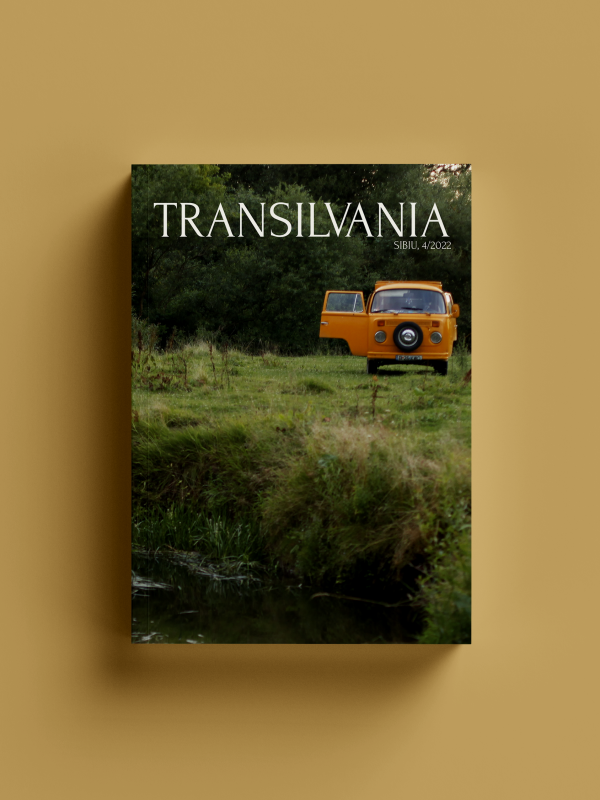
RT 4 / 2022

Transilvania 4.2022 featured
Revista: 4 / 2022
Anul Publicarii:2022
Print ISSN: 0255-0539
RT 4 / 2022

Științe socio-umane

Arte vizuale

Filozofie și studii sociale

Antropologie și etnologie

Sociologie

Științe politice & juridice

Istorie & Antropologie

Studii culturale

Autor: Andrei GORZO, Veronica LAZĂR
Email: andrei.gorzo@unatc.ro

A Slight Unease About Capitalism: Radu Jude’s The Happiest Girl in the World and the New Romanian Cinema

Abstract: The article discusses the aesthetics and the politics of the so-called New Romanian Cinema (a major post-2005 sensation on the international art-cinema circuit), succintly assessing its novelty in both a national and an international cinematic context. It then proceeds to discuss Radu Jude’s debut feature, The Happiest Girl in the World (2009), as a NRC film, typical in some ways, atypical in others. The paper highlights the film’s critique of advertising and the nuclear family.

Keywords: Radu Jude, New Romanian Cinema, post-communism, capitalism, advertising, the nuclear family, Cristi Puiu, Lucian Pintilie.

Citation suggestion: Gorzo, Andrei, and Veronica Lazăr. “A Slight Unease About Capitalism: Radu Jude’s The Happiest Girl in the World and the New Romanian Cinema.” Transilvania, no. 4 (2022): 01-14.

https://doi.org/10.51391/trva.2022.04.01.

Autor: Andrei NAE
Email: andrei.nae@lls.unibuc.ro

(Anti)Colonial Anti-Communism in S.T.A.L.K.E.R. Shadow of Chernobyl: Appropriating the Anti-Colonial Rhetoric of Heart of Darkness and F.E.A.R. to Criticize Soviet Communism

Abstract: This article analyses the anti-communist rhetoric of the popular Ukrainian video game S.T.A.L.K.E.R.: Shadow of Chernobyl which was developed by GSC Game World and released in 2007. In this paper I argue that, in order to mount a humanist critique against Soviet communism, the game borrows the anti-colonial discursive structure of Joseph Conrad’s Heart of Darkness filtered through the video game F.E.A.R. If colonialism is predicated on the juxtaposition of territorial expansion and a progressive temporality towards a civilizational ideal, then Heart of Darkness and F.E.A.R. convey a critique of colonialism by highlighting how spatial progress brings about temporal regression manifested as a dissolution of the self. To show this, they employ the doppelgänger convention. Both protagonists representing white civilization are on quest to find a character who has been ‘contaminated’ by the ‘heart of darkness.’ This latter character is eventually revealed to be a negative cultural doppelgänger of the protagonist who has assimilated otherness to the point of no return. By the same token, in S.T.A.L.K.E.R.: Shadow of Chernobyl the psychological regression of the protagonist is mapped onto spatial progress towards the heart of communism, in this case Reactor #4 of the Chernobyl Nuclear Power Plant. S.T.A.L.K.E.R. reworks the doppelgänger convention by identifying the protagonist with the character ‘gone native,’ i.e. gone communist, not only symbolically, but also physically. This enables the game to put forth two scenarios, namely one where the main character overcomes communism, and one where he embraces it. By offering both endings, the game maintains two contradictory views on the communist past. One ending suggests that communism can eventually be overcome, while the other postulates the communist past is here to stay.

Keywords: postcolonialism/postcommunism; intertextuality; intermediality; horror; first-person shooter; doppelgänger.

Citation suggestion: Nae, Andrei. “(Anti)Colonial Anti-Communism in S.T.A.L.K.E.R.: Shadow of Chernobyl. Appropriating the Anti-Colonial Rhetoric of Heart of Darkness and F.E.A.R. to Criticize Soviet Communism.” Transilvania, no. 4 (2022): 15-21.

https://doi.org/10.51391/trva.2022.04.02.

Autor: Ligia SMARANDACHE
Email: ligia.smarandache@ubbcluj.ro

Vernacular Videos in the Participatory Culture of Web 2.0: The Contribution of Amateurs and Artists to the Development of Audio-visual Language

Abstract:The revolution in communication technologies is changing language and this, in turn, will change human thinking. This statement can now be taken for granted. The fact that it is supported by many authors, including Marshal Mc Luhan (1964), Neil Postman (1992) and Lev Manovich (2002), is already evidence of it. The issue of information in the public sphere of Web 2.0 is controversial and much debated. The democratization of cyberspace brings with it the chance to develop a complex audiovisual grammar that anticipates video art and experimental films. The online environment features both to audiovisual experiments undertaken by amateur videographers and professional elites. In this place of extremes, there is room for developing both narrative and non-narrative expressions of self-reflexive audiovisual products. Whereas Lev Manovich (2002) states that the avant-garde becomes legitimised in the cut and paste era of digital filmmaking, which replaces the sequential narrative, this article sets out to determine the contribution of amateur videographers and artists to the development of the new audiovisual grammar of web 2.0. My case studies focus on the two main tendencies of home-made audiovisual products, both of them leading to the effectiveness of audiovisual communication. The video-confession replaces the visual narrative illustration with a form of orality that increases the audience’s imaginative participation. The DIY-videos, non-narrative metaphors in essay form, complement abstract comprehension. These new forms approach Astruc’s concept of caméra stylo, enhancing the audiovisual communication of the mass audience. Thus, the audience is able to comprehend a richer and more sophisticated cinematic language.

Keywords: Vernacular-videos, Video-essay, Film-essay, Audiovisual language, Video-confession.

Citation suggestion: Smarandache, Ligia. “Vernacular Videos in the Participatory Culture of Web 2.0: The Contribution of Amateurs and Artists to the Development of Audio-visual Language.” Transilvania, no. 4 (2022): 22-29.

https://doi.org/10.51391/trva.2022.04.03.

Biblioteconomie

Științele limbii

Științele economice

Antropologie. Studii filozofice

Teologie

Studii literare

Cuprins | Contents

Studii culturale

Andrei Gorzo & Veronica Lazăr | 1 | A Slight Unease About Capitalism: Radu Jude’s The Happiest Girl in the World and the New Romanian Cinema

Andrei Nae | 15 | (Anti)Colonial Anti-Communism in S.T.A.L.K.E.R. Shadow of Chernobyl: Appropriating the Anti-Colonial Rhetoric of Heart of Darkness and F.E.A.R. to Criticize Soviet Communism

Ligia Smarandache | 22 | Vernacular Videos in the Participatory Culture of Web 2.0: The Contribution of Amateurs and Artists to the Development of Audio-visual Language

Studii literare

Emanuel Modoc, Alex Goldiș | 30 | Nationalizing International Prestige: Foreign Literatures in Romanian Interwar Periodicals

Andreea Apostu | 40 | Ascunderi textuale: trei recenzii publicate de Mircea Eliade sub pseudonim în ultimul număr al Revistei universitare [Textual Coverings: Three Reviews by Mircea Eliade Published under Pseudonym in the Last Issue of Revista universitară]

Marta Petreu | 50 |  Ce n-a fost Blaga niciodată [What Blaga Never Was]

Mircea A. Diaconu | 60 | A mânca la Viena. Digresiuni despre ce înseamnă să fii bucovinean în capitala Imperiului [Eating in Vienna: Digressions on what it Means to Be from Bukovina in the Empire’s Capital]

Ana Catană-Spenchiu & Maria Moruz | 75 | Despre notele marginale din cartea Ieșirea din manuscrisul de lucru (ms.70 B.A.R.) al traducerii Bibliei de la Blaj (1795) [About the Marginal Notes in the Book Exodus from the working manuscript (Ms.70 B.A.R.) of the translation of the Blaj Bible (1795)]

Maria Sass | 83 | REVIEW: Petro Rychlo, ed. Mit den Augen von Zeitgenossen. Erinnerungen an Paul Celan

Istorie

Konstantin Ashrafyan | 86 | Problem Points of Various Research Methods and Prospects for Their Solution in the Study of 16th- to 18th-Century Spanish Florida

Autor: Emanuel MODOC, Alex GOLDIȘ
Email: emanuel.modoc@ubbcluj.ro

Nationalizing International Prestige: Foreign Literatures in Romanian Interwar Periodicals

Abstract: Drawing from recent developments in the field of World Literature, but also earlier attempts at mapping local cultural traditions, contexts, and affinities, our proposal attempts to investigate the dominant patterns of cultural criticism within the literary publications active during the interwar period. Using an exhaustive resource of metadata related to the relations between Romanian literature and foreign literatures developed over the span of twenty years, we plot a network abstraction focused on revealing patterns and trends of reception within Romanian cultural magazines. This process of “topic modeling” cultural criticism will serve to illustrate the dominant subject matters present in the Romanian cultural press. Following our data analysis, we will attempt to provide an explanatory model of “theory production” in Romanian literary culture that accounts for the seemingly “ahistorical” nature of autochthonous localizations.

Keywords: topic modelling, periodical communities, Digital Humanities, cultural criticism, Romanian literature

Citation suggestion: Modoc, Emanuel, and Alex Goldiș “Nationalizing International Prestige: Foreign Literatures in Romanian Interwar Periodicals.” Transilvania, no. 4 (2022): 30-39.

https://doi.org/10.51391/trva.2022.04.04.

Autor: Andreea APOSTU
Email: apostuandreea26@gmail.com

Textual Coverings: Three Reviews by Mircea Eliade Published under Pseudonym in the Last Issue of Revista universitară

Abstract: After his resignation from “Revista universitară” [“Universitary Journal”] in 1926, due to the scandal ignited by his review of Nicolae Iorga’s “Essai de synthèse de l’histoire de l’humanité,” Eliade continued to collaborate with the publication under the pseudonym “S.N.”. The three reviews analyzed in this article may seem of little importance – short informative texts, they nonetheless reveal the diversity of the young author’s interests and the persistence of several themes from Eliade’s youth to his late maturity: Italian culture (in his review of Alexandru Marcu’s “The Italian Romantics and Romanians”), B.P. Hasdeu’s life and works, metapsychic experiences and esoterism (through discussing Alberto Fidi’s “Treatise on Talismans”). These short texts reveal what we have called a sort of individual “longue durée” – a long-term affinity for certain subjects which evolves gradually and thoroughly throughout Eliade’s life. His passion for B.P. Hasdeu’s work and personality, for instance, started with a highschool conference, continued with an unfinished book project (revealed recently at an auction) and grew into an edition of Hasdeu, published in 1937: “Literary, Moral, and Political Writings.” Our article also analyses the connections between Eliade’s early articles and this new, unprecedented material, that appeared in March 2022 at a national auction.

Keywords: Mircea Eliade, manuscripts, Western esotericism.

Citation suggestion: Apostu, Andreea. “Ascunderi textuale: trei recenzii publicate de Mircea Eliade sub pseudonim în ultimul număr al Revistei universitare.” Transilvania, no. 4 (2022): 40-49.

https://doi.org/10.51391/trva.2022.04.05.

Autor: Marta PETREU
Email: martapetreu@yahoo.com

What Blaga Never Was

Abstract: The present study is a revisitation of Lucian Blaga’s work in all its compartments (from literary to philosophical), thoroughly deconstructing the labels attached to it by the different ideologies of three periods: the interwar, the communist, and the post-communist ones. Most of them abusive and/or erroneous, these labels transformed Blaga’s work into an artistic and theoretical corpus suffocated by ideological clichés. Using most diverse sources (from letters and memoirs to treatises of political sciences and biology), the author shows somehow apophatically what Blaga was not – concluding that, while traversing complicated eras of political extremism, he managed to remain immune to all their ideologies.

Keywords: Lucian Blaga, modern Romanian literature, modern Romanian philosophy, political extremism, interwar period, communist period.

Citation suggestion: Petreu, Marta. “Ce n-a fost Blaga niciodatăt.” Transilvania, no. 4 (2022): 50-59.

https://doi.org/10.51391/trva.2022.04.06.

Autor: Mircea A. DIACONU
Email: mircea_a_diaconu@hotmail.com

Eating in Vienna: Digressions on what it Means to Be from Bukovina in the Empire’s Capital

Abstract: Once in Vienna to get an education, the young Romanians that left Bukovina, be they sons of boyars, priests, peasants, or public servants, often found themselves in awe. One way or another, they soon experienced a hard time getting board and lodgings. To make ends meet, they had to pawn their belongings or borrow money, which spelled trouble for all of them. Consequently, their food choice and cooking skills welcome a cultural studies approach that reveals their worldview, identity or history proper. Taking into account mostly unknown memoirs, diaries and letters, the present paper aims to give insight into the eating habits and the world of young Bukovinians living in Vienna. Fitted within a chronological sequence, the case studies under scrutiny range from the Hurmuzachi brothers (Constantin, Eudoxiu, Gheorghe), Eminescu, and the so-called ‘Bukovinian colony’ to Ciprian Porumbescu and, eventually, Leca Morariu. Strangely enough, Morariu, although wounded in WWI, is the only one who managed to eat well while in Vienna. However, both his war and Vienna diaries are meaningful from many other perspectives than his meals. Beyond the actual or the implied questions they trigger, my somewhat random reading comes across as an opportunity to rediscover a lost world.

Keywords: Vienna, Bukovinian gastronomy, Eudoxiu Hurmuzachi, Eminescu, Ciprian Porumbescu, Leca Morariu.

Citation suggestion: Diaconu, Mircea A. “A mânca la Viena. Digresiuni despre ce înseamnă să fii bucovinean în capitala Imperiului.” Transilvania, no. 4 (2022): 60-74.

https://doi.org/10.51391/trva.2022.04.07.

Autor: Ana CATANĂ-SPENCHIU, Maria MORUZ
Email: anaspenchiu@gmail.com

About the Marginal Notes in the Book Exodus from the working manuscript (Ms.70 B.A.R.) of the translation of the Blaj Bible (1795)

Abstract: The biblical translation made by Samuil Micu, known as the Blaj Bible (1795), has an impressive number of notes. Originally written on the edge of the text or overwritten, the glosses made by the scholar reflect his work site. A significant number of them in the working manuscript (MS.70, B.A.R.) managed to find their place in the secondary version copied for printing (MS.111 B.A.R.) and later in the printed form. Samuil Micu relies in his approach on the model offered by the Bucharest Bible (1688), on the Septuagint in the edition of Lambert Bos (1709), the source text of his translation, as well as on other texts consulted to elucidate some translation difficulties. We aim to follow, as far as possible, through a comparison of the second biblical book, the Exodus, from the two texts (MS.70) and the printed form (B1795) the way in which the notes written in the original form of the text can be found in the printed version, taking into account the revisions from the transcribed manuscript (MS.111).

Keywords: glosses, biblical text, manuscripts, translation, Samuil Micu, Exodus

Citation suggestion: Catană-Spenchiu, Ana, and Maria Moruz. “Despre notele marginale din cartea Ieșirea din manuscrisul de lucru (ms.70 B.A.R.) al traducerii Bibliei de la Blaj (1795).” Transilvania, no. 4 (2022): 75-82.

https://doi.org/10.51391/trva.2022.04.08.

Autor: Maria SASS
Email: maria.sass@ulbsibiu.ro

REVIEW: Petro Rychlo, ed. Mit den Augen von Zeitgenossen. Erinnerungen an Paul Celan

Abstract: The memoir authored by the Ukrainian Germanist Petro Rychlo, whose first edition was published at Suhrkamp with the occasion of the centennial anniversary of Paul Celan’s birth, includes a chronological selection of 55 texts from all the stations of the poet’s life. The volume pursues a better knowledge of Paul Celan as individual, of his character and his psychology, aspects that could have collectively contributed to the tragic outcome of his troubled life. Paul Celan is revealed as a complex personality, both through his poetic uniqueness and existential tragedy, as well as in his greatness and human vulnerability. The author argues for the importance of getting acquainted with the biographical aspects surrounding Celan – the Holocaust, the great love for his mother, the search for his Jewish identity – and emphasizes their special significance in deciphering the hermetic Celanian poetry.

Keywords: Paul Celan, Der Meridian, Alfred Margul Sperber, hermetic poetry, Bremer Literary Prize, Georg Büchner Literary Prize

Citation suggestion: Sass, Maria. “REVIEW: Petro Rychlo, ed. Mit den Augen von Zeitgenossen. Erinnerungen an Paul Celan.” Transilvania, no. 4 (2022): 83-85.

https://doi.org/10.51391/trva.2022.04.09.

Științe vizuale

Dosar

Istorie si studii culturale

Istorie

Autor: Konstantin ASHRAFYAN
Email: kea6465@mail.ru

Problem Points of Various Research Methods and Prospects for Their Solution in the Study of 16th- to 18th-Century Spanish Florida

Abstract: Making use of the method and the results of Herbert Eugene Bolton, founder of the Latin American Historical Review who proved that Spanish heritage is crucial for understanding American history, the article examines some of the main questions every researcher studying 16th-centiry Spanish Florida is confronted with. The author identifies important methodological problems regarding the topic and proposes some solutions, while also initiating specific debates on the development and Christianization of Spanish Florida during the 16th to the 18th centuries. The methodological conviction of the article is that scientists cannot avoid historicism; it also shows specific problems of the narrative and typological method, as well as the potential for further analysis of such methods as source studies and documentary. One also discusses the cartographic problem and the periodization of what is considered Spanish Florida in the 16th century.

Keywords: Spanish Florida, Christianization, American Indians, European colonialism.

Citation suggestion: Ashrafyan, Konstantin. “Problem Points of Various Research Methods and Prospects for Their Solution in the Study of 16th- to 18th-Century Spanish Florida.” Transilvania, no. 4(2022): 86-96.

https://doi.org/10.51391/trva.2022.04.10.

Științele educației

Filozofie și studii politice

Stiintele comunicarii

Etnografie si folclor

Fizica speculativa

Recenzii

Economie

Artele spectacolului

Eveniment