
Search our journals and articles

3 / 2024

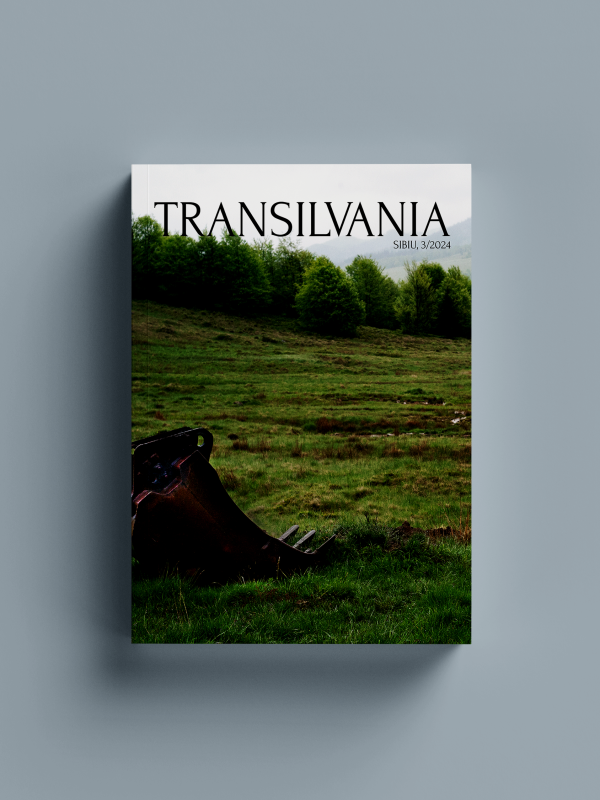
featured_Transilvania3_2024
Revista: 3 / 2024
Anul Publicarii:2024
Print ISSN: 0255-0539

Științe socio-umane

Arte vizuale

Filozofie și studii sociale

Antropologie și etnologie

Sociologie

Științe politice & juridice

Istorie & Antropologie

Studii culturale

Autor: Sofia ILIE
Email: sofia.ilie@ulbsibiu.ro

Abstract: In this essay I adress the issue of postsocialist transition as it was captured by three photographers of the former socialist states: Boris Mikhailov, Alexander Gronsky, Tamas Dezsӧ. The sudden transition that followed the fall of the Berlin Wall had visible consequences on the socio-economic reality in Eastern Europe, „the post-soviet man” trapped in a liminal space, on the border between a failed ideological project he tries to erase from its history (socialism) and one that fails to fulfil its promises, and even proves destructive (neo-liberalism). Combating normative Northwest European aesthetics, through the selected series of photographs I make a critique of the post-socialist period, showing in what way the new reality of late capitalism ruins homeless bodies and derelict spaces. Boris Michailov shows that the new dominant ideology is written in the flesh, choosing to take photos of the social class that suffers the most in post-socialism, and Alexander Gronsky and Tamas Dezsӧ contribute to a panorama of places that are no longer destinations in themselves, but unwelcoming or abandoned, because in late capitalism people migrate to metropolises.
Keywords: postsocialism, postcolonial effect, documentary photography, corporeality, corpo-politics of knowledge, normative aesthetics, liminal spaces. 3xlwin giriş

Anzaldúa, Gloria E., and Cherríe L. Morgana. This Bridge Called My Back: Writings by radical women of color, third edition. Bloomington IN: Third Woman Press, 2002.

Anzaldúa, Gloria E., and Analouise Keating. This Bridge we call Home: Radical visions for transformation. London & New York: Routledge, 2002.

Bailyn, John Frederick, Dijana Jelača, and Danijela Lugarić. The Future of (Post)Socialism: Eastern European Perspectives. Albany, NY: SUNY Press, 2018.

Bjelić, Dušan I., and Obrad Savić, ed. Balkan as Metaphor: Between Globalization and Fragmentation. Cambridge MA: The MIT Press, 2005.

Bourriaud, Nicolas. Estética relacional [Relational Aesthetics], translated by Cecilia Beceyro and Sergio Delgado. Buenos Aires: Adriana Hidalgo, 2008.

Buden, Boris. Zonă de trecere: Despre sfârșitul postcomunismului [Transition to Nowhere: On the End of Postcomunism], translated by Maria-Magdalena Anghelescu, introduction by Costi Rogozanu. Cluj-Napoca: Tact, 2012.

Cârstean, Svetlana. Sînt alta [I am Another]. Bucharest: Nemira, 2021.

Farago, Jason. “The Life’s Work of Photography’s Great Trickster, and Ukraine’s Greatest Artist”, New York Times, 28 October 2022, https://www.nytimes.com/2022/10/28/arts/design/boris-mikhailov.html.

Fisher, Mark. Realism capitalist: Nu există nicio alternativă? [Capitalist Realism: Is there no Alternative?], translated by Paul-Teodor Cristescu, introduction by Ștefan Baghiu. Cluj-Napoca: Tact, 2022.

Himka, John-Paul, and Jeanna Beata Michlic. Bringing the Dark Past to Light: The Reception of the Holocaust in Postcommunist Europe. Lincoln NE: University of Nebraska Press, 2013.

Jameson, Frederic. Postmodernismul sau logica culturală a capitalismului târziu [Postmodernism, or the Cultural Logic of Late Capitalism], translated by Alex Văsieș and Vlad Pojoga, introduction by Andrei Terian. Sibiu: ULBS, 2021.

King, Charles. “Post-Postcommunism: Transition, Comparison, and the End of «Eastern Europe».” World Politics 53, no. 1 (2000): 143-172.

Miticov, Dimitri. Efectul de peliculă [Film effect], second edition. Bucharest: Polirom, 2006.

Moghadam, Val. “Against Eurocentrism and Nativism: A Review Essay on Samir Amin’s Eurocentrism and Other Texts.” Socialism and Democracy 5, no. 2 (2007): 81-104. http://dx.doi.org/10.1080/08854309108428045.

Moore, David Chioni. “Is the Post- in Postcolonial the Post- in Post-Soviet? Toward a Global

Postcolonial Critique.” PMLA 116, no. 1 (2001): 111-128.

Müler, Martin. “Goodbye, Postsocialism!” Europe-Asia Studies 71, no. 4 (2019): 533-550. https://doi.org/10.1080/09668136.2019.1578337.

Pasternak, Gil. “Introduction: Photography in Transitioning European Communist and Post-Communist Histories.” Photography and Culture 12, no. 2 (2019): 139-149. https://doi.org/10.1080/17514517.2019.1603616.

Pasti, Vladimir. România în tranziție. Căderea în viitor [Romania in transition. The fall into the future]. Bucharest: Nemira, 1995.

Pârvulescu, Anca. “European Racial Triangulation.” In Postcolonial Transitions in Europe, edited by Sandra Ponzanesi and Gianmaria Colpani, 25-46. London & New York: Rowman & Littlefield International, 2015.

Pârvulescu, Anca. “Eastern Europe as Method.” The Slavic and East European Journal 63, no. 4 (2019): 470-481.

Pârvulescu, Anca and Manuela Boatcă. Creolizing the Modern: Transylvania across Empires. Ithaca NY: Cornell University Press, 2022.

Spivak, Gayatri Chakravorty. A Critique of Postcolonial Reason: Toward a History of the Vanishing Present, second edition. Cambridge MA: Harvard University Press, 1999.

Svašek, Maruška. Postsocialism: Politics and Emotions in Central and Eastern Europe. Oxford & New York: Berghahn Books, 2006.

Ștefănescu, Bogdan. Patrii din cuvinte. O tropologie a discursurilor identității naționale [Homelands of Words: A Tropology of National Identity Discourses]. Bucharest: Editura Universității din București, 2017.

Tlostanova, Madina. Postcolonialism and Postsocialism in Fiction and Art: Resistance and Re-existence. London & New York: Palgrave Macmillan, 2017.

Autor: Liri CHAPELAN
Email: chapelan.liri@unatc.ro

The Reception of Video Technology in Romanian Late Socialist Press

 bahix güncel giriş
Abstract: This paper explores the impact of video technology on Romanian papers during the last decade of socialism, particularly through its influence on cinematography. The significant changes in film practices due to advancements in audio-video capture, processing, and broadcasting sparked both apprehension and enthusiasm in Romanian thematic press. Initially treated as curiosities or specific disturbances in the media landscape, these developments eventually prompted more philosophical and speculative articles towards the end of the decade. These articles often critiqued the perceived decline in audiovisual content quality, attributing it to the medium’s appeal to the lowest common denominator of viewers and expressing concern for the preservation of cinema as an art form.

Acknowledgement: Această lucrare a fost susținută de proiectul „Philosophy in Late Socialist Europe: Theoretical Practices in the Face of Polycrisis” finanțat de Uniunea Europeană – NextgenerationEU și Guvernul României, în cadrul Planului Național de Redresare și Reziliență pentru România, contract nr. 760044//23.05.2023, cod PNRR-C9-I8-CF104/15.11.2022, prin Ministerul Cercetării, Inovării și Digitalizării, în cadrul Componentei 9, Investiția I8.


Bibliography

Bălan, Sorin Ovidiu. “Mini-cinematograf cu maxi-profit” [Mini-Cinema with Maxi-Profit]. Scânteia Tineretului, no. 12233, October 1988, 4.

Bostan, Dan, Șerban Pretor, Vladimir Schor, and Ilie Stupineanu. “Posibilități de determinare a unor parametri spațio-temporali în antrenament și concurs cu ajutorul tehnicii video” [Possibilities for Determining a Spatial-Temporal Parameters in Training and Competition with Video Techniques]. Cultură fizică și sport, no. 12 (1987): 28-35.

Căplescu, Romulus. “Muzica de privit” [Music for Looking]. Cinema, no. 10 (1984): 12-13.

“Colorarea electronică” [Electronic Color]. Contemporanul, no. 33, August 15, 1980, 4.

Dan, Călin. “Obiect și spațiu real – Obiect și spațiu virtual” [Object and Real Space – Object and Virtual Space]. Mobila, no. 2 (1985): 32-34.

Ghillis, Alexandru. “Inteligența artificială, tehnici și tehnologii de vârf în conservare-restaurare” [Artificial Intelligence, Techniques and Top Technologies in Restauration and Conservation]. Revista Muzeelor și Monumentelor, no. 1 (1983): 51-57.

Gorodcov, Mihaela. “Cinematograful asistat de calculator” [Computer Assisted Cinema]. Știință și tehnică, no. 12 (1987): 24-25.

Lădariu, Lazăr. “Alb-negru și color” [Black&White and Color]. Steaua Roșie, September 1985, 3.

Mihaiu, Virgil. “‘Conserve video’ și/sau artă vie” [Video Cans and/or Living Art]. Steaua, no. 3, March 1988, 58.

Murgu, Horea. “Orice unealtă nouă schimbă regulile jocului.” Cinema, no. 6 (1989): 12-13.

Pârvulescu, Constantin, and Emanuel Copilaş. “Hollywood Peeks: The Rise and Fall of Videotheques in 1980s Romania.” East European Politics and Societies 2, no. 27 (2013): 241-259.

Popescu,  Titu. “Necesitatea artei: ‘Arta viitorului’” [The Necessity of Art: The Art of the Future]. Transilvania, no. 4 (1980): 49.

Roberts, W.R., and H.E. Engle. “The Global Information Revolution and the Communist World.” The Washington Quarterly 9, no. 2 (1986): 141–155. doi:10.1080/01636608609477359

Ștefănescu,  Alexandru. “A scrie despre Nichita Stănescu” [Writing About Nichita Stănescu]. România literară, no. 41, October 9, 1986, 8.

Știopul,  Savel. “Asaltul audiovizualului” [The Assault of the Audiovisual]. Contemporanul, no. 31, July 28, 1989, 10.

Tănase, Alexandru. “Cîntarea României. Festivalul muncii și creației socialiste” [Cântarea României: The Festival of Socialist Work and Creation]. România literară, no. 50, December 13, 1984, 12-13.

Zanc, Ioan. “Informație și dezvoltare socială” [Information and Social Development]. Viitorul social, no. 4 (1982): 514-521.

Autor: Eugen CIURTIN & Andreea APOSTU
Email: e.ciurtin@ihr-acad.ro

Abstract. The present series of contributions critically edits in Romanian and English, with concordances and commentary, a hefty string of unpublished, multilingual manuscripts written by the young Mircea Eliade, Indologist and historian of religions in South Asia, from 1929 to 1931. Previously unknown, the manuscripts were purchased by a private collector, who most graciously contacted the editors in February 2023 and bequeathed them for the present publication. The series complements ECCE | The Complete Critical Edition of Mircea Eliade’s Scholarly Works before 1945, under the auspices of the Institute for the History of Religions of the Romanian Academy in Bucharest (first two volumes forthcoming). Covering the first two, 87-page Indian Notebooks, the first three instalments of MEUM | Mircea Eliade’s Unpublished Manuscripts from Private Collections were published in Transilvania 51 [155] (2023), no. 1, pp. 1-22 (Critical edition), no. 2, pp. 1-16 (Concordances A-E) and no. 3, pp. 1-16 (Commentary), supplemented by Eugen Ciurtin, „În arhiva lui: Eliade”, Transilvania 51 [155] (2023), no. 4, pp. 52-64 (I) and no. 8, pp. 30-38 (II).

 
ibizabet giriş
Keywords. Mircea Eliade, private collector, colonial India, History of religions, South Asian studies, Romanian culture, European culture, manuscript studies, critical editions.

Apostu, Andreea. “Mircea Eliade’s Virtual Bibliography: Two Manuscript Folios Linked to Valkyries in the Library.” Transilvania, no. 11-12 (2022): 71-79.

Ciurtin, Eugen (coordinator), Andreea Apostu (scientific secretary), et al., eds. ECCE | Ediția critică completă Eliade. Opera științifică (ante 1945) [The Complete Critical Edition of Mircea Eliade’s Scholarly Works before 1945], vol. I-II. Bucharest: Institute for the History of Religions, forthcoming 2024. ECCE forthcoming

Ciurtin, Eugen and Andreea Apostu. “Mircea Eliade’s Unpublished Manuscripts from Private Collections. I. Notebooks I & II (Calcutta, 1929-1931). Critical edition.” Transilvania, no. 1 (2023): 1-22. Ciurtin-Apostu 2023a

Ciurtin, Eugen and Andreea Apostu. “Mircea Eliade’s Unpublished Manuscripts from Private Collections. II. Notebooks I & II (Calcutta, 1929-1931). Concordances A-E.” Transilvania, no. 2 (2023): 1-16. Ciurtin-Apostu 2023b

Ciurtin, Eugen and Andreea Apostu. “Mircea Eliade’s Unpublished Manuscripts from Private Collections. III. Notebooks I & II (Calcutta, 1929-1931). Commentary.” Transilvania, no. 3 (2023): 1-16. Ciurtin-Apostu 2023c

Eliade Mircea. Solilocvii [Soliloquies], “Notă asupra ediției” [Editorial note] de “Editura” [by the Publishing House]. Bucharest: Humanitas, 1991.

Eliade Mircea. Solilocvii [Soliloquies]. Bucharest: Humanitas, 2003.

Eliade, Mircea. “Benares.” Vremea, year V, no. 225, 14 February 1932, 5.

Eliade, Mircea. 50 de conferințe radiofonice, 1932-1938 [50 radio lectures, 1932-1938], editorial note by Andrei Dimitriu. Bucharest: Humanitas, 2001.

Eliade, Mircea. Autobiography, vol. I: 1907-1937. Journey East, Journey West. Translated by Mac Linscott Ricketts. San Francisco: Harper & Row, 1981.

Eliade, Mircea. Erotica mistică în Bengal – studii de indianistică – (1929-1931) [Mystical Erotic in Bengal – Studies in Indology], foreword by Mircea Vulcănescu, ed. and pref. by Mircea Handoca, series ‘Folio’ no. 3. Bucharest: Jurnalul literar, 1994.

Eliade, Mircea. Europa, Asia, America… Corespondență [Europe, Asia, America… Correspondence]. Ed. with an index by Mircea Handoca. Bucharest: Humanitas, vol. I (A-H), 1999, vol. II (I-P) and vol. III (R-Z), 2004.

Eliade, Mircea. India, 2nd edition. Bucharest: Editura „Cugetarea” P.C. Georgescu-Delafras, 1935.

Eliade, Mircea. India, ed. and pref. by Mircea Handoca. Bucharest: Editura pentru Turism, 1991.

Eliade, Mircea. India. Bucharest: Editura „Cugetarea”, 1934.

Eliade, Mircea. Indiens mystische Erotik, aus dem Rumänischen übersetzt und herausgegeben von Richard Reschika. Berlin: Verlag der Weltreligionen (im Insel Verlag), 2012.

Eliade, Mircea. Oceanografie. Bucharest: Editura „Cultura poporului”, 1934.

Eliade, Mircea. Opere: proza literară, vol. I: Înainte de debutul editorial (1921-1930) [Works: Literary Prose, vol. 1: Before the editorial debut (1921-1930)]. Edition coordinated by Oana Soare, comments and versions by Andreea Apostu, Petruș Costea, Oana Safta, and Andreea Teliban, preface by Sorin Alexandrescu. București: Editura Fundația Națională pentru Știință și Artă, 2023. MEOP I

Eliade, Mircea. Opere: proza literară, vol. II: Isabel și apele diavolului, Maitreyi, Lumina ce se stinge…, India, Șantier [Works: Literary Prose, vol. 2]. Edition coordinated by Oana Soare, text revision, notes, comments, and versions by Andreea Apostu, Gabriel Badea, Cristina Balinte, and Petruș Costea, preface by Sorin Alexandrescu, Bucharest: Editura Fundația Națională pentru Știință și Artă, 2023. MEOP II

Eliade, Mircea. Șantier. Roman indirect [Work in Progress. An Indirect Novel]. Bucharest: „Cugetarea” [P.C. Georgescu-Delafras], 1935.

Eliade, Mircea. Soliloquii [Soliloquies], cu un portret inedit de Mac Constantinescu. Carte cu semne 1. Bucharest: Institutul de Arte Grafice ‘Bucovina’ I.E. Torouțiu, 1932.

Eliade, Mircea. Taina Indiei. Texte inedite [The Secret of India. Unpublished texts]. Ed. and pref. by Mircea Handoca, afterword by Horia Nicolescu. Bucharest: Editura Icar, n.d. [1991].

Eliade, Mircea. Yoga. Eseu asupra originilor misticii indiene [Yoga: Essay on the Origins of Indian Mysticism], critical edition by Eugen Ciurtin. Studies and Documents in History of Religions 1. Bucharest: Institute for the History of Religions, 2016.

Ghica, Ion. Opere [Works], edited by Ion Roman, pref. by Eugen Simion. Vol. 1: Scrisori către V. Alecsandri. Convorbiri economice [Letters to V. Alecsandri. Economic Conversations], Bucharest: Editura Fundației Naționale pentru Știință și Artă, 2017.

Lincoln, Bruce. Unpublished Appendices 1-17 to Secrets, Lies, and Consequences: A Great Scholar Hidden Past and his Protégé’s Unsolved Murder. Oxford-New York: Oxford University Press, 2023.

Autor: George-Bogdan TOFAN
Email: bogdan.tofan@academia-cj.ro

Octavian C. Tăslăuanu, Spiritus rector of the Dacia journal

 Abstract: As a reaction against the territorial losses suffered by Romania in 1940, Octavian C. Tăslăuanu, alongside a group of young writers (Dan Botta and Emil Giurgiuca), created on 15th April 1941 Dacia, an intellectual platform in favour of Romanian reunification. The existing censorship prevented the magazine from a long and fruitful presence; thus, only eight issues were published. In half of these editions, Octavian C. Tăsluanu published two editorials (The Romanian vital space and Imperial tradition), a short story (The Green King), six articles (Battlecry; The Macedo-Romanians; Banat; Morningstar; The Ilirians and the Formation of the Romanian people; The Russian Danger) and an introduction signed with his initials, T.[ăslăuanu] C.[odru], to Simion Mehedinți’s article What is Transylvania. The present study reviews Tăslăuanu’s presence in this journal, previously ignored by Romanian literary historiography due to at least 4 causes: 1. the historical context when the journal appeared; 2. the journal’s radical nationalistic politics; 3. some contributors were Iron Guard adepts; 4. the ultra-nationalistic interwar positions were paradoxically forbidden to study under the Romanian national-communism.
betoffice giriş
Keywords: World War 2, Vienna Diktat, Romanian intellectuals in Nazi-allied Romania, Dacia, Octavian C. Tăslăuanu

Consiliul Național pentru Studierea Arhivelor Securității [National Council for the Study of the Securitate Archives]. Dosar Acțiune Informativă Tăslăuanu Octavian, no. 53201: 10.

“Figuri ardelene: Octavian C. Tăslăuanu” [Transylvanian Figures: Octavian C. Tăslăuanu]. Ardealul, year I, no. 22, July 12-19 (1941): 12 (unsigned article).

Giurgiuca, Emil. “Cuvinte pentru început” [Words for a Beginning]. Dacia, year I, no. 1, April 15 (1941): 1.

Stancu, Vasile. “Revista Dacia și Octavian C. Tăslăuanu” [The Dacia Journal and Octavian C. Tăslăuanu]. Sesiunea de comunicări și referate „Octavian C. Tăslăuanu”, no. 6 (2013): 65-72.

  1. [Octavian C. Tăslăuanu]. “Un strigăt de alarmă” [A Battlecry]. Dacia, year I , no. 1, April 15 (1941): 7.

Tăslăuanu, Octavian C. “Spațiul vital românesc” [Romanian Lebensraum]. Dacia, year I, no. 2, May 1 (1941): 1.

Tăslăuanu, Octavian C. “Macedo-românii” [The Macedo-Romanians]. Dacia, year I, no. 2, May 1 (1941): 7.

Tăslăuanu, Octavian C. “Banatul” [The Banat]. Dacia, year I, no. 2, May 1 (1941): 7.

Tăslăuanu, Octavian C. “Luceafărul” [The Morning Star]. Dacia, year I, no. 2, May 1 (1941): 7.

Tăslăuanu, Octavian C. “Tradiția imperială” [The Imperial Tradition]. Dacia, year I, no. 4, June 15 (1941): 1.

Tăslăuanu, Octavian C. “Pericolul rusesc” [The Russian Danger]. Dacia, year I, no. 5, July 15 (1941): 7.

Winkler, Iudita. “Personificarea Daciei pe monedele romane imperiale” [The Personification of Dacia on Roman Imperial Coins]. Studii clasice, year VII (1965): 225-234.

Autor: Simona Maria CURSARU HERLEA
Email: simona.herlea@ulbsibiu.ro

Curative Conservation and Restoration of a Stove Tile

 slotbar giriş
Abstract: The article presents the operations of conservation and restoration of a ceramic tile from the facade of a tiled stove. This stove tile dates back to the eighteenth century and was produced in Brasov. Today it is part of the ethnographic collection of the Interethnic Museum of the Hârtibaciu Valley. The technological flow of the conservation and restoration of the piece includes operations such as: removing the dust; eliminating the adherent dirt from the enameled surface; strengthening the enamel coating; cleaning the inner side of the tile; drying the fragments; gluing the fragments together; filling in the missing part; eliminating excess material; grouting the joining areas between the edges; restoring the embossed decoration; finishing of additions and grouting; removing plaster powder; chromatic integration; protective coating; presenting the working methods, materials and substances used for each operation. We also considered it necessary to make some recommendations regarding the handling and the storage of the restored piece.

Keywords: restoration, curative conservation, pottery, stove tile, Brașov, eighteenth century.

Betz, Jessica. “The Influence of Glass Transition Temperatures on the Performance of  Acrylic Thermoplastic Adhesives.” Columbia University Graduate School of Architecture, Planning, and Preservation, GSAPP Master’s Thesis, Advisor: George Wheeler, 2017.

Cursaru-Herlea, Simona Maria. “Agenții de degradare și formele de degradare a obiectelor ceramice.” Transilvania, no. 8 (2022): 82-88.

Faraon, Irina. “Sobele de cahle din inventarul Cetății Făgărașului.” Acta terrae fogarasiensis 5 (2016): 23-33.

Feller, Robert L. “Thermoplastic Polymers Currently in Use as Protective Coatings and Potential Directions for Further Research.” AICCM Bulletin 10, no. 2 (1984): 5–18.

Hotărârea nr. 1546 din 18 decembrie 2003 pentru aprobarea „Normelor de conservare și restaurare a bunurilor culturale mobile clasate.” Monitorul Oficial, no. 58, January 23, 2004.

Klusch, Horst. Zauber alter Kacheln aus Rumänien. Sibiu: Imago, 1999.

Koob, Stephen P. “The Use of Paraloid B-72 as an Adhesive. Its application for archaeological ceramics and other materials.” Studies in Conservation, no. 31 (1986): 7–14.

Koob, Stephen P. “Paraloid B-72: 25 Years of Use as a Consolidant and Adhesive for Ceramics and Glass.” In Holding It All Together: Ancient and Modern Approaches to Joining, Repair and Consolidation, edited by J. Ambers, C. Higgitt, L. Harrison, and D. Saunders, 113–119. London: Archetype Publications, 2009.

Koob, Stephen P. “Manipulating Materials: Preparing and Using Paraloid B-72 Adhesive Mixtures.” AIC Objects Specialty Group Postprints, no. 25 (2018): 1-8.

Logan, Judith A., and Tara Grant. “Caring for ceramic and glass objects.” Preventive conservation guidelines for collections. https://www.canada.ca/en/conservation-institute/services/preventive-conservation/guidelines-collections/ceramics-glass-preventive-conservation.html.

Marcu-Istrate, Daniela. Cahle din Transilvania şi Banat de la începuturi până la 1700. Cluj-Napoca: Accent, 2004.

Mason, Janet. “Handling heritage objects.” https://www.canada.ca/en/conservation-institute/services/preventive-conservation/guidelines-collections/handling-heritage-objects.html.

Szöcsz, Fülöp Károly and Karla Roșca. Mărturii ale civilizaţiei transilvănene. Colecţia de cahle a Muzeului ASTRA [Testimonies of Transylvanian Civilization]. Sibiu: ASTRA Museum, 2006.

Biblioteconomie

Științele limbii

Științele economice

Antropologie. Studii filozofice

Teologie

Studii literare

Autor: Iulia VÎRBAN
Email: iulia.maria.virban@gmail.com

Bessarabian Literature Between the West and the East: The Export of Moldovan Prose Writers and the Double Periphery


Abstract: Given the gap between the “Damrosch model”, advocating for cultural translation with “liberal” circulation, and the (post)Marxist perspective outlined by Moretti, influenced by Wallerstein, which shifts focus to “master-slave”/“oppressor-oppressed” dynamics to highlight symbolic and economic inequalities within literary spheres (as per Bourdieu & Sapiro), this paper aims to illustrate that the “hospitality” of centers towards peripheries should not be overemphasized, whether in terms of familiarity or from an Eastern eccentricity standpoint. The case study I propose (Vasile Ernu (Born in the USSR, 2006), Iulian Ciocan (Before Brezhnev Died, 2007), Liliana Corobca (Kinderland, 2013), and Tatiana Țîbuleac (The Glass Garden, 2018)) demonstrates that some authors represent Western symptomatic trends (Țîbuleac), while others embody Eastern sensibilities (Ernu), or find themselves in a nuanced balance between the two (Ciocan & Corobca). This validates the notion that major cultural and literary hubs (France, Germany, Spain, Italy, Russia) vie for the position of “temporary sub-centers” (Thomsen), leveraging interest in peripheries to enhance visibility. Simultaneously, without attributing a conspiratorial tone to this dynamic, I find a discussion on the assimilation of regional literatures into central ones through Zohar’s inter-systemic transfer theory relevant. Thus, the international success of Bessarabian authors is achieved either through “therapeutic writing” practices (Gefen), as exemplified by Țîbuleac, or via fetishization common in former communist bloc countries (Ernu and Ciocan), alongside similarities with international literary paradigms (Corobca). These levels intersect, suggesting a multifaceted pathway to recognition.


Keywords: World Literature, center-periphery relation, Basarabian literature, temporary sub-centres, inter-systemic cultural transfer, inequality of the literary field, export

Antonescu, Ana. “Anchetă despre provocările traducerii și publicării literaturii române în spațiul francez” [Inquiry About the Challenges of Translating and Publishing Romanian Literature in the French Literary Space], conducted by Eli Bădică. Bookaholic, April 15, 2019. https://www.bookaholic.ro/ancheta-despre-provocarile-traducerii-si-publicarii-literaturii-romane-in-spatiul-francez.html.

Apter, Emily. Against World Literature. London: Verso, 2013. e-book.

Bădică, Eli. “Interviu cu scriitoarea Liliana Corobca” [Interview with the writer Liliana Corobca]. Suplimentul de Cultură, January 18, 2016. https://suplimentuldecultura.ro/11003/interviu-cu-scriitoarea-liliana-corobca/.

Bâlici, Mihnea. “World-Literature and the Bessarabian Literary System. Combined and Uneven

Development in the Semiperiphery”. Metacritic Journal for Comparative Studies and Theory 8, no. 1 (2022): 84-104.

Bonnano, Mario. “Nato in URSS di Vasile Ernu” [Born in the USSR by Vasile Ernu]. Sololibri.net, April 1, 2019. https://www.sololibri.net/Nato-in-URSS-Ernu.html.

Bourdieu, Pierre. Regulile artei. Geneza și structura câmpului literar [The Rules of Art: Genesis and Structure of the Literary Field]. Translated by Laura Albulescu and Bogdan Ghiu, edited by Mircea Martin. Bucharest: Art, 2012.

Burcea, Dan. “Éloge de la couleur d’émeraude: «L’été où maman a eu les yeux verts», un roman de Tatiana Țîbuleac.” Lettres Capitales, June 7, 2018. https://lettrescapitales.com/eloge-de-la-couleur-demeraude-lete-ou-maman-a-eu-les-yeux-verts-un-roman-de-tatiana-tibuleac/.

Casanova, Pascale. Republica mondială a literelor [The World Republic of Letters]. Translated by Cristina Bîzu. Bucharest: Art, 2016.

Cernat, Paul. “Ce merge și ce nu merge la ‘export’ în literatura română?” [What works and what doesn’t work for “export” in Romanian literature?]. Observator Cultural, no. 366-367, April 5, 2018. https://www.observatorcultural.ro/articol/ce-merge-si-ce-nu-merge-la-export-din-literatura-romana-2/.

Ciocan, Iulian. Înainte să moară Brejnev [Before Brezhnev Died]. Iași: Polirom, 2007.

Corobca, Liliana. Kinderland. Bucharest: Cartea Românească, 2013.

Coroian Goldiș, Andreea. “Editorial Fiction: Local Issues and Global Relevance in French and Romanian Literature.” In The Culture of Translation in Romania, edited by Maria Sass, Ștefan Baghiu, and Vlad Pojoga. Berlin: Peter Lang GmbH, 2018.

Ernu, Vasile. Născut în URSS, ediția a V-a [Born in the USSR]. Iași: Polirom, 2020.

Ernu, Vasile. “MiniRecenzii la Născut în URSS.” ernu.ro, July 12, 2017.  https://www.ernu.ro/presa/minirecenzii-la-nascut-in-urss/.

Even-Zohar, Itamar. “Polysystem studies.” Poetics Today (International Journal for Theory and Analysis of Literature and Communication) 11, no. 1 (1990).

Gefen, Alexandre. Réparer le monde. Paris: Éditions Corti, 2017.

Goldiș, Alex. “Influențe și confluențe în literatura română contemporană (VI)” [Influences and Confluences in Contemporary Romanian Literature (VI)]. Revista Vatra, no. 10-11 (2022): 58-67. https://revistavatra.org/2023/01/05/influente-si-confluente-in-literatura-romana-contemporana-vi/.

Han, Hanna. “Multilingvismul și periferia: o analiză a romanului basarabean post-sovietic” [Multilingualism and the Periphery: An Analysis of the Post-Soviet Bessarabian Novel]. Transilvania, no. 5-6 (2023): 74-81.

Hermeziu, Cristina. “Un adolescent et sa mère détestée : de la haine à la rage.” Actualité, April 11, 2018. https://actualitte.com/article/19736/chroniques/un-adolescent-et-sa-mere-detestee-de-la-haine-a-la-rage.

Iovănel, Mihai. Istoria literaturii române contemporane (1990-2020) [The History of Contemporary Romanian Literature (1990-2020)]. Iași: Polirom, 2021.

Lupașcu, Emanuel. “Asynchronous Instantaneity. The Posthuman Turn in the Romanian Literary System.” Metacritic Journal for Comparative Studies and Theory 9, no. 1 (2023): 144-170.

Moretti, Franco. Distant reading. London & New York: Verso, 2013.

Preston, Alex. “Kinderland by Liliana Corobca review – a bleak but beautiful tale of survival.” The Observer, November 19, 2023. https://www.theguardian.com/books/2023/nov/19/kinderland-by-liliana-corobca-review-a-bleak-but-beautiful-tale-of-survival.

Sapiro, Gisèle. La sociologie de la littérature. Paris: La Découverte, 2014.

Sapiro Gisèle & T. Leperlier. “Les agents de la globalisation éditoriale: stratégies de conquête et de resistance.” Réseaux, no. 226-227 (2021): 4-5. https://www.cairn.info/revue-reseaux-2021-2-page-127.htm.

Sass, Maria, Ștefan Baghiu, and Vlad Pojoga, eds. The Culture of Translation in Romania. Berlin: Peter Lang, 2018.

Stănescu, Bogdan-Alexandru. “Re-born Translated.” Journal of World Literature 3, no. 1 (2018).

Șăran, Mirela. “World Literature și «romanul pașaport»: Sînt o babă comunistă!” [World Literature and the ‘Passport Novel’: I’m a communist old woman!]. Revista Vatra, no. 11-12 (2017). https://revistavatra.org/2018/01/26/mirela-saran-world-literature-si-romanul-pasaport-sint-o-baba-comunista/.

Terian, Andrei. Critica de export. Teorii, contexte, ideologii [Export Criticism: Theories, Contexts, Ideologies]. Bucharest: Editura Muzeul Literaturii, 2013.

Thomsen, Mads Rosendhal. Mapping World Literature. New York: Continuum International Publishing Group, 2008.

Tötösy de Zepetnek, Steven. “Configurations of Postcoloniality and National Identity: Inbetween Peripherality and Narratives of Change”. The Comparatist 23 (1999).

Tötösy de Zepetnek, Steven. Comparative Literature. Theory, Method, Application. Amsterdam/Atlanta: Rodopi, 2011.

Țîbuleac, Tatiana. Grădina de sticlă, ediția a V-a [The Glass Garden]. Bucharest: Cartier Popular, 2022.

Ung, Snejana. “In the Literary Neighborhood.” Metacritic Journal for Comparative Studies and Theory 9, no. 1 (2023): 56-72.

Varga, Dragoș, and Ștefan Baghiu. “Mirrored Otherness and Microhistory in Post-Soviet Literature. The Estranged Milieus in Vasile Ernu’s Essays and Fiction.” Transylvanian Review 31 (2022): 223-234.

Vîrban, Iulia-Maria. “De la marginal la central: cartografii ale exportului în proza Tatianei Țîbuleac” [From Marginal to Central: Cartographies of Export in Tatiana Tibuleac’s Prose]. Transilvania, no. 5-6 (2023): 118-124.

Ventura, Lourdes. “Reseña: «El jardín de vidrio», de Tatiana Țîbuleac” [The Glass Garden by Tatiana Țîbuleac]. El Cultural, June 18, 2021. https://impedimenta.es/archivos/26066.

Walkowitz, Rebecca L. Born Translated: The Contemporary Novel in an Age of World Literature. New York: Columbia University Press, 2015. ebook.

Wallerstein, Immanuel. Pentru a înțelege lumea. O introducere în analiza sistemelor-lume [World-Systems Analysis: An Introduction]. Translated by Ovidiu Țichindeleanu. Cluj: Idea Design & Print, 2013.

Wirthenshon, Andreas. “Der Garten aus Glas von Tatiana Țîbuleac” [The Glass Garden by Tatiana Țîbuleac]. WDR online, June 16, 2023. https://www1.wdr.de/kultur/buecher/tibuleac-der-garten-aus-glas-102.html.

Autor: Ioan FĂRMUŞ
Email: farmusioan@yahoo.com

Reading G. Călinescu’s novel Bietul Ioanide [Poor Ioanide] from a Socialist Realist perspective (I) 

Abstract: This article explores the complexities of the process of writing in a period of transition of the communist regime, as illustrated by the novel Bietul Ioanide [Poor Ioanide] written by G.Călinescu, a Romanian prose writer and literary critic. The attempt to classify the book as either Socialist Realist or subversive turns out to be problematic. In order to reveal that, the study brings into discussion the ideological positioning of the author (recuperated by the new regime from the interwar period, but seldom perceived as an ally), the genesis of the novel, the context of its appearance, the reviews it got (especially the official ones) or the points Călinescu’s book has in common with the Marxist-Leninist ideology and with Socialist Realism.

Keywords: Socialist Realism; censorship; G.Călinescu; novel; Communism;

Baghiu, Ștefan. “The Socialist Realist Novel in Romania between 1948 and 1955: Novelistic Genres and Subgenres.” Dacoromania Litteraria 7 (2020): 56–71.

Betea, Lavinia. “Stenograma discuției dintre Gh. Gheorghiu-Dej și G. Călinescu. 2 martie 1960.” [The Transcription of the Discussion between Gh. Gheorghiu-Dej and G. Călinescu. March 2, 1960]. România literară, no. 11, March 25, 2003, 16-18.

Borza, Cosmin. “Trei concepte ‘socialiste’: realismul, postmodernismul, estetismul” [Three ‘Socialist’ Concepts: Realism, Postmodernism, Aestheticism]. Caietele Sextil Pușcariu, no. 2 (2015): 535-541.

Cernat, Paul. “G. Călinescu și totalitarismul castrator” [G. Călinescu and the Castrating Totalitarianism]. Observator cultural, no. 592, September 16, 2011, 39-40.

Clark, Katerina. The Soviet Novel: History as Ritual. Chicago & London: The University of Chicago Press, 1981.

Dumitru, Teodora. “Programul lui G. Călinescu la Jurnalul literar în 1939 și ecourile lui postbelice” [The Programme of G. Călinescu at The Literary Journal in 1939 and his post-war echoes]. Revista de istorie și teorie literară 11, no. 1-4 (2017): 197-224.

Goldiș, Alex. “Literary Interferences in Subversive East-European Prose under Communism.” In The Culture of Translation in Romania, edited by Maria Sass, Ștefan Baghiu, and Vlad Pojoga, 85-97. Berlin, Peter Lang, 2018.

Iosifescu, Silvian. “G.Călinescu: Bietul Ioanide” [G. Călinescu: Poor Ioanide]. Contemporanul, no. 52, December 25, 1953.

Jalbă, C. Romanul lui G. Călinescu [G. Călinescu’s novel]. Bucharest: Minerva, 1980.

Lahusen, Thomas, and Evgeny Dobrenko, eds. Socialist Realism without Shores. Durham: Duke University Press, 1997.

Mecu, Nicolae. G. Călinescu față cu totalitarismul [G.Călinescu face to face with Totalitarianism]. Cluj: Dacia XXI, 2011.

Morson, Gary Saul. “Socialist Realism and Literary Theory.” The Journal of Aesthetics and Art Criticism, no. 2 (1979): 121-133.

Negrici, Eugen. Literatura română sub communism [Romanian Literature under Communism]. Bucharest: Editura Fundației Pro, 2006.

Popescu-Doreanu, N. “Despre romanul ‘Bietul Ioanide’.” [About the Novel “Poor Ioanide”]. Viața românească 7, no. 2 (1955).

Selejean, Ana. Literatura în totalitarism (anul 1954) [Literature under Totalitarianism (the year 1954)]. Sibiu: Fundația culturală FRONDE, 1996.

Terian, Andrei. G. Călinescu: a cincea esență [G.Călinescu: the Fifth Essence]. Bucharest: Cartea Românească, 2009.

Ungureanu, Cornel. Istoria secretă a literaturii române. [The Secret History of Romanian Literature]. Brașov: Aula, 2007.

Autor: Alexandra CIOCÂRLIE
Email: aciocarlie@gmail.com

Homer՚s Revenge: Ismail Kadare, File on H.

Abstract: Conceived as a fictive replica of the scientific expedition of Milman Parry and Albert Lord, Kadare depicts the journey in Albania of some students at Harvard in order to decipher the system that once gave birth to the antique epics. The Balkan region is the last place which has preserved the oral production of poems in a similar way to the Homeric ones. The young researchers intend to record the lyrics recited by the Albanian rhapsodists and to compare the variants. Their aim is to understand how the system of oral epics diffusion and improvisations bases on preexisting structures function. They want to discover the technology of creating and performing such artistic creations. They want to give an answer to the question of how an epic comes into being. The recording of the ballads helps them to elucidate the epic production system but endangers the whole spontaneous phenomenon of oral creation. The conservation on tape or in writing of the poems might kill their spontaneous and authentic live production.

Keywords: world literature, Ismail Kadare, Homer, epic poem, modern novel, Balkan region

Cambou, Sandrine. “Paysages dans le brouillard : Le Dossier H. d’Ismaïl Kadaré. [Landscapes in the

fog : Ismail Kadare’s File on H.].” In Lectures d’Ismaïl Kadaré, edited by Ariane Eissen and Véronique

Gély, 293-310. Nanterre: Presses Universitaires de Nanterre, 2011.
Eissen, Ariane, Visages d’Ismail Kadaré [Faces of Ismail Kadaré]. Paris: Hermann, 2015.
Genette, Gérard. Palimpsestes. La littérature au second degré [Palimpsests: Literature in the Second

Degree]. Paris: Seuil, 1982.
Homer. Odiseea [The Odyssey]. Translated by George Murnu. Bucharest: Univers, 1971. Kadare, Ismail, Dosarul H. [File on H.]. Translated by Marius Dobrescu. Bucharest: Univers, 1999.

Autor: Maria BARBU
Email: mariabarbu1998@yahoo.com

Abstract: Jack Kerouac’s On the Road is one of United States’s best known travel narratives, a novel that fictionalizes key moments and characters from the 1950s and wraps them in the typical bohemian aura of the Beat generation. However, besides discussing these historical elements and Kerouac’s way of reimagining them in his work, the aim of this paper is to take the analysis even further and to examine the text from an original point of view, namely through Corin Braga’s concept of the “anarchetype”. Meant to represent the opposite of the archetype understood as a cultural imagine or as a way of perceiving the world, the anarchetype will be transposed into the terms of travel literature in order to demonstrate that On the Road is an important example of an anarchetypal pattern that reflects, on a geographical map, the vision and thinking perspectives of the postmodern subject.

Key words: anarchetype, Jack Kerouac, On the Road, journey, Beat generation, travel literature

Acknowledgement: This work was supported by a grant of the Romanian Ministry of Research, Innovation and Digitalization, UEFISCDI, project number PN-III-P4-PCE-2021-1234.


Bibliography

Abel, Marco. “Speeding Across the Rhizome: Deleuze meets Kerouac On the Road.” Modern Fiction Studies 48, no. 2 (2002): 227-256.

Braga, Corin, De la arhetip la anarhetip [From Archetype to Anarchetype]. Iași: Polirom, 2006.

Braga, Corin. “Anarchetype: Reading Aesthetic Form after ‘Structure’.” In Theory in the “Post” Era: A Vocabulary for the 21st-Century Conceptual Commons, edited by Alexandru Matei, Christian Moraru, and Andrei Terian, 121-139. New York: Bloomsbury Academic, 2022.

Carden, Mary Paniccia. “‘Adventures in Auto-Eroticism’: Economies of Traveling Masculinity in On the Road and The First Third.” In What’s Your Road, Man? Critical Essays on Jack Kerouac’s On the Road, edited by Hilary Holladay and Robert Holton, 77-98. Carbondale: Southern Illinois University Press, 2008.

Charters, Ann. Kerouac: A Biography. New York: St. Martin’s Press, 1987 [1973].

Cresswell, Tim. “Mobility as Resistance: A Geographical Reading of Kerouac’s On the Road.”  Transactions of the Institute of British Geographers 18, no. 2 (1993): 249-262.

Deleuze, Gilles, and Felix Guattari. A Thousand Plateaus: Capitalism and Schizophrenia. Minneapolis & London: University of Minnesota Press, 1987.

Foster, Edward Halsey. Understanding the Beats. Columbia: University of South Carolina Press, 1992.

Giamo, Ben. Kerouac, The Word and the Way: Prose Artist as Spiritual Quester. Carbondale & Edwardsville: Southern Illinois University Press, 2000.

Grace, Nancy M. Jack Kerouac and the Literary Imagination. New York: Palgrave Macmillan, 2007.

Gussow, Adam. “Bohemia Revisited: Malcolm Cowley, Jack Kerouac, and On the Road.” The Georgia Review 38, no. 2 (1984): 291-311.

Holladay, Hilary. “Preface.” In What’s Your Road, Man? Critical Essays on Jack Kerouac’s On the Road, edited by Hilary Holladay and Robert Holton, ix-xiii. Carbondale: Southern Illinois University Press, 2008.

Holmes, John Clellon. Nothing More to Declare. New York: E.P. Dutton & Co., 1967.

Holton, Robert, “Introduction.” In What’s Your Road, Man? Critical Essays on Jack Kerouac’s On the Road, edited by Hilary Holladay and Robert Holton, 1-7. Carbondale: Southern Illinois University Press, 2008.

Hunt, Tim. Kerouac’s Crooked Road. The Development of a Fiction, with a Foreword by Ann Charters and a New Preface. Carbondale & Edwardsville: Southern Illinois University Press, 2010 [1981].

Kerouac, Jack. “Selected Letters: To Neal Cassady, May 22, 1951.” In The Portable Jack Kerouac, edited by Ann Charters, 605-608. New York: Viking, 1995.

Kerouac, Jack. On the Road. New York: Penguin Books, 1991 [1957].

Lardas, John. The Bop Apocalypse. Urbana & Chicago: University of Illinois Press, 2001.

Larson, Lars Erik. “Free Ways and Straight Roads: The Interstates of Sal Paradise and 1950s America.” In What’s Your Road, Man? Critical Essays on Jack Kerouac’s On the Road, edited by Hilary Holladay and Robert Holton, 35-59. Carbondale: Southern Illinois University Press, 2008.

Ligairi, Rachel. “When Mexico Looks Like Mexico: The Hyperrealization of Race and The Pursuit of The Authentic.” In What’s Your Road, Man? Critical Essays on Jack Kerouac’s On the Road, edited by Hilary Holladay and Robert Holton, 139-154. Carbondale: Southern Illinois University Press, 2008.

Malcolm, Douglas. “‘Jazz America’: Jazz and African American Culture in Jack Kerouac’s On the Road.” Contemporary Literature 40, no. 1 (1999): 85-110.

Massumi, Brian. The Principle of Unrest: Activitst Philosophy in the Expanded Field. London: Open Humanities Press, 2017.

McNally, Dennis. Desolate Angel: Jack Kerouac, The Beat Generation, and America. eBook edition. New York: Hachette Books, 2020.

Richardson, Mark. “Peasant Dreams: Reading On the Road.” Texas Studies in Literature and Language 43, no. 2 (2001): 218-242.

Stephenson, Gregory. The Daybreak Boys. Essays on the Literature of the Beat Generation. Carbondale: Southern Illinois University Press, 2009.

Swartz, Omar. The View from On the Road: The Rhetorical Vision of Jack Kerouac. Carbondale: Southern Illinois University Press, 1999.

Weinreich, Regina. Kerouac’s Spontaneous Poetics: A Study of the Fiction. New York: Thunder’s Mouth Press, 2001 [1987].

Wills, David S. “Who’s Who: A guide to Kerouac’s Characters.” Beatdom, 2010, https://www.beatdom.com/whos-who-a-guide-to-kerouacs-characters/ .

Zelinsky, Wilbur. The Cultural Geography of the United States. Englewood Cliffs: Prentice-Hall, 1992 [1973].

Științe vizuale

Dosar

Istorie si studii culturale

Istorie

Științele educației

Filozofie și studii politice

Stiintele comunicarii

Etnografie si folclor

Fizica speculativa

Recenzii

Economie

Artele spectacolului

Eveniment