
Search our journals and articles

3 / 2022

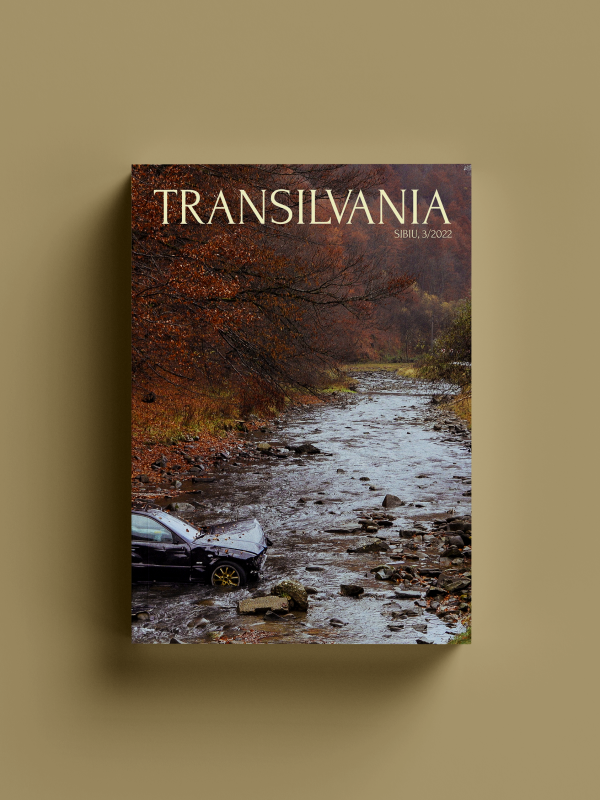
Transilvania 3.2022 cover site
Revista: 3 / 2022
Anul Publicarii:2022
Print ISSN: 0255-0539

Științe socio-umane

Arte vizuale

Filozofie și studii sociale

Antropologie și etnologie

Autor: Otilia HEDEȘAN
Email: otilia.hedesan@e-uvt.ro

Abstract: This article is a synthetic presentation of a field research conducted by the author between 2nd and 18th of August 1991, in the village of Cornova. The research needs to be approached from a multiple perspective imposed by different contexts. The first one is the fact that the research was conducted six decades after the field campaigns of the Sociologic School of Bucharest in Cornova. The second context is given by the fact that the village was included in the Ungheni district of Moldavian SSR, therefore it was a soviet territory at the time. The third context places the research between the first ethnological campaigns outside de Romanian borders in the post-socialist era. The article presents representative excerpts from a series of interviews recorded in the summer of 1991. The topics are: the main lineages of răzeși (free peasants) who had founded villages since legendary times; the deportation to Siberia of some families from Cornova; the random contacts between the Moldavians and their families left on the other side of the Ural Mountains, during the soviet period. Although these topics were intensely studied in the last decades, the value of the excerpts briefly analyzed in this article is given by the nature of the records they belong to – oral testimonies on subjects which could put the interlocutors at risk in the last days of the soviet regime.

Keywords: Cornova, field research, folklore camps, history of Romanian ethnology.

Citation suggestion: Hedeșan, Otilia. „Cercetări de teren la Cornova, 1991. A Puzzle in Progress”. Transilvania, no. 3 (2022): 67-75.

https://doi.org/10.51391/trva.2022.03.08.

Autor: Otilia HEDEȘAN & Cosmina TIMOCE-MOCANU
Email: cosminatimoce@gmail.com

Interview with otilia hedeșan:beyond cornova in 1991

Abstract: The Students’ Society of Ethnology and Folklore from Romania organized field research in some villages belonging to the Moldavian Soviet Socialist Republic between the 2nd and the 18th of August 1991. One of them was Cornova – the Moldavian village where the field research of the Sociological School from Bucharest had taken place in 1931. Although the Students’ Society revisited a famous field six decades after Gusti’s team, its work remained completely unknown for the academic community until now. Otilia Hedeșan has been present on this field as a young assistant of the Department of Ethnology of the West University of Timișoara. During an extended interview on google meet, on the 30th of October 2021, she recalled the research conducted in Cornova. The text resulted from our dialog recovers, in a subjective manner, the contexts of the research and evokes events in which a part of the villagers was involved. On the challenging new field, the young researcher was confronted with a series of experiences and real situation which made her learn, the hard way, some important lessons about the practice of anthropology in the post-socialist times.

Key words: Cornova, field research, folklore camps, history of Romanian ethnology.

Citation suggestion: Hedeșan, Otilia; Timoce-Mocanu, Cosmina. „INTERVIU cu Otilia Hedeșan: Dincolo de Cornova la 1991”. Transilvania, no. 3(2022): 76-85.

https://doi.org/10.51391/trva.2022.03.09

Autor: Ana GRAMA
Email: gramaana@gmail.com

REVIEW: Ioan Opriș, Vasile stoica. O emblemă națională în pușcărie

Abstract: The study reviews professor Ioan Opriș’s reconstruction of the diplomat and ambassador Vasile Stoica’s professional trajectory, mainly based on family archive documents, but also relying on adjacent sources. Born in Sibiu, in the Avrig township, Vasile Stoica (1889-1959) worked in diplomacy, having remarkable initiatives for Romania’s destiny before and during the two World Wars, as well as during the interwar period. He was a victim of the communist dictatorship, dying in the political prison in Jilava. Even though his social-professional, civic, political, and citizen existence is representative for the epoch and sometimes has a crucial importance in the understanding of its details, his life has been scarcely examined by historians prior to Ioan Opriș’s monograph using valid sources and scientific approaches.

Keywords: modern Romanian history, Romania in the 20th century, diplomatic history of Romania, the Great Union of 1918, communist totalitarianism in Romania, Vasile Stoica

Citation suggestion: Grama, Ana. „REVIEW: Ioan Opriș, Vasile stoica. O emblemă națională în pușcărie”. Transilvania, no. 3 (2022): 92-96. https://doi.org/10.51391/trva.2022.03.12.

uluslararası evden eve nakliyat

Sociologie

Științe politice & juridice

Istorie & Antropologie

Studii culturale

Autor: Andrei GORZO, Veronica LAZĂR
Email: andrei.gorzo@unatc.ro

The New Romanian Cinema and Beyond: The Films of Radu Jude

Abstract: The paper parses the major existing literature, in English and Romanian, on the New Romanian Cinema (also called the Romanian New Wave) which became an international film-festival sensation in the mid-2000s. It maps the main lines of disagreement among the various scholars who have attempted to define this phenomenon. The paper argues that the Romanian cinema that had made its dazzling debut on the international scene some 15 years ago has gradually turned into something else – something harder to pin down to an aesthetic paradigm, to a core generational group of ten or so filmmakers, or to a limited set of ideological coordinates. Finally, the paper proposes that the evolving body of work of director Radu Jude (who has established himself in recent years as a major innovator) provides a good lens through which to take the measure of those aesthetic and political changes.

Keywords: New Romanian Cinema, Romanian New Wave, Romanian post-communist culture, Radu Jude, esthetics and politics.

Citation suggestion: Gorzo, Andrei, and Veronica Lazăr. „The New Romanian Cinema and Beyond: The Films of Radu Jude”. Transilvania, no. 3 (2022): 1-9.

https://doi.org/10.51391/trva.2022.03.01.

Autor: Mihai IOVĂNEL, Andrei GORZO
Email: mihai.iovanel@gmail.com

Alex. Leo Șerban – A Tory anarchist in Romania during the 90s and 2000s: A Dialogue between Mihai Iovănel and Andrei Gorzo

Abstract: Andrei Gorzo and Mihai Iovănel reconstruct in the form of a dialogue the intellectual trajectory of the film critic Alex. Leo Șerban, an emblematic figure for the Romanian culture from the years 1990-2000. On this conversational support there are also evoked the ideological polarizations in Romania in recent decades, the evolution of film criticism in the post-communist period in parallel with the evolution of the cultural press, as well as the “cultural wars” either in mainstream or in some still little researched obscure niches.

Keywords: Romanian cinema, cultural studies, poststructuralism, film criticism, New Romanian Cinema.

Citation suggestion: Iovănel, Mihai, and Andrei Gorzo. „Alex. Leo Șerban – un Tory anarchist în România anilor ’90-2000: Mihai Iovănel în dialog cu Andrei Gorzo” Transilvania, no. 3 (2022): 10-20.

https://doi.org/10.51391/trva.2022.03.02.

Autor: Ion INDOLEAN
Email: ion.indolean@ubbcluj.ro

Perspectives on the Image of Dracula in the Cinema of a Century

Abstract: This article aims to analyze the evolution of the cinematic representation of the character Dracula, imagined and made famous by Bram Stoker, the author of the eponymous Gothic novel. To better understand the context in which this character developed, I begin by presenting some relevant details from the life and work of the medieval ruler Vlad the Impaler, the source of inspiration for the British writer. The purpose of this article is to highlight the differences in nuance and changes over time with respect to Dracula. From a one-sided, bloody, animalistic character, he becomes more and more sophisticated every decade. In a cinematic century, Dracula changes radically, begins to have secondary objectives, placed immediately after his physiological need. This behavioral change can define the producers’ attempt to create a product that is marketable and open to a wider audience.

Keywords: Dracula, Bram Stoker, Cinema, Horror, Myth, Reality, Transylvania

Citation suggestion: Indolean, Ion . „Perspective ale imaginii lui Dracula într-un secol cinematografic”. Transilvania, no. 3 (2022): 21-31.

https://doi.org/10.51391/trva.2022.03.03.

Biblioteconomie

Științele limbii

Autor: Iulia-Maria TICĂRĂU
Email: iulia.deaconu@ulbsibiu.ro

Review: Elena Platon, Româna ca limbă străină

Abstract: This article aims to review the recently published study Româna ca limbă străină (RLS): elemente de metadidactică by Elena Platon. Throughout her research, the author discusses, from an evolutionary point of view, starting from the year of the emergence of this discipline (1974), the practical foundation on which RLS was built and the lack of a theoretical one. This made the academic space reluctant regarding the field of RLS and consider it a discipline that lacks the features needed to be part of it. Elena Platon analyzes the connections that Romanian as a foreign language has with the other related disciplines and explains the specific concepts of both language didactics and RLS didactics. The study only highlights the fact that the field of RLS, even if it was born for economic reasons, is a branch that is arousing more and more interest in the academic field and that is why it is necessary to build the scientific foundation, even if almost 50 years have passed since its emergence.

Keywords: review, Elena Platon, Romanian as a foreign language (RLS).

Citation suggestion: Ticărău, Iulia-Maria. „REVIEW: Elena Platon, Româna ca limbă străinăl”. Transilvania, no. 3 (2022): 91-93.

https://doi.org/10.51391/trva.2022.03.11.

şehirler arası nakliyat

Bibliography

Platon, Elena. Româna ca limbă străină (RLS): elemente de metadidactică [Romanian as a Foreign Language (RLS): Elements of Metadidactics]. Cluj-Napoca: Editura Presa Universitară Clujeană, 2021.

Științele economice

Antropologie. Studii filozofice

Teologie

Studii literare

Autor: Teodora DUMITRU
Email: teodoralilianadumitru@gmail.com

The Genius as Natural Phenomenon vs. The Genius as Miracle: The Evolution from a 19th Century Rationalist Explanation to an Irrationalist 20th Century One

Abstract: This paper investigates certain aspects of the concept of “genius” in 19th European literature and philosophy. The peculiarity of my approach consists in noticing a change within the epistemological foundation of this concept on a line that starts, at the beginning of the 19th century, from an eminently rationalist framework, but evolves progressively toward an irrational or supernatural perspective.

Keywords: genius, planet, cosmology, physics laws, nature’s laws, gravitation law, classical mechanics, Isaac Newton, Immanuel Kant, J.F. Herbart, Arthur Schopenhauer, Hippolyte Taine, G. Ibrăileanu.

Citation suggestion: Dumitru Teodora. „Geniul ca fenomen în ordinea naturii vs. geniul ca miracol: evoluția de la o explicație raționalistă de secol XIX la una iraționalistă de secol XX”. Transilvania, no. 3(2022): 32-40.

https://doi.org/10.51391/trva.2022.03.04.

Autor: Denisa BUD
Email: denisa.bud17@yahoo.ro

The Dynamics of Book Production of the Romanian Novel between 1965 and 1989

Abstract: : The present paper aims to provide an overview of the evolution of the Romanian novel from the publication perspective between 1965-1989. Through the employed methodology, the quantitative analysis, it will be observed in which measure the events and the regulations from the political system influence the dynamic of the Romanian novel production. In addition to this, it will be observing the geographical distribution of the publishing houses and the modifications which appears about their editorial hierarchy as a consequence of the newly implemented rules of the political system.

Keywords: editorial production, romanian literature, communism, macroanalyse, romanian novel.

Citation suggestion: Bud, Denisa. „Dinamici ale producției editoriale a romanului românesc între 1965 și 1989”. Transilvania, no. 3 (2022): 41-47.

https://doi.org/10.51391/trva.2022.03.05.

Autor: Teona FARMATU
Email: teonafarmatu@gmail.com

Network Temporalities and North American Influence in the Romanian Poetry of the Early 1980s

Abstract: Set within the frame of World Literature, and dwelling on the multifaceted concept of networking, this paper aims to provide a temporal pattern concerning the transfer/import of postwar North American poetic trends within the Romanian poetry of the 1980s. By relating the aestheticized model of Romanian (neo)modernism to the more direct, biographical discourse of the Beat poetry, the influence of which emerged upfront in Romanian poetry starting from the late 1970s, as well to the Confessional model the paper explores overlapping temporalities within the two literary systems, whereby the paradigms of (neo)modernism and postmodernism, respectively, clashed, due to the homogenizing effect of the communist context. Along these lines, I outline the notion of diachrony in synchrony of the Romanian poetry of the early 1980s, when several poetic patterns pertaining to different stages of North American poetry exerted a simultaneous influence during a very short time interval. The attempts made by Romanian poets to synchronize with, or borrow from Anglo-American literature, also involved relaying certain attitudes, views, and values – both aesthetic and largely ideological – that were specific to the source culture.

Keywords: diachrony in synchrony, network temporalities, North American poetic trends, literary transfer, the Romanian 1980s poetry.

Citation suggestion: Farmatu, Teona. „Network Temporalities and North American Influence in the Romanian Poetry of the Early 1980s”. Transilvania, no. 3 (2022): 48-56.

https://doi.org/10.51391/trva.2022.03.06.

Autor: Andrei Bogdan POPA
Email: 3andreipopa@gmail.com

Towards a Postnaturalist Ethics of Fiction: Misanthropocene and the Commons in Pond (2015) by Claire Louise-Bennett

Abstract: This article conceptualizes a postnaturalist ethics of fiction in order to trace the interconnections between anthropogenic effects on the environment and the reading and writing of texts as thematized in Claire Louise-Bennett’s collection of short stories Pond. Starting from different theoretical formulations regarding epistemological “gaps,” I explore theoretical links between Jacques Rancière’s notion of fictional democracy, its relation to micro-events, and Steven Vogel’s concept of the artifact as the practice which changes an already socially built natural environment. I then build upon this framework by relating it to Paul de Man’s theory of unreadability and its effects upon the space of reading. In applying this framework on the close reading of the volume, what first surfaces is a tacit self-consciousness regarding the complicity between human practices upon a rapidly declining environment and the consumption and production of text, which following Vogel, is just another artifact in our fragile, dysfunctional Commons. Moreover, the protagonist’s fascination and longing for the apparent autonomy of the natural world is threatened by the traces of sociality she invariably finds in the environment. The subsequent section of the textual analysis addresses Pond’s ecological brand of misanthropy and notion of belonging and emplacement, social dialogue, mobilization, and democracy that are all calibrated according to the threat of climate change. I will thus argue that Bennett’s texts, in their antisocial, tense escapism to environmental thinking, can re-valorize the concept of Misanthropocene by expressing a frustrated but honest disillusionment regarding the apparently nonsocial autonomy of nature.

Keywords: postnaturalism, narrative ethics, unreadability, Misanthropocene, the Commons.

Citation suggestion: Popa, Andrei Bogdan. „Towards a Postnaturalist Ethics of Fiction: Misanthropocene and the Commons in Pond (2015) by Claire Louise-Bennett”. Transilvania, no. 3 (2022): 57-66.

https://doi.org/10.51391/trva.2022.03.07.

Științe vizuale

Dosar

Istorie si studii culturale

Istorie

Științele educației

Filozofie și studii politice

Stiintele comunicarii

Etnografie si folclor

Fizica speculativa

Recenzii

Economie

Artele spectacolului

Eveniment