
Search our journals and articles

2 / 2023

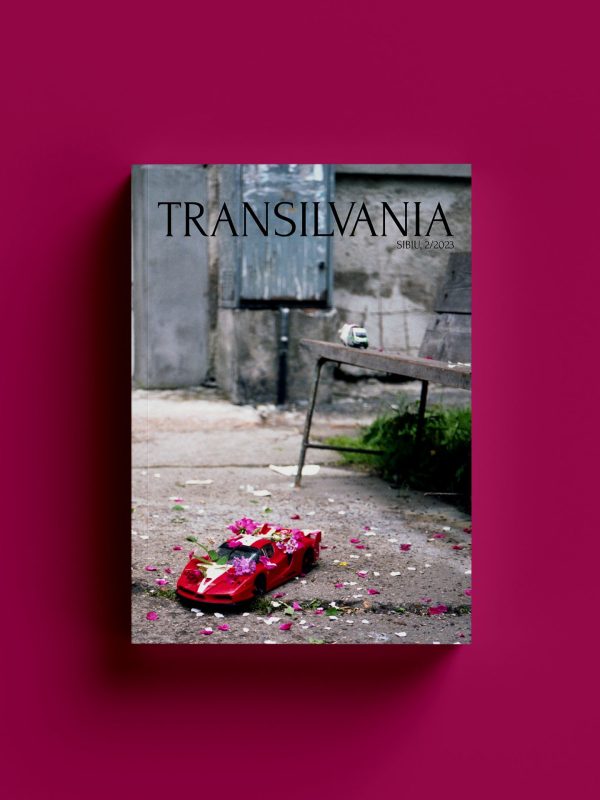
Transilvania featured 2.2023
Revista: 2 / 2023
Anul Publicarii:2023
Print ISSN: 0255-0539
foto Ioana Cîrlig

Științe socio-umane

Autor: Elisaveta DRĂGHICI
Email: elisaveta.draghici@ugal.ro

Associational Behaviour – An Indicator Of Quality Of Life

Abstract: Partnership to achieve common goals is an example of social action. When it is geared towards achieving a high level of quality of life, it is a complex dynamic and therefore of interest to researchers. This study explores the associative phenomenon from the perspective of two dimensions (which define the quality-of-life paradigm), namely quality of society and lifestyles (according to Mărginean and Precupețu’s vision, 2011), but also from the perspective of the community life and social participation dimension (as stated by Fahey et al., 2003). In addition to the theoretical approach on joining organizations for social involvement (in order to achieve a better life), the results of empirical research based on the administration of a questionnaire are presented. The empirical research highlights perceptions of action in society, the determinants of associational behavior oriented towards social involvement, the motivations behind the establishment of non-governmental organizations and their relation to the concern to improve the quality of life. The present study is one section of a larger ongoing research on motivations for setting up NGOs and the development of the non-profit sector. The topic is of interest in that, thirty years after freedom of association was achieved in Romania, the exploration of the motivations for setting up an NGO has been sporadic, the study showing current aspects of association for involvement in society.

Keywords: social associational behavior, non-governmental organizations, motivations, quality of life

Bibliography

Cace, Sorin, Victor Nicolăescu, Aandreia‐Nicoleta Anton, and Smaranda Rotaru. Organizaţiile neguvernamentale  şi economia socială [NGOs and Social Economy]. Bucharest: Editura Expert, 2011.

Elster, Jon. Comportamentul social. Fundamentele explicației în științele sociale [Social Behavior: The Fundamentals of Explanation in Social Sciences]. Bucharest: Editura ALLJahson, 2013.

Johnson, Allan G. Dicționarul Blackwell de sociologie: ghid de utilizare a limbajului sociologic [The Blackwell Dictionary of Sociology]. Bucharest: Humanitas, 2007.

Mărginean, Ioan, and Ana Bălașa, eds. Calitatea vieții în România [Life Quality in Romania]. Bucharest: Expert, 2005.

Mărginean, Ioan, and Ileana Precupețu, eds. Paradigma calității vieții [The Paradigm of Life Quality]. Bucharest: Editura Academiei Române, 2011.

Marele dicționar al psihologiei [The Big Dictionary of Psychology]. Bucharest: Editura Trei, 2006.

Gombert, Tobias et al. Statul, societatea civilă și democrația socială. Manual de democrație socială 6 [The State, Civil Society, and Social Democracy: Social Democracy Manual 6]. Bucharest: Friedrich-Ebert-Stiftung România, 2015. Online: https://library.fes.de/pdf-files/bueros/bukarest/12415.pdf.

Mărginean, Ioan, and Marian Vasile, eds. Dicționar de calitatea vieții [Life Quality Dictionary]. Bucharest: Editura Academiei 2015. online: https://bibliotecadesociologie.ro/en/download/marginean-ioan-vasile-marian-eds-2015-dictionar-de-calitatea-vietii-bucuresti-editura-academiei/.

Lewis, David. “Nongovernmental Organizations, Definition and History.” In International encyclopedia of civil society, edited by H.K. Anheier and S. Toepler, 1056-1062. New York: Springer, 2010.

Voicu, Bogdan. “Capacitatea de a coopera. Asociaționismul din România, azi și acum 30 de ani” [The Capacity of Cooperation]. In Atlasul Valorilor sociale. România la 100 de ani, edited by Bogdan Voicu, Horațiu Mihai Rusu, and Claudiu D. Tufiș, 54-60. Cluj-Napoca: Presa Universitară Clujeană, 2020.

Bălașa, Ana, “Contribuția sectorului neguvernamental la realizarea unor obiective ale politicilor sociale şi la ameliorarea calității vieții populației” [NGOs Contributions to the Realization of Some Objectives of Social Policies and Amelioration of the Life of Population]. Calitatea Vieții, XV (2004): 123-136. https://www.revistacalitateavietii.ro/oldrcv/2004/CV-1-2-04/10.pdf.

Buburuzan, Leon. “Tineret, asociere, viață civică” [Youth, Association, Civic Life]. Revista Română de Sociologie XIII, no. 3-4 (2002): 211–225. https://www.revistadesociologie.ro/pdf-uri/nr.3-4-2002/LEON%20%20BUBURUZAN%20Art2.pdf

Mălăescu, Maria. “Locul și rolul organizațiilor neguvernamentale din sectorul asociativ în rezolvarea problemelor sociale” [The Place and the Role of NGOs from Associative Sector in Solving Social Problems]. Anuarul Institutului de Cercetări Socio-Umane C.S. Nicolăescu-Plopșor, no. XIII (2012): 199-213. http://npissh.ro/ro/wp-content/uploads/sites/2/2015/12/Locul-%C5%9Fi-rolul-organiza%C5%A3iilor.pdf.

Mihály, Emőke. “The Contribution of NGOs in Reducing Poverty: Case Study of the North Vest Development Region in Romania.” Kultúra és Közösség V, no. 1 (2010): 47-59. http://kulturaeskozosseg.hu/pdf/2010/2/kek_2010_2_5.pdf.

Necșulescu, Anemari-Helen. “Geneza apariţiei ONG-urilor din România.” Romanian Political Science Review XI, no. 3 (2011): 525-556. https://www.ssoar.info/ssoar/bitstream/handle/document/44865/ssoar-studiapolitica-2011-3-necsulescu-Geneza_aparitiei_ONG-urilor_din_Romania.pdf?sequence=3.

Fahey, Tony, Brian Nolan, and Christopher T. Whelan. Monitoring Quality of Life in Europe. Louxembourg: European Foundation for the Improvement of Living and Working Conditions, 2003.


Online Resources and Data


Fondul pentru Dezvoltarea Societății Civile. România 2017. Sectorul neguvernamental. Profil, tendințe, provocări. Bucharest: F.D.S.C., 2017a. https://fondong.fdsc.ro/upload/Stiri%20generale/Romania%202017.pdf

Fondul pentru Dezvoltarea Societății Civile. The Associative and Philantropic Behavior of Romanians, 1996. http://www.fdsc.ro/documente/24.pdf

Fondul pentru Dezvoltarea Societății Civile. Infografice „România 2017. Sectorul neguvernamental – profil, tendinte, provocări”, 2017b.  http://www.fdsc.ro/library/files/infografice_en_2017,_raport.pdf.

Saulean, Daniel. Sursele sociale ale vieții asociative și filantropiei în România. Bucharest: F.D.S.C., 2001. http://www.fdsc.ro/documente/22.pdf.

Comitetul Economic și Social European, https://www.eesc.europa.eu/ro/members-groups/categories/categoria-viata-asociativa.

Ministerul Justiției, Registrul Național ONG, https://www.just.ro/registrul-national-ong/.

RODA (Romania Social Data Archive), http://roda.ro/ro/catalogul-de-date#catalogstudyvariable-34-7614.

Arte vizuale

Filozofie și studii sociale

Antropologie și etnologie

Sociologie

Științe politice & juridice

Istorie & Antropologie

Studii culturale

Biblioteconomie

Științele limbii

Științele economice

Antropologie. Studii filozofice

Teologie

Studii literare

Autor: Eugen CIURTIN, Andreea APOSTU
Email: e.ciurtin@ihr-acad.ro

Abstract. The present series of contributions critically edits in Romanian and English, with concordances and commentary, a string of unpublished, multilingual manuscripts written by the young Mircea Eliade, Indologist and historian of religions in South Asia, from 1929 to 1931. Previously unknown, the manuscripts were purchased by a private collector, who most graciously contacted the editors in February 2023 and bequeathed them for the present publication. The series complements ECCE | The Complete Critical Edition of Mircea Eliade’s Scholarly Works before 1945, under the auspices of the Institute for the History of Religions in Bucharest (first two volumes forthcoming). The first (double) instalment was published in Transilvania 51 [155] (2023), no. 1, pp. 1-22.

Keywords. Mircea Eliade, private collector, colonial India, History of religions, South Asian studies, Romanian culture, European culture, manuscript studies, critical editions.

Ciurtin, Eugen, and Andreea Apostu. “Mircea Eliade’s Unpublished Manuscripts from Private Collections II. Notebooks I & II (Calcutta, 1929-1931). Concordances A-E.” Transilvania, no. 2 (2023): 1-16. https://doi.org/10.51391/trva.2023.02.01.

Bibliography

Eliade, Mircea. Soliloquii [Soliloquies], cu un portret inedit de Mac Constantinescu. Carte cu semne 1. Bucharest: Institutul de Arte Grafice ‘Bucovina’ I.E. Torouțiu, 1932. Republished as Solilocvii, “Notă asupra ediției” [Editorial note] de “Editura” [by the Publishing House]. Bucharest: Humanitas, 1991. Reprinted Bucharest: Humanitas, 2003 (without “Notă asupra ediției”). Eliade 1932 | 1991 | 2003

Eliade, Mircea. “Encheiresis naturae.” Cuvântul VIII, no. 2486, March 23, 1932, 3. Eliade 1932a

Eliade, Mircea. “Pseudo-Indika.” Vremea V, no. 260, October 23, 1932, 7. Eliade 1932b

Eliade, Mircea. Șantier. Roman indirect [Work in Progress. An Indirect Novel] [pe copertă: Șantier. Roman]. Bucharest: “Cugetarea” [P.C. Georgescu-Delafras], 1935. Eliade 1935

Eliade, Mircea. “Contemplație” [Contemplation]. Familia, 3rd ser., I, no. 7-8 (November 1935): 64-65.

Eliade, Mircea. Fragmentarium. Bucharest: Vremea, 1939.

Eliade, Mircea. “Pagini regăsite (II).” Revista de istorie și teorie literară, no. 2-3, 1986. Republished in M. Handoca, Mircea Eliade – pagini regăsite – [Retrieved Pages]. Bucharest: Lider, 2008, 197-202.

Eliade, Mircea. “Fragmentarium [Notații fugare din India],” edited by Mircea Handoca. Manuscriptum, no. 3 (1987): 95-102.

Eliade, Mircea. Erotica mistică în Bengal – studii de indianistică – (1929-1931) [Mystical Erotic in Bengal – Studies in Indology], foreword by Mircea Vulcănescu [sic] [“Notă editorială la Cuvântul înainte” by Marin Diaconu], edited by de Mircea Handoca, Seria ‘Folio’, no. 3. Bucharest: Jurnalul literar, 1994. Eliade 1994

Eliade, Mircea. 50 de conferințe radiofonice [50 Radio-broadcasted Lectures]. Bucharest: Humanitas, 2001.

Eliade, Mircea. Europa, Asia, America… Corespondență [Europe, Asia, America… Correspondence]. Edited and indexed by Mircea Handoca. Bucharest: Humanitas, vol. I (A-H), 1999, vol. II (I-P) and vol. III (R-Z), 2004. Eliade 1999-2004

Eliade, Mircea. “Intime Aufzeichnungen. Gedachte, niedergeschriebene und übertragene Fragmente in Indien [sic]” [Intimate notes. Fragments thought-out, written down and transcribed in India]. In Mircea Eliade, Indiens mystische Erotik, aus dem Rumänischen übersetzt und herausgegeben von Richard Reschika. Berlin: Verlag der Weltreligionen (im Insel Verlag), 2012. Eliade 2012

Eliade, Mircea. Yoga. Eseu asupra originilor misticii indiene [Yoga: Essay on the Origins of Indian Mysticism], critical edition by Eugen Ciurtin. Studies and Documents in History of Religions 1. Bucharest: Institute for the History of Religions, 2016. Eliade 2016


Ciurtin, Eugen and Andreea Apostu. “Mircea Eliade’s Unpublished Manuscripts from Private Collections. II. Notebooks I & II (Calcutta, 1929-1931). Critical edition.” Transilvania, no. 1 (2023): 1-22. Ciurtin-Apostu 2023

Ciurtin, Eugen (coordinator), Andreea Apostu (scientific secretary), Ionuț Daniel Băncilă, Daniela Dumbravă, Octavian-Adrian Negoiță, Cătălin Pavel, Vlad Șovărel, and Bogdan Tătaru-Cazaban, eds. ECCE | Ediția critică completă Eliade. Opera științifică (ante 1945) [The Complete Critical Edition of Mircea Eliade’s Scholarly Works before 1945], vol. I-II. Bucharest: Institute for the History of Religions, forthcoming 2023. ECCE forthcoming

Rennie, Bryan S. “Fact and interpretation: sui generis religion, ascription, and art.” Archaeus, vol. 15 [Girardot, Norman J. and Bryan S. Rennie (Guest Editors). Remembering, Reimagining, Revalorizing Mircea Eliade, Bucharest: IHR] (2011): 51-74.

Autor: Alexandra OPRESCU
Email: alexandramihaelaoprescu@gmail.com

A Manuscript Hidden in Plain Sight: Mihail Sebastian’s Journal Kept During 1930-1931


Abstract: The manuscript I talk about in this paper – Mihail Sebastianʼs diary from 1930 to 1931 – has been “hidden” in sight for nearly 40 years, in a public library from the cultural center of the country. I insist upon the unpublished content of this notebook, which I show and contextualize. I also discuss the importance of the manuscript, giving some significant details about the appearance of the notebook that housed the novel diary of the The Town with Acacia Trees, a diary kept by Sebastian during his time in Paris (1930-1931). The discovery of this unpublished notebook is per se a turning point for Sebastian’s exegetes.

Key words: unpublished manuscript, diary, The Town with Acacia Trees, Romanian-Jewish writer, Mihail Sebastian

Citation suggestion: Oprescu, Alexandra. “Un manuscris ascuns în văzul lumii: jurnalul lui Mihail Sebastian din anii 1930-1931.” Transilvania, no. 2 (2023): 17-25. https://doi.org/10.51391/trva.2023.02.02.

Bibliography


Dumitru, Teodora. “Manuscrisul obscur așteaptă ochiul limpede. Un Mihail Sebastian inedit de aproape o sută de ani” [The Obscure Manuscript Awaits the Clear Eye. An Unpublished Mihail Sebastianʼs Work Almost a Hundred Years Old].  Scena 9, March 9, 2023. https://www.scena9.ro/article/manuscris-mihail-sebastian-jurnal-descoperire.

Dumitru, Teodora. “Ineditul jurnal din 1930-1931 al lui Mihail Sebastian – un preview al întregii sale opere” [Mihail Sebastian’s Unpublished Diary From 1930-1931: A Preview of His Entire Work]. Transilvania, no. 2 (2023).

Oprescu, Alexandra. “Cum am ajuns să țin în mână un manuscris inedit al lui Mihail Sebastian” [How I Came to Hold an Unpublished Manuscript by Mihail Sebastian]. Scena9, March 9, 2023. https://www.scena9.ro/article/manuscris-inedit-jurnal-mihail-sebastian.

Petreu, Marta. Diavolul și ucenicul său: Nae Ionescu – Mihail Sebastian [The Devil and His Apprentice: Nae Ionescu – Mihail Sebastian]. Iași: Polirom, 2009.

Sebastian, Mihail. “Jurnal de roman” [A Novel’s Diary]. Azi, no. 5 (1932).

Sebastian, Mihail. Eseuri, cronici, memorial, edited by Cornelia Ștefănescu. Bucharest: Editura Minerva, 1972.

Sebastian, Mihail. Opere II. Teatru. Corespondență [Works II. Dramaturgy. Letters], edited by Mihaela Constantinescu-Podocea, selection, notes, and comments by Oana Safta. Bucharest: Academia Română, Fundația Națională pentru Știință și Artă, 2011.

Sebastian, Mihail. Opere IV. Publicistică (1930-1932) [Works IV. Journalistic Writings (1930-1932)], edited by Mihaela Constantinescu-Podocea, selection, notes, and comments by Oana Safta and Petruș Costea. Bucharest: Academia Română, Fundația Națională pentru Știință și Artă, 2013.

Sebastian. Mihail. Jurnal 1930-1931. Manuscris inedit [Diary 1930-1931: Unpublished Manuscript]. Cota 091/27, Biblioteca Centrală Universitară „Carol I”, Bucharest.

Autor: Teodora DUMITRU
Email: teodoralilianadumitru@gmail.com

Mihail Sebastian’s Unpublished Diary From 1930-1931: A Preview of His Entire Work

Abstract: In this essay I bring to attention the event of the recent discovery of an unpublished diary of the Romanian-Jewish literary critic, writer, and diarist Mihail Sebastian (1907-1945). This diary—written between 1930 and 1931—contains fragments that were published in the press of the author’s time (in 1932), but also some passages that remain unpublished until today. All the passages related to the author’s Jewish origins and his anguish of living in a “closed and defined circle,” a metaphor for the real or symbolic ghetto, are unpublished. Also, these unpublished passages expose his strategy for creating and publishing prose fiction: since they are the work of a Jewish author, the characters would be impossible to conceive of as anything other than “Jews,” but, upon publication, the author would delegate them a non-Jewish identity. This strategy would allow Sebastian’s “Jewish-Romanian” “truths” to be communicated publicly, but without explicitly assuming them as such. The information provided by the unpublished fragments of this diary—nowhere expressed so firmly and transparently in author’s writing—reconfigure how Sebastian’s entire oeuvre is to be interpreted, from the first prose fiction intended for publication to his (private) diary, partially published after 1989. I will show in this essay, following unpublished passages from this journal between 1930 and 1931, that all of Sebastian’s writings—both those that apparently ignore the theme of Jewishness and those that approach it head-on—are permeated by the same anguish: the anguish of living and writing in a “closed circle,” a feeling heightened by the increasingly anti-Semitic atmosphere in 1930s Romania. I also prove that Sebastianʼs strategies of obscuring his Jewish identity and indirectly communicating his “truths” as a Romanian Jew are coherent and well connected with his strategies of direct communication of the same “truths.”

Keywords: unpublished diary, antisemitism, jewish interwar literature, Mihail Sebastian

Citation suggestion: Dumitru, Teodora. “Ineditul jurnal din 1930-1931 al lui Mihail Sebastian – un preview al întregii sale opere.” Transilvania, no. 2 (2023): 26-41. https://doi.org/10.51391/trva.2023.02.03.

Bibliography


Baltazar, Camil. Scrisori [Letters]. Bucharest: Editura pentru Literatură, 1965.

Cernat, Paul. “Între somațiile Istoriei și utopia Vacanței” [Between the Summons of History and the Utopia of Holiday]. Observator cultural, no. 393, October 11, 2007.

Dumitru, Teodora. “Manuscrisul obscur așteaptă ochiul limpede. Un Mihail Sebastian inedit de aproape o sută de ani” [The Obscure Manuscript Awaits the Clear Eye. An Unpublished Mihail Sebastianʼs Work Almost a Hundred Years Old].  Scena 9, March 9, 2023. https://www.scena9.ro/article/manuscris-mihail-sebastian-jurnal-descoperire.

Georgescu, Diana. “Excursions into National Specificity and European Identity: Mihail Sebastian’s Interwar Travel Reportage.” In Under Eastern Eyes: A Comparative Introduction to East European Travel Writing on Europe, edited by Wendy Bracewell and Alex Drace-Francis (Budapest & New York: CEU Press, 2008).

Handoca, Mircea. Convorbiri cu și despre Mircea Eliade [Conversations with and about Mircea Eliade]. Bucharest: Humanitas, 1998.

Honigberger, Johann Martin. Treizeci și cinci de ani în Orient [Thirty-five years in the Orient], foreword by Arion Roșu, edited by Eugen Ciurtin, translated by Eugen Ciurtin, Ciprian Lupu, and Ana Lupașcu. Iași: Polirom, 2004.

Ignat, Mihai. “Onomastica romanelor lui Sebastian” [Onomastic in Sebastianʼs Novels]. Transilvania, no. 1 (2015).

Iovănel, Mihai. Evreul improbabil. Mihail Sebastian: o monografie ideologică [The Unlikely Jew: Michael Sebastian, an Ideological Monograph]. Bucharest: Cartea Românească, 2012.

Lovinescu, E. Istoria literaturii române contemporane, Vol. III, Evoluția poeziei lirice [History of Contemporary Romanian Literature, Vol. III, The Evolution of Lyric Poetry]. Bucharest: Editura Ancora, 1927.

Nastasă, Lucian, ed. Antisemitismul universitar în România (1919-1939): Mărturii documentare [University Anti-Semitism in Romania (1919-1939): Documentary Evidence], foreword by Carol Iancu. Cluj-Napoca: Editura Institutului pentru Studierea Problemelor Minorităților Naționale, Kriterion, 2011.

Oprescu, Alexandra. “Cum am ajuns să țin în mână un manuscris inedit al lui Mihail Sebastian” [How I Came to Hold an Unpublished Manuscript by Mihail Sebastian]. Scena 9, 9 martie 2023. https://www.scena9.ro/article/manuscris-inedit-jurnal-mihail-sebastian.

Sebastian, Mihail. Opere I. Proză [Works I. Prose], edited by Mihaela Constantinescu-Podocea, selection, notes, and comments by Oana Safta. Bucharest: Academia Română, Fundația Națională pentru Știință și Artă, 2011.

Sebastian, Mihail. Opere IV. Publicistică (1930-1932) [Works IV. Journalistic Writings (1930-1932)], edited by Mihaela Constantinescu-Podocea, selection, notes, and comments by Oana Safta and Petruș Costea. Bucharest: Academia Română, Fundația Națională pentru Știință și Artă, 2013.

Sebastian, Mihail. Opere V. Publicistică: 1933-1934 [Works V. Journalistic Writings (1933-1934)], edited by Mihaela Constantinescu-Podocea, selection, notes, and comments by Mihaela Constantinescu-Podocea and Oana Safta. Bucharest: Academia Română, Fundația Națională pentru Știință și Artă, 2014.

Sebastian. Mihail. Jurnal 1930-1931. Manuscris inedit [Diary 1930-1931. Unpublished Manuscript]. Cota 091/27, Biblioteca Centrală Universitară „Carol I”, Bucharest.

Mihail Sebastian. Opere I. Proză [Works I. Prose], edited by Mihaela Constantinescu-Podocea, selection, notes, and comments by Oana Safta. Bucharest: Academia Română, Fundația Națională pentru Știință și Artă, 2011.

Autor: Teona FARMATU
Email: teonafarmatu@gmail.com


Mariana Marin: The Making and the Unmaking of a Myth. The Tragic Posture (I)


Abstract: Following the theories about the author’s posture, my paper aims both to reconstruct the path of Mariana Marin’s mythologization and to deconstruct it by establishing two main postures: the tragic posture, congealed mainly post-mortem, and the ethical one, originating in a specific ethos, identifiable in the poet’s biographical-artistic trajectory. Having become a mythologised figure of the 1980s generation, due to the fatalistic correspondences between poems and biography or to the legitimisation of her value by comparison with poets of the same framework, but from the mainstream of world literature (Sylvia Plath, Anne Sexton, Else Lasker-Schüler), Madi –  the famous nickname – tends to penetrate abusively, sometimes unjustifiably, into the reception of Mariana Marin’s texts, hence the empirical persona which becomes strongly than the poetic work.

Keywords: Mariana Marin, Madi, ethos, ethical posture, tragic posture, myth, Mariana Marin’s fictionalization.

Citation suggestion: Farmatu, Teona. “Mariana Marin: facerea și desfacerea unui mit. Postura tragică (I).” Transilvania, no. 2 (2023): 42-55. https://doi.org/10.51391/trva.2023.02.04.

Bibliography

“In memoriam Mariana Marin”. Observator cultural, April 8, 2003. https://www.observatorcultural.ro/articol/in-memoriam-mariana-marin/.

“In memoriam Mariana Marin”. România literară, no. 14, 2003.

“În România se intensifică rezistența față de regimul Ceaușescu” [Resistance to the Ceaușescu Regime is Growing in Romania], fragmente din Arhiva Open Society (Budapesta), Institutul de Cercetare al Radio Europa Liberă, secția română. https://jurnalul.ro/scinteia/aici-radio-europa-libera/in-romania-se-intensifica-rezistenta-fata-de-regimul-ceausescu-529029.html.

“Supliment Mariana Marin” [Mariana Marin Supplement]. Observator cultural, no. 236 (494), 2009.

Cărtărescu, Mircea. Creionul de tâmplărie [The Carpentry Pencil]. Bucharest: Humanitas, 2020.

Cărtărescu, Mircea. Postmodernismul românesc [The Romanian Postmodernism], afterword by Paul Cornea. Bucharest: Humanitas, 1999.

Cărtărescu, Mircea. Zen Jurnal: 2004-2010 [Zen Diary: 2004-2010]. Bucharest: Humanitas, 2011.

Cârstean, Svetlana. “« Cuvintele atrag realitatea ». Interviu cu Mariana Marin” [The words attract reality. Interview with Mariana Marin]. Observator cultural, no. 89, 2016. https://www.observatorcultural.ro/articol/cuvintele-atrag-realitatea-interviu-cu-mariana-marin/.

Cesereanu, Ruxandra. “Disperarea învinge teama de moarte?” [Does desperation overcome fear of death?]. Steaua, no. 10 (2016): 19-20.

Ciotloș, Cosmin. Cenaclul de Luni. Viața și opera [Monday Literary Circle. The life and the Work]. Bucharest: Pandora M, 2021.

David, Emilia. “De la canonul optzecist la canonul transnațional” [From the Eighties Canon to the Transnational Canon]. Transilvania, no. 7-8 (2021): 128-132.

Farmatu, Teona. “(De)limitări (est)etice: Cazul Mariana Marin” [Aesthetic and Ethical Boundaries: The Case of Mariana Marin]. Steaua, no. 5 (2021): 33-35.

Hodârnău, Ioana. “Mariana Marin – Le biographisme féroce” [Mariana Marin – The Ferocious Biography]. Dacoroamnia litteraria, no. 8 (2021): 30-45.

Iovănel, Mihai. Istoria literaturii române contemporane (1990-2020) [The History of Romanian Contemporary Literature (1990-2020)]. Iași: Polirom, 2021.

Komartin, Claudiu. “Nebunia de a gusta trandafir” [The Madness of Tasting Roses]. Observator cultural Supliment, no. 236 (2009).

Lefter, Ion Bogdan. Flashback 1985: Începuturile „noii poezii” [Flashback 1985: The Beginnings of the ‘New Poetry’]. Bucharest: Paralela 45, 2005.

Manolescu, Nicolae. Istoria critică a literaturii române [The Critical History of the Romanian Literature]. Bucharest: Cartea Românească, 2019.

Marin, Mariana. O singurătate feroce [A Fierce Loneliness], edited by Teodor Dună. Bucharest: Tracus Arte, 2015.

Marin, Mariana. Paper Children, translated by Adam J. Sorkin, Irina Giannetti, Angela Jianu, Mia Nazarie, & Liana Vrăjitoru, foreword by Nina Cassian and Adam J. Sorkin. Brooklyn NY: Ugly Duckling Presse, 2006.

Marin, Mariana. Scrisoare deschisă sau Nu mă mai așteptați la ore mici [Open Letter or Don’t Wait for Me in the Small Hours], foreword by Nicolae Manolescu, graphic design by de Tudor Jebeleanu. Bucharest: Casa Radio, 2014.

Marin, Mariana. Zestrea de aur [The Golden Dowry], foreword by Costi Rogozanu. Bucharest: Muzeul Literaturii Române, 2002.

Marin, Mariana. Zestrea de aur/ La dote d’oro [The Golden Dowry/ La dote d’oro], translated by Clara Mitola. Bucharest: Pavesiana, 2013.

Martin, Mircea. G. Călinescu și complexele literaturii române [G. Călinescu and the Complexes of the Romanian Literature]. Bucharest: Paralela 45, 2002.

Meizoz, Jérome. “Ethos, champ et facture des oeuvres : recherche sur la « posture »” [Ethos, Field and Invoice’s Works: Research on Posture]. Pratiques : linguistique, littérature, didactique, no. 117-118 (2003): 241-250.

Minculete, Iunis. “Marta Petreu dintr-o perspectivă gender” [Marta Petreu from a Gender Perspective]. Transilvania, no. 10 (2019): 50-53.

Moldoveanu, Daniela. “Mariana Marin în lagărele minții” [Mariana Marin Within the Camps of the Mind ]. Caiete critice, no. 8 (2013): 48-55.

Orlea, Oana. Ia-ți boarfele și mișcă! [Get Your Stuff and Move!], interview by Mariana Marin. Bucharest: Cartea Românească, 1991.

Rogozanu, Costi. “Poezia optzeci în stil academic” [Academically Eighties Poetry]. România literară, no. 42 (2001).

Stoichiț, Iulia. “«Orgolioasele moraliste»: Marta Petreu și Mariana Marin” [‘The Proud Women Moralists’: Marta Petreu and Mariana Marin]. Vatra, no. 9 (2021): 78-81.

Țeposu, Radu G. Istoria tragică & grotescă a întunecatului deceniu literar nouă [The Tragic & Grotesque History of the Dark Literary Ninth Decade], foreword by Al. Cistelecan. Bucharest: Cartea Românească, 2006.

Ursa, Anca. “Generația ‘80 în poezie” [The 80s Generation in Poetry], in Studii de literatură română recentă [Researches on Recent Romanian Literature], volume III Istoria postmodernismului prin antologii [The History of Postmodernism through Anthologies], edited by Gheorghe Perian. Cluj-Napoca: Limes, 2018.

Autor: Diana STROESCU
Email: diana.stroescu1@gmail.com

“A Generation of Susceptible Writers”: Emil Ivănescu, Dinu Pillat, and Alexandru Vona

Abstract: The study analyzes the work of three authors which were not duly integrated into the literary canon: Emil Ivănescu, Dinu Pillat and Alexandru Vona. Even if their names are lesser known within the history of Romanian literature, the article remarks that the exceptional historical circumstances of the war generation they belonged to influenced in a peculiar manner the configuration of the texts. Thus, their literary creations gave us a particular idea about the ways in which Romanian modernism was both generated and canonically validated.

Keywords: modern and contemporary Romanian literature, war generation, Emil Ivănescu, Dinu Pillat, Alexandru Vona, Albatros group

Citation suggestion: Stroescu, Diana. “’O generație de susceptibili’: Emil Ivănescu, Dinu Pillat, Alexandru Vona.” Transilvania, no. 2 (2023): 56-69. https://doi.org/10.51391/trva.2023.02.05.

Bibliography

Bloom, Harold. Anxietatea influenței: o teorie a poeziei [The Anxiety of Influence: A Theory of Poetry]. Translated by Rareș Moldovan. Pitești: Paralela 45, 2008.

Boisdeffre, Pierre de. Les Ecrivains de la Nuit ou la littérature change de signe [The Writers of the Night or Literature Changes Sign]. Paris: Librairie Plon, 1973.

Borges, Jorge Luis. Proză completă [Complete Prose], vol. 1. Translated by Irina Dogaru, Cristina Hăulică, and Andrei Ionescu. Iași: Polirom, 2006.

Cordoș, Sanda. Literatura între revoluție și reacțiune [Literature Between Revolution and Reaction]. Cluj-Napoca: Biblioteca Apostrof, 1999.

Cuzmici, Loredana. Generaţia Albatros – o nouă avangardă [The Albatros Generation – A New Avant-garde]. Iași: Editura Universităţii „Alexandru Ioan Cuza”, 2005.

Graff, Gerald. Literature against Itself: Literary Ideas in Modern Society. Chicago: University of Chicago Press, 1995.

Ivănescu, Emil. Artistul și moartea [The Artist and the Death]. Edited by Raluca Dună. Bucharest: Institutul Cultural Român, 2006.

Ivănescu, Mircea, and Vasile Avram. Interviu transfinit: Mircea Ivănescu răspunde la 286 de întrebări ale lui Vasile Avram [Transfinite interview: Mircea Ivănescu answers 286 questions of Vasile Avram]. Bistrița: Casa de editură Max Blecher, 2012.

Jolly, Margaretta, ed. Encyclopedia of Life Writing: Autobiographical and Biographical Forms. New York: Routledge, 2001.

Le Rider, Jacques. Jurnale intime vieneze [Private Viennese Diaries]. Translated by Magda Jeanrenaud. Iași: Polirom, 2001.

Le Rider, Jacques. Modernitatea vieneză şi crizele identităţii [Modernity and Crises of Identity: Culture and Society in Fin-de-siècle Vienna]. Translated by Magda Jeanrenaud. Iași: Editura UAIC, 2003.

Mitchievici, Angelo. Cultura faliei şi modernitatea românească [Fissure Culture and Romanian Modernity], Iasi: Institutul European, 2013.

Nietzsche, Friedrich. Amurgul idolilor sau Cum se filozofează cu ciocanul [Twilight of the Idols, or, How to Philosophize with a Hammer], Humanitas, București, 2012.

Idem. Dincolo de bine și de rău [Beyond Good and Evil]. Translated by Radu Gabriel Pârvu. Bucharest: Humanitas, 2015.

Ortega y Gasset, José. Tema vremii noastre [The Theme of Our Times]. Bucharest: Humanitas, 1997.

Paulhan, Jean. Florile din Tarbes sau Teroarea în Litere [The Flowers of Tarbes or, Terror in Literature]. Iași: Editura UAIC, 2015.

Pillat, Dinu. Tinerețe ciudată și alte scrieri [Strange Youth and Other Writings]. Bucharest: Humanitas, 2011.

Pillat, Dinu and Cornelia Pillat, Biruința unei iubiri: pagini de corespondență [The Victory of a Love: Correspondence Pages]. Bucharest: Editura Humanitas, 2008.

Pillat, Monica. Cultura ca interior [Culture as Interior]. Bucharest: Vremea, 2001.

Sábato, Ernesto. Tunelul [The Tunnel]. Translated by Tudora Șandru Mehedinți. Bucharest: Humanitas, 2016.

Sorohan, Elvira. Singurătatea scriitorului [The Solitude of the Writer]. Iași: Editura UAIC, 2004.

Sypher, Wylie. Loss of the Self in Modern Art and Literature. New York: Random House, 1962.

Vila-Matas, Enrique. Bartleby & Co. Translated by Ileana Scipione. Bucharest: RAO, 2004.

Vona, Alexandru. Ferestre întredeschise: Alexandru Vona și Ovidiu Constantinescu [Ajar Windows: Alexandru Vona and Ovidiu Constantinescu]. Cluj-Napoca: Biblioteca Apostrof, 1997.

Vona, Alexandru. Ferestrele zidite [The Bricked Windows]. Bucharest: EST, 2001. Vona, Alexandru. Să mai fiu o dată îndrăgostit [To Be in Love Once More]. Cluj-Napoca: Biblioteca Apostrof, 2009.

Vona, Alexandru. „7 zile cu Alexandru Vona” [7 Days with Alexandru Vona]. Observator cultural, October 14, 2011. https://www. observatorcultural.ro/articol/7-zile-cu-alexandru-vona/.

Autor: Lucian ȚION
Email: tionfiul@yahoo.com

Abstract: National theatre was at the forefront of nation-building efforts in Europe at the end of the 19th century. New nations instrumentalized traditional motifs such as legends, myths of origin, and fairytales for their alleged part in shaping “national character.” In this paper I analyze how Lucian Blaga, an iconic playwright and philosopher of romantic-nationalist inspiration, used folklore in Zamolxis, Pagan Mystery (1921) in Romania to mythify the national self-image. Employing a deconstructionist, postcolonial reading of the play, I analyze the use of myth and its role in the construction of the national imaginary. I also situate this process in the geopolitical context of the late 19th and early 20th century Eastern Europe, a place in which several newly created nation-states instrumentalized culture to compete with one another for the legitimization of both territorial claims and political supremacy.
bahis siteleri
Keywords: nationalism, Romania, theatre, cultural identity, Lucian Blaga, postcolonial.

Bibliography

Aarseth, Asbjørn. Peer Gynt and Ghosts. London: Macmillan Education, 1989.

Bakhtin, M.M. The Dialogic Imagination. Austin: University of Texas Press, 1981.

Berlin, Isaiah. Three Critics of the Enlightenment: Vico, Hamann, Herder. Princeton: Princeton University Press, 1999.

Băicoianu, Anca. “Is the ‘Colonial’ in ‘Post-colonial’ the ‘Soviet’ in ‘Post-soviet’? The Boundaries of Postcolonial Studies.” Dacoromania Litteraria II (2015): 90-100.

Blaga, Lucian. Teatru. Bucharest: Minerva, 1970.

Blaga, Lucian. Opere: Trilogia cosmologică [Cosmologic Trilogy]. Bucharest: Minerva, 1988.

Boia, Lucian. History and Myth in Romanian Consciousness. Budapest: CEU Press, 2001.

Close, Elizabeth. The Development of Modern Romanian. Oxford: Oxford University Press, 1974.

Dana, Dan. “The ‘Zalmoxis’ of Lucian Blaga, between construction and revolt: an aspect of the debate on the ‘national specificity’ in interwar Romania.” Caietele Echinox 12 (2007): 334-353.

Eliade, Mircea. Zalmoxis, the Vanishing God: Comparative Studies in the Religions and Folklore of Dacia and Eastern Europe. Chicago: University of Chicago Press, 1972.

Gellner, Ernest. Nations and Nationalism. Oxford: Basil Blackwell, 1983.

Georgescu, Florin. Capitalul în România postcomunistă, vol. 1 [The Capital in Postcommunist Romania]. Bucharest: Editura Academiei Române, 2018.

Grancea, Mihaela. Dacismul şi avatarurile discursului istoriografic postcomunist [Dacianism and the Avatars of the Post-communist Historiographic Discourse). Studia Politica: Romanian Political Science Review 1 (2007): 95-115.

Herodotus. The History of Herodotus, vol. I. http://www.gutenberg.org/files/2707/2707-h/2707-h.htm#link4noteref-91.

Kiossev, Alexander, The Self-Colonizing Metaphor. http://monumenttotransformation.org/atlas-of-transformation/html/s/self-colonization/the-self-colonizing-metaphor-alexander-kiossev.html.

Kovačevic, Nataša. Narrating Post/Communism: Colonial discourse and Europe’s Borderline Civilization. London: Routledge, 2008.

Lamport, Francis. Virgins, Bastards and Saviours of the Nation: Reflections on Schiller’s Historical Dramas. In Schiller: A Birmingham Symposium, edited by Nicholas Martin. Amsterdam: Rodopi, 2006.

MacMillan, Margaret. Paris 1919: Six Months That Changed the World. New York: Random House, 2003.

Mindra, V. “Piesa românească în premieră.” Revista Teatrul, no. 1 (1977): 26-31.

Nistor, Eugeniu. “The Mioritical Space of Lucian Blaga.” Studia Universitatis Petru Maior Philologia, no. 3 (2004): 98-109.

Said, Edward. Orientalism. London: Penguin, 1977.

Shevtsova, Maria. “Interculturalism, Aestheticism, Orientalism: Starting from Peter Brook’s Mahabharata.” Theatre Research International 22, no. 2 (1997): 98-104.

Strabo, Geography. http://www.gutenberg.org/files/44884/44884-h/44884-h.htm.

Todorova, Maria. “The Balkans: From Discovery to Invention.” Slavic Review 2 (1994): 453-482.

Țichindeleanu, Ovidiu. Contracultură. Rudimente de filosofie critică. Cluj: Idea, 2016.

Țion, Lucian. “The Use of Language in the Making of Romanian Nationalism from Dimitrie Cantemir and Mihai Eminescu to the Iron Guard and National Communism.” Acta Universitatis Sapientiae: European and Regional Studies 20 (2021): 63-92.

Van der Oye, David Schimmelpenninck. Russian Orientalism: Asia in the Russian Mind from Peter the  Great to the Emigration. Yale: Yale University Press, 2010.

Ziolkowski, Margaret. Soviet Heroic Poetry in Context: Folklore or Fakelore. Newark: University of Delaware Press, 2013.

Științe vizuale

Dosar

Istorie si studii culturale

Istorie

Științele educației

Filozofie și studii politice

Stiintele comunicarii

Etnografie si folclor

Fizica speculativa

Recenzii

Economie

Artele spectacolului

Eveniment