
Search our journals and articles

1 / 2024

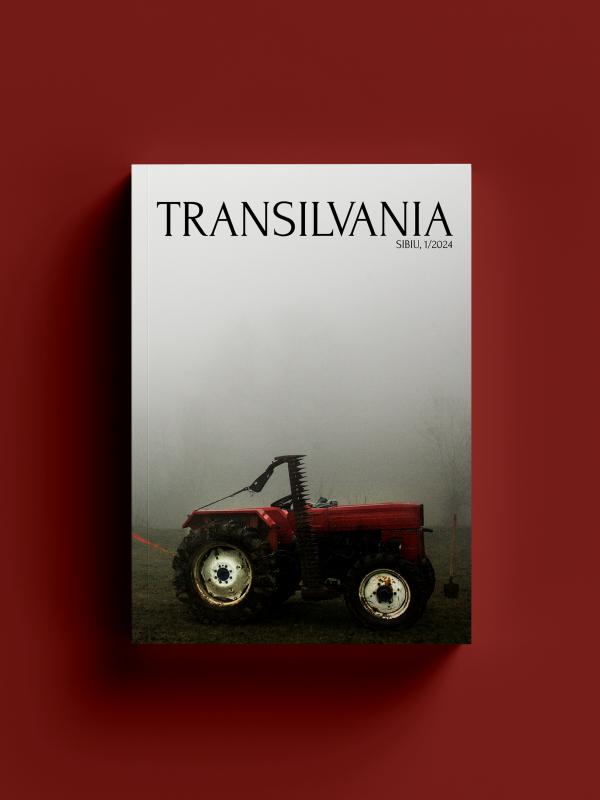
Transilvania featured 1.2024
Revista: 1 / 2024
Anul Publicarii:2024
Print ISSN: 0255-0539

Științe socio-umane

Arte vizuale

Filozofie și studii sociale

Antropologie și etnologie

Sociologie

Științe politice & juridice

Istorie & Antropologie

Studii culturale

Autor: Ioana-Ruxandra FRUNTELATĂ
Email: ioana.fruntelata@litere.unibuc.ro

From the Museum Space to the Ethnological Field and Back: Meanings and Aims of Research

Abstract: The article argues the importance of ethnological field research for contemporary ethnographic museums, stating the premise that the specificity of ethnological heritage consists in its epistemic value and in its intrinsic human (‘living’) dimension. As a central institution of knowledge, any modern ethnographic museum should be connected to the present, studying heritage communities and bearers in order to preserve and safeguard the systemic character of folk cultures, their unique know-how and forms of expression and their creative and affective components. By reassessing the results of the research project „Contemporary Villages in Romania – Openings Towards Europe” which was initiated by the Museum of Ethnography in Brașov in 2005 and implemented in 2006-2007, the knowledge and expertise acquired during ethnological field researches are explored. The project was coordinated by Ligia Fulga Ph. D and aimed to perform an emergency ethnological research in two communes in Brașov county that were to be crossed by the A3 Highway Brașov-Borș, under construction. Teams of Brașov museum researchers and teams of University professors and students from the Faculty of Letters, University of Bucharest worked together to identify the representative heritage of communes Mândra and Șercaia. As coordinator of two research teams working in Mândra in 2006 and 2007, the author of the article analyses the collected material focusing upon “traditions of representation” and the marginal status of two exceptional heritage bearers, a Rroma woman – poet and singer and a Romanian woman with exceptional memory and communication skills. Also, the exhibition dedicated to the village Mândra after the end of the project is regarded as a kind of validation of the quality of the research, since villagers who were invited to the Brașov Museum of Ethnography to see and discuss the exhibition actually mirrored themselves in its exhibits. Finally, two more arguments for the necessity of field research as current museum activity are formulated: the constant need for collecting the present because ‘traditional’ culture is meaningful “only when seen in relationship with any other observable aspects of culture” (Christian Feest) and the characteristic ‘interweaving’ of ethnological scholarship (and ethnologues, as a matter of fact) in present heritage regimes and in the making of cultural heritage.

Keywords: ethnological field research, museums, heritage, Museum of Ethnography in Brasov

Citation suggestion: Fruntelată, Ioana-Ruxandra. “Din spațiul muzeal pe terenul etnologic și înapoi: sensurile și finalitățile cercetării.”Transilvania, no. 01 (2024): 1-9.

Adell, Nicolas, Regina F. Bendix, Chiara Bortolotto, and Markus Tauschek. “Introduction. Between Imagined Communities and Communities of Practice: Participation, Territory and the Making of Heritage,” In Between Imagined Communities and Communities of Practice: Participation, Territory and the Making of Heritage, edited by Nicolas Adell, Regina F. Bendix, Chiara Bortolotto and Markus Tauschek – Göttingen Studies in Cultural Property, volume 8 –, 7-21. Göttingen: Universitätsverlag Göttingen, 2015.

Butoi, Ionuț. “Recitindu-l pe Stahl.” Transilvania, no. 1-2 (2022): 5-14.

Constantinescu, Nicolae. “Cultura populară românească – părțile și întregul” [Romanian Folk Culture – Parts and Whole]. In Folclorul, cum poate fi înțeles. Studii și articole de etnologie românească [Folklore: How It Could Be Understood. Studies and Articles of Romanian Ethnology], edition, English abstracts and afterword by Ioana-Ruxandra Fruntelată, 101-122. Bucharest: Editura Universității din București, 2011.

Deaconu, Gheorghe. “Patrimoniul viu al culturii populare – concept, strategie, gestiune” [The Living Heritage of Folk Culture – Concept, Strategy, Management]. In Sinteze: 1994-2008 [Syntheses: 1994-2008], 139-143. Bucharest: Centrul Național pentru Conservarea și Promovarea Culturii Tradiționale, 2009.

Dundes, Alan. “Structuralism and Folklore.” In The Meaning of Folklore: The Analytical Essays of Alan Dundes, edited and introduced by Simon J. Bronner, 123-153. Utah: Utah University Press, 2007.

Feest, Christian. “Which Ethnography Do Ethnographic Museums Need?” In Beyond Modernity. Do Ethnography Museums Need Ethnography?, edited by Vito Lattanzi, Sandra Ferracuti, and Elisabetta Frasca, 185–195. Espera, 2014. www.researchgate.net/publication/262006304.

Fruntelată, Ioana-Ruxandra. “Autopatrimonializare și identități locale” [Self-heritigization and local identities]. In Anuarul Institutului de Etnografie și Folclor “C. Brăiloiu” [Annual review of the Institute of Ethnography and Folklore “C. Brăiloiu”], new series, vol. 27, 433-443. Bucharest: Editura Academiei Române, 2016.

Fruntelată, Ioana-Ruxandra. “Emoțiile şi etnologia ‘acasă’” [Emotions and Ethnology at Home] in etno. brasov.ro, percepții, medii culturale, comunicare vol. 3 [etno.brasov.ro, perceptions, cultural media, communication], edited by Ioan-George Andron and Ligia Fulga, 65-70 (Brașov: Editura Capo- Lavoro, 2007).

Fruntelată, Ioana-Ruxandra. “Marginal și excepțional în configurarea patrimoniului rural: o poetă țărancă” [Marginal and Exceptional in the Configuration of Rural Heritage: A Peasant Woman Poet]. In Sinteze: 1994-2008 [Syntheses: 1994-2008], 727-729. Bucharest: Centrul Național pentru Conservarea și Promovarea Culturii Tradiționale, 2009.

Fruntelată, Ioana-Ruxandra. “O rediscutare a viziunii lui Henri. H. Stahl despre „adevărata și falsa cultură sătească.” Transilvania, no. 1-2 (2022): 15-24.

Fruntelată, Ioana-Ruxandra. “Patrimoniul cultural imaterial – realitate și reprezentare” [Intangible Cultural Heritage – Reality and Representation], in „Caietele ASER” 8/ 2012 [ASER Notebooks – publication of the Romanian Association of Ethnological Sciences], edited by Ioana Fruntelată, Gabriel-Cătălin Stoian, and Emil Țîrcomnicu, 146-151. Bucharest: Editura Etnologică, 2013.

Fruntelată, Ioana-Ruxandra. “Tradiții de reprezentare şi purtătorii lor. Aplicație la satul Mândra (jud. Braşov)” [Traditions of Representation and Their Bearers: Mândra Village, Brașov County]. In Caietele ASER 2 [ASER Notebooks – publication of the Romanian Association of Ethnological Sciences], 129-138. Oradea: Editura Muzeului Țării Crişurilor, 2007.

Fulga, Ligia. “Proiectul de cercetare „Sate contemporane din România – deschideri spre Europa”/ raport intermediar 2006 [The Research Project “Contemporary Villages in Romania – Openings towards Europe”]. In Caietele ASER 2/2006 [ASER Notebooks – publication of the Romanian Association of 9

Ethnological Sciences], 263-272. Oradea: Editura Muzeului Țării Crişurilor, 2007.

Ionică, Ion. “Dealu Mohului. Ceremonia agrară a cununii în Țara Oltului” [Mohu Hill. Agrarian Ceremony of the Wreath in Olt Land], ed. Constantin Mohanu. Bucharest: Minerva, 1996.

Repciuc, Ioana. “Laminorul observației. Tehnica cercetării de teren în concepția lui Henri H. Stahl.” Transilvania, no. 1-2 (2022): 25-32.

Rostás, Zoltán. “Henri H. Stahl–un sociolog constructor de istorie. Perspectiva unui istoric budapestan” [Henri H. Stahl: A Sociologist Building History. The Perspective of a Historian from Budapest]. Transilvania, no. 1-2 (2022).

Cornelia Cocan cântând la Muzeul de Etnografie din Brașov, cu ocazia expoziției organizate pe 20 martie 2008. A doua din dreapta ei este Maria Moldovan. Foto: Ioana Fruntelată

Gheorghe Taflan și Elisabeta Zară, prezentați ca purtători de patrimoniu din Mândra în expoziția organizată de Muzeul de Etnografie din Brașov, 20 martie 2008. Foto: Ioana Fruntelată

Cornelia Cocan și cercetătoarea Georgiana Radu (în costumul împrumutat de tanti Cornelia) la reconstituirea șezătorii din Mândra, iulie 2006. Foto: Ioana Fruntelată

Elisabeta Zară și Gheorghe Taflan pregătindu-se să participe la reconstituirea jocului din Mândra, 20 iulie 2006. Foto: Ioana Fruntelată

Autor: Karla ROȘCA
Email: karla.rosca@muzeulastra.com

Restitutions and Re-enactments in the Open-Air Museum in Dumbrava Sibiului:

The Story of the Corund Potters

Abstract: The field research undertook by ASTRA Museum in the Szeklers’ area, especially in the locality of Corund, Harghita County, between 2021 and 2022, aimed to capture the rural life of the community, the acquisition of utilitarian and decorative ceramic objects important for the museum’s collections and the identification of craftspeople who still practice this craft and which can demonstrate to the visiting public of the Open-Air Museum in Dumbrava Sibiului, the mastery of the craft. In 2023, the number of potters from Corund who use the traditional decorum is decreasing, with approximately 250 potters working in workshops. We are witnessing a reorientation of the pottery centre due to current demands, especially external ones, which implicitly leads to a change in decorum and techniques. What is the future of the Corund ceramics? Can we talk about the identity of the ceramics production and the preservation of the Corund brand? It is difficult to say, given that in recent years, in addition to traditional ceramic, the potters from Corund display a new type of ceramics which is more or less in line with the continuity of the tradition of the Corund centre, with strong European influences, coming from Germany, Austria,festwin giriş Hungary, Italy or Spain. The preliminary research completed the scientific research on the Szekler heritage held by ASTRA Museum, especially the craft of traditional pottery, by identifying craftspeople to help us complete our puzzle. The interviewed potters’ families contributed with objects, photographs, and life stories, and we recovered a significant part of documentary material on the oral history of the local Szeklers, thus obtaining a systematic fund composed of audio and video recordings, digital images, mostly on the pottery craft. All these completed the museum’s electronic database and will contribute to its use for scientific and craft recovery purposes. As a result of the research, we initiated a programme to protect and promote the traditional pottery from Corund by inviting craftspeople to the events and interactive workshops organized by the museum, designed for the visiting public, which we hope will contribute to enhancing the quality of the ceramic produced.

Keywords: field research, heritage communities, traditional pottery, potters, Corund, sustainability, heritage facilitation

Citation suggestion: Roșca, Karla. “Restituiri și reconstituiri în Muzeul în aer liber din Dumbrava Sibiului:povestea olarilor din Corund”. Transilvania, no. 1 (2024): 10-18.

Barabás, Endre. Udvarhely vármegye leírása közgazdasági szempontból. Megyei monográfiák [Description of Odorheiu County from an Economic Point of View. County Monographs]. Budapest: Pesti Könyvnyomda Részvénytársaság, 1904.

Haáz, Ferenc Rezső. “Adatok a korondi fazekas mesterséghez” [Data for the Korund Pottery Craft]. Néprajzi Értesítő XXXII (1940): 184-186.

Incze, Lajos. “A korondi fazék” [The Korund Pottery]. Hitel repertórium, no. 2 (1939): 122-131.

István, Lájos. A korondi kerámia. Népi Alkotások és Műkedvelő Tömegmozgalom Hargita megyei Irányító Központja kiadványa [The Korund Ceramics. Publication of the Harghita County Center of Folk Art]. Miercurea Ciuc: 1973.

Jakab, Elek, and Lajos Szádeczky. Udvarhely vármegye története a legrégibb időtől 1849-ig. [History of the County of Udvarhely from the earliest times to 1849]. Budapest: Athenaeum, 1901.

Kardalus, János, ed. Ceramica din Corund. A korondi kerámia. [The Korund Pottery]. Miercurea Ciuc: 1981.

Kocsi, Márta and Csomor, Lajos. Korondi székely fazekasság [Korund Székely Pottery]. Budapest: Népművelési Propaganda Iroda, 1980.

Kós, Károly. Tájak, falvak, hagyománzok. [Landscapes, Villages, Traditions]. Bucharest: Kriterion, 1976.

Kozma, Ferenc. A székelyföld közgazdasági és közmívelődési állapota. [The economic and social development state of Székelyföld]. Budapesta: Franklin, 1879.

Kresz, Mária. „Fazekas, korsós, tálos”. [Pot, Jug, Bowl]. In Ethnographia, LXXI (1960): 297-379.

Muzeul ASTRA – Jurnal virtual. http://www.muzeulastra.com/2010/08/.

Muzeul ASTRA. Târgul Creatorilor Populari din România / Târgul de sfânta Mărie, ediția 40. https:// muzeulastra.ro/eveniment/targul-creatorilor-populari-targul-de-sfanta-marie-editia-nr-40/

Arhivele Statului din Miercurea Ciuc, Registrele fiscale din anii 1818-1848, fond 38.

Ilyés Mihály, Corund, județul Harghita, (n.1954, Corund). Interview: Karla Roșca (2021-2022, Corund, in his workshop).

Autor: Ovidiu BARON
Email: ovidiu.baron@muzeulastra.com

“The Secret Memory of the Objects”: Cultural Mediation in the Museum Through Workshop,

Object, and Story

Abstract: The current article reviews the evolution of cultural mediation and its modes of functioning in the activities proposed within the ASTRA Museum, recovering the field research efforts of the predecessors and continuing them with well-articulated forays into today’s rural world. The author mentions the arguments for the research and collection of constructions, objects, and deneme bonusu
installations, starting from the project of the Transylvanian Associations for Romanian Literature and the Culture of the Romanian People (ASTRA), which has inaugurated the Museum of Associations in 1905 with its first exhibition of sequences of outdoor constructions. The Museum of Popular Techniques, opened in 1967, became after the Revolution of 1989 the Museum of Traditional Popular Civilization, an integral part of the ASTRA National Museum Complex. Often found under the urgency of saving some constructions, objects, or traditions, field research has had multiple results, whether one refers to collections, to the permanent outdoor exhibition, to scientific studies, or to the continuous identification of human resources capable of transmitting knowledge, skills and abilities, as well as of transcribing or recording through images and sound the memory of the village. A new valorisation of these cultural research and mediating efforts has been materialized in the “Secret Memory of Objects” Program.

Keywords: history of the ASTRA Museum, cultural mediation, field research, ethnography, museum interpretation, storytelling

Citation suggestion: Baron, Ovidiu. “„Memoria secretă a obiectelor”. Medierea culturală în muzeu prin atelier, obiect și poveste”. Transilvania, no. 1 (2024): 19-28.

Baron, Ovidiu, and Lucian Nicolae Robu, eds. 50 de ani de muzeu în aer liber în Dumbrava Sibiului în 18 interviuri [50 Years of the Open-Air Museum in Sibiu’s Dumbrava in 18 Interviews]. Sibiu: ASTRA Museum, 2013.

Baron, Ovidiu, and Ancuța Ilie. Memoria secretă a obiectelor – catalog 2022-2023 [Secret Memory of Objects – Catalogue 2022-2023]. Sibiu: ASTRA Museum, 2023.

Baron, Ovidiu, and Ancuța Ilie. Soarele din farfurie – o abordare creativ-ludică a patrimoniului etnografic [The Sun in a Plate – A Creative Playful Approach to Ethnographic Heritage]. In Marketingul și educația în muzee. Sibiu: ASTRA Museum, 2023.

Bordeaux, Marie-Christine. “Mediation.” In Dictionary of Museology, edited by François Mairesse. New York: Routledge, 2023.

Bucur, Corneliu. Muzeul Civilizației Populare Tradiționale “ASTRA” (Dumbrava Sibiului) – Catalog [ASTRA Museum of Traditional Popular Civilization – Catalogue]. Sibiu: ASTRA Museum, 2007.

Bucur, Corneliu, ed. Muzeul ASTRA. 100 de ani de etnomuzeologie românească la Sibiu [ASTRA Museum: 100 years of Romanian Ethnomusicology in Sibiu]. Sibiu: ASTRA Museum, 2006.

Caune, Jean. La démocratisation culturelle – Une médiation à nout de souffle [Cultural Democratization – Breathless Mediation]. Grenoble: Presses universitaires de Grenobles, 2006.

Chaumier, Serge, and François Mairesse. La médiation culturelle [Cultural Mediation]. Paris: Armand Colin, 2013.

Irimie, Cornel. “Cercetarea pe bază de chestionare în etnografia românească contemporană. Rezultate obținute în cadrul Secției de etnografie și artă populară a Muzeului Brukenthal din Sibiu” [Research based on Enquiry in Romanian Contemporary Ethnography: Results gathered within the Ethnography and Folk Art Section of the Brukenthal Museum in Sibiu]. In Cornel Irimie și evoluția Muzeului Tehnicii Populare [Cornel Irimie and the Evolution of the Folk Technique Museum], edited by Marius-Florin Streza and Lucian Nicolae Robu. Sibiu: ASTRA Museum, 2013.

Irimie, Cornel. “Muzeul Tehnicii Populare. Actualitate, concepție, profil tematic și plan de organizare” [Museum of Popular Technique: Actuality, Concept, Thematic Profile, and Organizational Plan]. Cibinium, no. 1 (1966): 15-28.

Irimie, Cornel. “Observația în etnologie” [Observation in Ethnology]. In Cornel Irimie și evoluția Muzeului Tehnicii Populare [Cornel Irimie and the Evolution of the Folk Technique Museum], edited by Marius- Florin Streza and Lucian Nicolae Robu. Sibiu: ASTRA Museum, 2013.

Lupu, Nicolae. “Cuvînt înainte” [Foreword]. Cibinium, no. 1 (1966): 3-6.

Nasim-Aboudrar, Bruno, and François Mairesse. La Médiation culturelle [Cultural Mediation]. Paris: PUF/ Humensis, 2022.

Rushdie, Salman. “Povești fantastice” [Fantastic Stories]. In Salman Rushdie, Limbaje ale adevărului [Languages of Truth]. Iași: Polirom, 2022.

Sterca-Șuluțiu, Iosif. “Discursul ținut la inaugurarea Muzeului istoric și etnografic și la deschiderea Expoziției, în 19 August st. n. 1905” [Speech at the Inauguration of the History and Ethnography Museum and of the Exhibition, on August 19 n.s. 1905]. In Conferințele ASTREI – restituiri [ASTRA conferences – restitutions], no. 99 (2010): 6.

Vancu, Radu. “Patru cazuri de violență împotriva scriitorilor: Salman Rushdie, Ashraf Fayadh, Meral Șimșek, Nedim Türfent – limbaje ale adevărului [Four Cases of Violence against Writers: Salman Rushdie, Ashraf Fayadh, Meral Șimșek, and Nedim Türfent – Languages of Truth]. Transilvania, no. 11-12 (2022): 68-72.

Autor: Ancuța-Maria ILIE
Email: ancuta.ilie@muzeulastra.com

Field Research in the Context of Cultural Mediation Practice in the ASTRA Museum

Abstract: The present study analyses the ethnographic field research in the context of cultural mediation activities at the ASTRA Museum in Sibiu. In 2022, the Museum started `The Secret Memory of Objects` cultural program that consists of workshop-exhibitions, cultural mediation, cultural animations, and storytelling activities, all of them having in common the ethnographic field research as the core starting point. Within this context, the article presents three research cases conducted on field by ASTRA Museum specialists in 2022-2023. The aim of these field studies was to bring up to date all the information and the present situation of the targeted communities. In addition, this paper gives practical examples of creative ways to valorize the research and make it relevant for different types of visitors.

Keywords: field research, ethnography, cultural mediation, exhibition, museum, storytelling

Citation suggestion: Ilie, Ancuța-Maria. “’Cercetarea de teren în contextul practicilor de mediere culturală din Muzeul ASTRA.” Transilvania, no. 01 (2024): 29-35.

deneme bonusu veren siteler

Nasim-Aboudrar, Bruno, and François Mairesse. La Médiation culturelle [Cultural Mediation]. Paris: PUF/ Humensis, 2022.

Baron, Ovidiu. Fata pădurii. [Forest Girl]. Illustrated by Iulia Teodorescu. Sibiu: ASTRA Museum, 2023.

Baron, Ovidiu, and Ancuța Ilie. Memoria secretă a obiectelor – catalog 2022-2023 [Secret Memory of Objects – Catalogue 2022-2023]. Sibiu: ASTRA Museum, 2023.

Baron, Ovidiu, and Ancuța Ilie. „Soarele din farfurie – o abordare creativ-ludică a patrimoniului etnografic” [“The Sun in a Plate” – A Creative Playful Approach to Ethnographic Heritage]. In Marketingul și educația în muzee. Sibiu: ASTRA Museum, 2023.

Baron, Ovidiu, Olga Popa, and Adrian Scheianu. Găleșoaia: lumea veche vs. lumea nouă: excurs expozițional [Găleșoaia: The Old World vs. The New World: An Exhibitional Approach]. Sibiu: ASTRA Museum, 2009.

Caune, Jean. La démocratisation culturelle – Une médiation à nout de souffle [Cultural Democratization – Breathless Mediation]. Grenoble: Presses

Autor: Eduard-Claudiu GROSS
Email: eduard.gross@ubbcluj.ro

Dissolving Reality: Exploring the Erosion of Photographic Authenticity in the Age of AI

Abstract: This study explores the intricate dynamics of visual communication in the context of AI-generated visuals. The question of picture interpretation, starting with the subjective interpretation of images, contextual constraints, and cultural influences of individuals that may affect the perception of an image, is at the heart of this work. The study examines a range of viewpoints on the perception of pictures from writers including Roland Barthes, John Berger, Susan Sontag, and Jean Baudrillard in order to investigate these concerns. The paper also explores the significance of AI-generated graphics, as well as Jean Baudrillard’s simulacra notion. It draws attention to how simulacra, or representations without a true relationship to reality, are embodied by AI-generated visuals. In the context of AI-generated imagery, Baudrillard’s phases of the image are analyzed, indicating the separation from reality and the formation of pure simulacra. The importance of critically engaging with images becomes evident, as viewers’ personal experiences, cultural backgrounds, and the intricate complexities of visual media intertwine to shape meaning. The insights derived from this study contribute to a deeper understanding of the multi-faceted nature of visual communication in contemporary society, emphasizing the need for a nuanced and critical approach to the interpretation of visual content.

Keywords: Visual Communication; Subjectivity; Contextual Influences; AI-generated Imagery; Simulacra; Image Interpretation

Citation suggestion: Gross, Eduard-Claudiu. “Dissolving Reality: Exploring the Erosion of Photographic Authenticity in the Age of AI” Transilvania, no. 01 (2024): 36-43.

“Oxford Word of the Year 2016.” Oxford Languages. Accessed May 31, 2023. https://languages.oup. com/word-of-the-year/2016/.

“Post-Truth.” post-truth adjective – Definition, pictures, pronunciation and usage notes | Oxford Advanced Learner’s Dictionary at OxfordLearnersDictionaries.com. Accessed May 31, 2023. https:// www.oxfordlearnersdictionaries.com/definition/english/post-truth.

Barthes, Roland. Camera Lucida: Reflections on Photography. 1st American ed. Hill and Wang.

Baudrillard, Jean. Simulacra and Simulation. University of Michigan Press, 1994.

Berger, John. Ways of seeing: Based on the BBC television series. London: British Broadcasting Corporation, 1972.

Boorstin, Daniel J. The image: A guide to pseudo-events in America. New York: Atheneum, 1992.

Broussard, Meredith. Artificial unintelligence: How computers misunderstand the world. Cambridge, MA: The MIT Press, 2019.

Debord, Guy. The Society of the Spectacle. New York: Zone Books, 1995.

Elkins, James. Visual studies a skeptical introduction. New York: Routledge, 2003.

Grierson, Jamie. “Photographer Admits Prize-Winning Image Was AI-Generated.” The Guardian, April 17, 2023. https://www.theguardian.com/technology/2023/apr/17/photographer-admits-prize-winning-image-was-ai-generated.

Huang, Kalley. “Why Pope Francis Is the Star of a.i.-Generated Photos.” The New York Times, April 8, 2023. https://www.nytimes.com/2023/04/08/technology/ai-photos-pope-francis.html.

Jarow, Oshan. “How Fake AI Images Can Expand Your Mind.” Vox, March 30, 2023. https://www.vox. com/future-perfect/23661673/pope-puffer-coat-generative-ai-midjourney-imagination.

Kakutani, Michiko. The death of truth: Notes on falsehood in the age of trump. New York: Tim Duggan Books, 2018.

Kress, Gunther, and Theo van Leeuwen. Reading images: The grammar of visual design. London: Routledge, 2010.

McIntyre, Lee C. Post-truth. Cambridge, MA: MIT Press, 2018.

Sontag, Susan. On Photography. New York: RosettaBooks, 2005.

T., Mitchell W J. What do pictures want?: The lives and loves of images. Chicago, Ill: Univ. of Chicago Press, 2010.

Tancred, Jo Lawson. “The Prophecies of Aaron.” Outland, November 4, 2022. https://outland.art/ harold-cohen-aaron/.

Tandoc, Edson C., Zheng Wei Lim, and Richard Ling. “Defining ‘Fake News.’” Digital Journalism 6, no. 2 (2017): 137–53. https://doi.org/10.1080/21670811.2017.1360143.

Wardle, Claire. “Information Disorder: Toward an Interdisciplinary Framework for Research and Policy Making.” 2017.

Autor: Georgiana BUȚ
Email: georgianabut@gmail.com

La Biennale di Venezia: The Pavillion as Artistic Intervention Object

Abstract: In this paper I examine a particular type of exhibition space, namely the national pavilion at the Venice Biennale, and analyze the current tendency within contemporary art of treating the exhibition pavilion as an object of artistic intervention. Three case studies – Relocating a Structure by Maria Eichhorn, The Last Land by Hans Schabus and I, Impostor by Mike Nelson – were selected from the interval 2005-2022, as they capture an approach in which, I argue, the exhibition pavilion is comprised within the structure of the work as a physical, as well as a symbolic support. These are spaces that Eichhorn, Schabus, and Nelson mold and reorganize to their complete transfiguration, at times making them disappear or moving them altogether (even if only within the imagination). Starting from Kendall Walton’s concept of make-believe, and its further elaborations by Elisa Caldarola, I propose the pavilion as a support that determines two types of imaginative play through the mechanisms of content-oriented make-believe, and prop-orientated make-believe. Inspired by the theory of installation art advanced by Elisa Cadarola, I then analyze some techniques used to configure the space and structure the public’s experience within the three works. In doing so, I show how, in Eichhorn’s Relocating a Structure, Schabus’ The Last Land and Nelson’s I, Impostor, the exhibition pavilion becomes an artistic resource.

Keywords: national pavilion, Venice Biennale, artistic resource, artistic intervention, installation art, exhibition space, content-oriented/ prop-oriented make believe

Citation suggestion: Buț, Georgiana. “Bienala de Artă de la Veneția: pavilionul ca obiect al intervenției artistice”. Transilvania, no. 1 (2024): 44-55.

Acknowledgement: Lucrarea a fost realizată în timpul unui stagiu la Istituto Romeno di Cultura e Ricerca Umanistica din Veneția, obținut cu sprijinul statului român prin programul național de burse „Nicolae Iorga,” desfășurat în 2022 și face parte din teza de doctorat cu titlul Expoziția de artă contemporanăca medium artistic (2023), elaborată de Georgiana Buț la Universitatea „Babeș-Bolyai” Cluj-Napoca, Școala Doctorală de Filosofie.

Bishop, Claire. Installation Art: A Critical History. London: Routledge, 2005.

Bourdieu, Pierre. Distinction: A Social Critique of the Judgement of Taste. London: Routledge & Kegan, 1984.

Caldarola, Elisa. Filosofia dell’artecontemporanea: installazioni, siti, oggetti. Macerata: Quodlibet, 2020.

Cameron, Dan. “Memories of Trespassing.” In Mike Nelson: British Pavilion, 54th International Art Exhibition, La Biennale di Venezia 2011, edited by Mike Nelson and Dan Cameron. London: British Council, 2011.

Darwent, Charles. “Real Space Fictions.” Modern Painters: a quarterly journal of the fine arts 14, no. 3 (2001): 37-43.

Declercq, Jef. “Field Notes: Maria Eichhorn, ‘Relocating a Structure,’ German Pavilion, 59th Venice Biennale.” Art & Education. https://www.artandeducation.net/schoolwatch/485978/field-notes-maria-eichhorn-relocating-a-structure-german-pavilion-59th-venice-biennale.

Dziewior, Yilmaz, ed. Maria Eichhorn: Relocating a Structure, German Pavilion 2022, 59th International Art Exhibition la Biennale di Venezia. Köln: Verlag der Buchhandlung Walther und Franz König, 2022.

Dziewior, Yilmaz. “Showing What’s There. Maria Eichhorn and the German Pavilion in Venice.” In Maria Eichhorn: Relocating a Structure, German Pavilion 2022, 59th International Art Exhibition la Biennale di Venezia, edited by Yilmaz Dziewior. Köln: Verlag der Buchhandlung Walther und Franz König, 2022.

Gaiger, Jason. “Dismantling the Frame: Site-Specific Art and Aesthetic Autonomy.” British Journal of Aesthetics 49, no. 1 (2009): 43–58. https://doi.org/10.1093/aesthj/ayn058 .

Hills, David. “Metaphor.” In The Stanford Encyclopedia of Philosophy, edited by Edward N. Zalta and Uri Nodelman (2022). https://plato.stanford.edu/archives/fall2022/entries/metaphor/.

Hollein, Max. “Hans Schabus: Das Letzte Land [The Last Land], 2005.” In Hans Schabus: das letzte Land, edited by Max Hollein. Vienna: Schlebrugge, 2005.

Manchester, Elizabeth. “Michael Craig-Martin, An Oak Tree, 1973.” Tate, December 2002. https://www. tate.org.uk/art/artworks/craig-martin-an-oak-tree-l02262.

Rugoff, Ralph. “Venice Top Ten (In No Particular Order).” Frieze, no. 93 (2005).

Sharp, Jasper. “The Last Land.” ArtReview: international art & style 56, no. 5 (2005).

Spanier, Samson. “Venice Biennale news.” Apollo: the international magazine of the arts 7 (2005).

Martini, Vittoria. “The Giardini: Status of the Property.” In Maria Eichhorn: Relocating a Structure, German Pavilion 2022, 59th International Art Exhibition la Biennale di Venezia, edited by Yilmaz Dziewior. Köln: Verlag der Buchhandlung Walther und Franz König, 2022.

Nelson, Mike, Rachel Withers et al. “Host Pavilion/Guest House/Han.” In Mike Nelson: British Pavilion, 54th International Art Exhibition, La Biennale di Venezia 2011, edited by Mike Nelson and Dan Cameron. London: British Council, 2011.

Walton, Kendall L. “Categories of Art.” The Philosophical Review 79, no. 3 (1970): 334-67. https://doi. org/10.2307/2183933.

Walton, Kendall L. Mimesis as Make-Believe: On The Foundation of Representational Arts. Cambridge MA & London: Harvard University Press, 1990.

Walton, Kendall L. “Metaphor and Prop Oriented Make-Believe.” European Journal of Philosophy 1, no. 1 (1993): 39–57.

“Austrian Pavilion Venice Biennale 2005.” E-flux, May 10, 2005. https://www.e-flux.com/ announcements/42090/austrian-pavilion-venice-biennale-2005/.

Mike Nelson. The Coral Reef. Matt’s Gallery, January 26 – March 26 2000. https://www.mattsgallery. org/exhibitions/the-coral-reef.

Autor: Victor Daniel CREȚU & Radu RACOVIȚAN
Email: victor.cretu@ulbsibiu.ro

The visit of the royal family to Transylvania in the context of the year 1919 (II)

Abstract: The visits made in the interwar period by representatives of the royal family to the United Provinces with the Country in 1918 had a certain significance. The physical presence of the members of the Romanian dynasty was an act of affirmation of legitimacy and suzerainty over the territory acquired in 1918. The Romanian press in Transylvania and memorial oeuvres have extensively reflected and emphasized the importance of the visit of the Royal Family, following its route, which included numerous localities, from the outposts of the Romanian army at Békéscsaba (in Hungary) to Braşov. As far as Transylvania is concerned, this was all the more necessary given that, after World War I, a sudden campaign of unprecedented vehemence and magnitude was launched by Hungarian political circles, asking for the support of the international public opinion and of the governments of Western countries for the revision of the Treaty of Trianon, which had “mutilated” the borders of the Hungarian state, aiming at the restitution of Transylvania, unjustly “wrested” from Hungary’s body. The use of symbolic registers with grandiloquent connotations was a fairly common practice at such events at the time. The presence of the royal authority in Transylvania was stated by a symbolic gesture. The emblematic figure of Michael the Brave, who for the first time in history achieved the union of the Romanian territories and the reawakening of his qualities in the person of King Ferdinand I, or of his heir, Prince Carol, were the symbolic leitmotif of all trips.

Keywords: Romanian dynasty, World War I, Ferdinand I, Transylvania, royal family.

Citation suggestion: Cretu, Victor Daniel and Radu Racovitan . “The visit of the royal family to Transylvania in the context of the year 1919 (II).” Transilvania, no. 01 (2024): 56-67.


Acknowledgement: This work is supported by the Ministry of Research, Innovation and Digitization through Program 1 – Development of the national research – development system. Subprogram 1.2 – Institutional performance – Projects for financing excellence in RDI, contract no. 28 PFE/30.12.2021.

Brătianu Gheorghe. Acțiunea politică şi militară a României în 1919. În lumina corespondenței diplomatice a lui I. I. C. Brătianu [Romania’s Political and Military action in 1919. In light of the diplomatic correspondence of I.I.C. Brătianu]. Bucharest: Cartea Româneasca, 1939.

Romania’s National Library. Saint-Georges collection, [BNR, Saint-Georges collection], file no 497, memorandum by Take Ionescu regarding the establishment of the Small Entente.

Campus, Eliza. Din politica externă a României (1913-1947) [From Romania’s external policies (1913- 1947)]. Bucharest: Editura Politica, 1980).

Duca, I. G. Memorii [ Memoirs], vol. IV, Războiul (1917-1919). Edited by Stelian Neagoe. Bucharest: Machiavelli Press, 1994.

Dutu, Al., C-tin Botoran, and M. Retegan. Transilvania în evoluția relațiilor româno-ungare. O abordare mai puțin cunoscută [Transylvania in the evolution of Romanian – Hungarian relations. A less known approach]. Bucharest: Editura Militară, 1993.

Iancu Gheorghe. Contribuția Consiliului Dirigent la consolidarea statului național unitar român (1918- 1920) [The contribution of the Ruling Council to the consolidation of the unitary Romanian national state (1918-1920)]. Cluj-Napoca, Dacia Press, 1985.

Ministry of Foreign Affairs, Paris collection, [MAE, Paris collection], file 54.

Mary, Queen of Romania. Însemnări zilnice [Daily Notes]. Bucharest, Historia Press, 2006.

Suciu, Dumitru. Monarhia şi făurirea României Mari [The Monarchy and the creation of Greater Romania]. Bucharest: Albatros Press, 1997.

Tilea, V. V. Acțiunea diplomatică a României. Noiembrie 1919 – martie 1920 [ Romania’s Diplomatic action. November 1919 – March 1920]. Sibiu: Tipografia Poporului, 1925.

Autor: Levente Nagy & Erika Mandl N.
Email: nagy.levente@btk.elte.hu

Quasi liber et pictura… Some Considerations on the Interpretation of Signs in the Works Baltagul (Mihail Sadoveanu), The Name Of The Rose (Umberto Eco) and The Barbarian (Zsigmond Móricz)

Abstract: In the present study we try to give a comparative analysis of the three works starting from the idea that the narrative structure of the respective works is essentially that of the detective novel. We analyze those methods by which the main hero (Guglielmo) and heroines (Vitoria and the anonymous wife of the shepherd Bodri) of the works manage to identify the killers through the interpretation of signs. Even if there are no direct influences and connections between the three texts regarding the semiotic process, striking analogies can be detected. Given the fact that in the case of linguistic signs the correctness of the interpretation depends only on the authority, we try to demonstrate that in the three works the interpretation of the signs has direct social consequences. Power is legitimized by interpretation, of which only scholars are capable.The excluded (heretics, shepherds) misinterpret the signs because they do not know the language with which they could interpret them correctly.Their language is meaningless, their speech is almost identical to the sounds made by animals. Finally we present the narrator’s attitude towards this world of the excluded.

Keywords: power, semiosis, detective fiction, intertextuality, referentiality, social exclusion

Citation suggestion: Nagy, Levente and Mandl, Erika N. “Quasi liber et pictura…Câteva considerații despre interpretarea semnelor în operele Baltagul (Mihail Sadoveanu), Numele trandafirului (Umberto Eco) și Barbarii (Zsigmond Móricz)”. Transilvania, no. 1 (2024): 68-76.

Augustin. “Enarrationes in Psalmos.” In Patrologia Latina. Tom 36., ed. de Jacques Paul Migne. Paris, 1861.

Bényei, Tamás. Rejtélyes rend: A krimi, a metafizika és a posztmodern [Mysterious Order: Detectiv Novel, Metaphysics and Postmodernism]. Budapest: Akadémiai Kiadó, 2000.

Benyovszky Krisztián. A jelek szerint: a detektívtörténet és közép-európai emléknyomai [What the Signs tell us: the Detective Novel in the Literatures of Central Europe]. Pozsony: Kalligram, 2003.

Cozma, Codruța. „Numele personajelor din romanul Baltagul, de Mihail Sadoveanu, în citire convențională vs. neconvențională.” [The Names of the Characters in the Novel Baltagul, by Mihail Sadoveanu, in conventional versus unconventional Reading]. In Numele și numirea. Actele conferinței internaționale de onomastică „numele și numirea” Ediția a III-a: Convențional / Neconvențional în onomastică [Name and Designation. Proceedings of the international onomastic conference “Name and Naming,” 3rd edition: Conventional/ Unconventional in Onomastic] ed. de Ovidiu Felecan. Cluj-Napoca: Editura Mega, 2015.

Cséve Anna. “A Barbárok olvasásának lehetséges kontextusai” [ Barbarians, possible Contexts of Interpretation]. Irodalomismeret, no. 4 (2014): 70-81.

Cséve Anna. “Halálhörgés a pusztában. A Barbárok keletkezéstörténetéhez” [Howl of death in the prairies. About the genesis of the novella Barbarians]. Pannon Tükör, no. 4 (1998): 10-18.

Eco, Umberto. Numele trandafirului [The Name of the Rose]. Translated by Florin Chirițescu. Iași: Polirom, 2004.

Eisemann György. “Adagio barbaro.” Szépirodalmi Figyelő, no. 1 (2022): 47-58.

Fărmuș, Ioan “Ficțiunea care se țese. O analiză a romanului Baltagul de Mihail Sadoveanu” [The Fiction that is weaving: an Analysis of Mihail Sadoveanu’s novel Baltagul]. Transilvania, no. 4 (2020): 51-58.

Iovănel, Mihai. “Popular Genres: Science Fiction and Fantasy, Detectiv Novel, Thriller.” Dacoromaia Litteraria, no. 7 (2020): 137-153.

Manolescu, Nicolae. Arca lui Noe. Eseu despre romanul românesc [Noah’s Ark: Essay on the Romanian Novel]. Bucharest: Editura 100+ 1 Gramar, 2003.

Nicolae Manolescu. Istoria critică a literaturii române [The Critical History of Romanian Literature]. Pitești: Editura Paralela 45, 2008.

Móricz Zsigmond. Pasărea cerului [Bird of the Sky]. Bucharest: Editura Univers, 1970.

Paleologu, Alexandru. Treptele lumii sau cale către sine a lui Mihail Sadoveanu [The Steps of the World or the Road towards the Inner Self of Mihail Sadoveanu]. Bucharest: Cartea Românească, 2006.

Popa, Mircea. „Sadoveanu és Móricz” [Sadoveanu and Móricz]. Helikon no. 21 (1992): 3-4.

Réthy Andor, Váczy Leona. Literatura maghiară în limba română [Hungarian Literature in Romanian]. Bucharest: Kriterion, 1983.

Sabunde de, Raimundus. Theologia naturalis seu Liber creaturarum, Prologus, hrsg. Friedrich Stegmüller. Stuttgart – Bad Cannstatt: F. Frommann Verlag, 1966.

Sadoveanu, Mihail. Opere 10 [Works]. Bucureşti: ESPLA, 1957.

Autor: Dumitra BARON
Email: dumitra.baron@ulbsibiu.ro

Writing « in the true night of the soul ». Cioran as a reader of Fitzgerald

Abstract: In this article, we explore the main sources of the fascination that Cioran (1911-1955), a French writer of Romanian origin, shows to the late work of the American novelist Francis Scott Fitzgerald (The Crack-Up, 1936), in the portrait he devotes to him in Exercices d’admiration (1986), taking into account some of his favorite themes: the necessary collapse to reach the depths of being, the importance of crisis and the corresponding lucidity, the disillusionment and the impossibility of writing. This close reading will allow us to identify first some features of how Cioran reads the foreign text and then to observe the mechanisms he uses to integrate his reading notes into the making of his own text. The experience of the broken identity discovered through the reading of the Fitzgeraldian text will allow Cioran not only to find a confirmation of his own thoughts and meditations on the same topic, but also to initiate literary creation, despite the constant fear of the impossibility of scriptural gesture.

Keywords: crack-up, writing, intertextuality, lucidity, Cioran, Fitzgerald

Citation suggestion: Baron, Dumitra. “Écrire « dans la vraie nuit de l’âme ». Cioran lecteur de Fitzgerald”. Transilvania, no. 2 (2024): 77-82.

ACKNOWLEDGEMENTS

This work was supported by a grant of the Romanian Ministry of Education and Research, CNCS/ CCCDI – UEFISCDI, project number PN-III-P3-3.6-H2020-2020-0160, contract no. 55/2021.

deneme bonusu veren siteler

Bertrand, Pierre. Le Coeur silencieux des choses – Essai sur l’écriture comme exercice de survie [The Silent Heart of Things – Essay on Writing as a Survival Exercise]. Québec : Liber, 1999.

Bessière, Jean. Fitzgerald la vocation de l’échec [Fitzgerald the Vocation of Failure]. Paris : Larousse, « Thèmes et textes », 1972.

Cioran. OEuvres [Works]. Paris : Gallimard, « Quarto », 1995.

Cioran. Entretiens [Interviews]. Paris : Gallimard, « NRF Arcades », 1995.

Cioran. Cahiers. 1957-1972 [Notebooks. 1957-1972]. Paris : Gallimard, 1997.

Deleuze, Gilles. Pourparlers [Negociations]. Paris : Minuit, 1990.

Deleuze, Gilles, Parnet, Claire. Dialogues [Dialogues]. Paris : Flammarion, 1996.

Fitzgerald, Francis Scott. De l’écriture [On Writing], textes réunis et présentés par Larry W. Phillips, traduits de l’américain par Jacques Tournier. Bruxelles : Complexe, 1991.

Fitzgerald, Francis Scott. Carnets [Notebooks], édités par Matthew J. Bruccoli, traduit de l’anglais (États-Unis) et préfacé par Pierre Guglielmina. Paris : Fayard, (1978) 2002.

Fitzgerald, Francis Scott. La Fêlure et autres nouvelles [The Crack-Up and Other Short Stories] (1936), traduit de l’américain par Suzanne Mayoux et Dominique Aury, traduction révisée par Suzanne Mayoux. Paris : Gallimard, 2004.

Ionescu, Arleen. „Samuel Beckett and E. M. Cioran: The Passion for Ruins”, Transilvania, nr. 1, 2023, p. 23-37.

Nizon, Paul. Marcher à l’écriture – Leçons de Francfort [Walking to Writing – Frankfurt Lessons], trad. Jean-Claude Rambach. Arles : Actes Sud, (1985) 1991.

Rosset, Clément. Le Choix des mots [Choice of Words]. Paris : Minuit, 1995.

Autor: Iulia HAȘDEU
Email: iulia.hasdeu@hesge.ch

The Gipsy Girl and the National Ideal: Reflections from a Painting Exhibition

Abstract: This essay examines the representational trope of the Gypsy Girl in the 2017 classical paintings exhibition: Images of Gypsies in the collection of the Art Museum of Cluj Napoca. Through cultural studies lens, I look into some of the most well-known classical Romanian paintings within their genealogy in the Western ones. Then, I argue that the Gypsy Girl figure is a particular recurent trope, shared by painters and curators from a typical modern position. The essay draws a line between the 19th century Orientalist modern European painters, then the views of the Romanian classical funding fathers of the classical painting and finally the very present Romanian gypsylorist curatorial ideas. Its concludes that the colonial and national ideology shared by all these elite actors alows the expression of an asymetrical relation between some imagined Us and Them, taking a well-known sexist male gaze form, as much as an priviledged position who looks at an exotic „object”.

Keywords: Romanian painting, portrait, Orientalism, Roma women

Citation suggestion: Hașdeu, Iulia. “Țigăncușa și idealul național: reflecții pornind de la o expoziție de pictură”. Transilvania, no. 1 (2024): 83-96.

Ben, Mahmoud Feriel, and Daniel Nicolas. Le voyage en Orient, de l’âge d’or à l’avènement du tourisme (1850-1930). Paris: Place de Victoires, 2008.

Berko, Patrick, and Viviane Berko. Peinture orientaliste. Bruxelles: Éditions Laconti, 2014.

Blanchard, Pascal, Nicolae Bancel, Gilles Boëtsch, Dominic Thomas, and Christelle Taraud. Sexe, race & colonies. La domination des corps du XVe siècle à nos jours. Paris: La Découverte, 2018.

Chiorean, Maria. “Racialized Modernity in Late Nineteenth Century Romanian Literature”. Metacritic Journal for Comparative Studies and Theory 9, no. 1 (2023). https://www.metacriticjournal.com/ article/256/racialized-modernity-in-late-nineteenth-century-romanian-literature

De Font-Reaulx, Dominique. Peinture et photographie. Les Enjeux d’une rencontre, 1839-1914. Paris: Flammarion, 2013.

Drace-Francis, Alex. Geneza culturii române moderne. Instituțiile scrisului și dezvoltarea identității naționale, 1700-1900. Bucharest: Polirom, 2016.

Dupouy, Alexandre. La photographie érotique. Paris: Payot, 2004.

Fanon, Franz. Piele albă, măşti negre [White Skin, Black Masks]. Cluj-Napoca: Tact, 2011.

Filipescu, Ioana. Imagini ale țiganilor în colecția Muzeului de Artă din Cluj. Lucrări din Patrimoniul Muzeului de Artă Cluj-Napoca [The Images of Gypsies in the Collection of the Museum of Art in Cluj]. Cluj-Napoca: Editura Mega, 2017.

Galoin, Alain. “Femmes d’Alger dans leur appartement de Delacroix.” Histoire par l’image, 2007. http:// www.histoire-image.org/fr/etudes/femmes-alger-leur-appartement-delacroix.

Gellner, Ernst. Națiuni și nationalism. Noi perspective asupra trecutului [Nations and Nationalism]. Oradea: Antet și CEU Press, 1997.

Grigore, Delia, and Sarau Grigore. Istorie şi tradiții rrome [Roma Histories and Traditions]. Bucharest: Editura Salvați Copiii, 2006.

Hall, Stuart. “Encoding/decoding.” In Culture, Media, Language: Working Papers in Cultural Studies, edited by Centre for Contemporary Cultural Studies. London: Hutchinson, 1972-1979.

Ionescu, Adrian Silvan. “Modernitatea lui Aman” [Aman’s Modernity]. Studii și cercetări de istoria artei și artă plastică, serie nouă 1, no. 45 (2011): 97-139.

Lee, Ken. “Orientalism and Gypsylorism, in Social Analysis.” The International Journal of Social and Cultural Practice, 44, no. 2 (2000): 129-156.

Meseșan, Diana. “O expoziție cu ‘țigani’ stârnește discuții despre imaginea romilor în România” [An exhibition with ‘gypsies’ starts discussions over the image of Roma people in Romania]. Scena 9, January 11, 2018. https://www.scena9.ro/article/expozitie-tigani-muzeul-arta-cluj-romi.

Mihăilescu, Vintilă. Antropologie. Cinci introduceri [Anthropology: Five Introductions]. Iași: Polirom, 2007.

Mihăilescu, Vintilă. “Quelle anthropologie pour quelle société? Société post-paysanne et ethnologie postnationale en Roumanie.” Anthropologie et Sociétés 32, no. 1-2 (2008): 217-239.

Mihăilescu, Vintilă, and P. Matei, eds. Condiția romă și schimbarea discursului [The Roma Situation and the Change of Discourse]. Iași: Polirom, 2014.

Mitu, Melinda, and Sorin Mitu. Ungurii despre români. Nașterea unei imagini etnice [Hungarians about Romanians: The Birth of an Ethnical Image]. Iași: Polirom, 2014.

Neacșu, Crina. “Celălalt în Aferim! al lui Radu Jude: dimensiunea lingvistică a rasismului.” Transilvania, no. 7 (2023): 10-16.

Oișteanu, Andrei. Sexualitate și societate. Istorie, religie și literature [Sexuality and Society: History, Religion, and Literature]. Iași: Polirom, 2016.

Stanislav, Cătălina et al. “Diversitate identitară în romanul românesc (1933-1947)”. Transilvania, no. 9 (2021): 25-34.

Pojoga, Vlad et al. “Diversitate identitară în romanul românesc (1844-1932).” Transilvania, no. 11 (2020): 33-44.

Pop-Curşeu, Ioan. “The Gypsy-Witch: Social-cultural representations, fascination and fears.” Revista de etnografie si folclor, no. 1-2 (2014): 23-45.

Preda, Caterina. “Reprezentări artistice ale romilor în cultura română, secolele XIX-XXI.” In Romii din România: identitate și alteritate [Roma People in Romania: Identity and Alterity], edited by Irina Năstasă, 79-102. Cluj-Napoca: Școala Ardeleană, 2018.

Punga, Doina. “La peinture roumaine à l’époque de Theodor Aman – entre tradition et innovation.” In La peinture roumaine 1800-1940, catalogue d’exposition Anvers, 29-46, 1995.96

Roman, Nicoleta. “Deznădăjduită muiere n-au fost ca mine”. Femei, onoare şi păcat în Valahia secolului al XIX-lea. Bucharest: Humanitas, 2016.

Said, Edward W. Orientalism. Concepțiile occidentale despre Orient. Timișoara: Editura Amarcord, 2001.

Staszak, Jean-François. “Qu’est-ce que l’exotisme ?.” Le Globe 148 (2008): 7-30.

Stoler, Ann Laura. Race and Education of Desire, Foucault’s History of Sexuality and the Colonial Order of Things. Durham: Duke University Press, 1995.

Sumpf, Alexandre. “Ingres et les femmes aux bains : l’hygiène exotique.” Histoire par l’image. 2011. http://www.histoire-image.org/fr/etudes/ingres-femmes-bains-hygiene-exotique.

Taraud, Christelle Mauresques. Femmes orientales dans la photographie coloniale, 1860-1910. Paris: Albin-Michel, 2003.

Thornton, Lynne. La Femme dans la peinture orientaliste. Paris: A.C.R., 1996.

Tudor, Ciprian. Ficțiunea “libertății sălbatice” în secolul al XIX-lea. Carmen între mit cultural și stereotip etnic. Bucharest: Editura Tritonic, 2018.

Vintilă -Ghițulescu, Constanța. Patimă și desfătare. Bucharest: Humanitas, 2015.

Olariu, Elena, and Mariana Vida. Oglinzile Orientului. Pictură şi grafică din colecțiile Muzeului Național de Artă al României. Bucharest: Editura Muzeului Național de Artă al României, 2016.

Verbraeken, Paul. La peinture roumaine 1800-1940. Anvers: Pandora, 1995.

Biblioteconomie

Științele limbii

Științele economice

Antropologie. Studii filozofice

Teologie

Studii literare

Științe vizuale

Dosar

Istorie si studii culturale

Istorie

Științele educației

Filozofie și studii politice

Stiintele comunicarii

Etnografie si folclor

Fizica speculativa

Recenzii

Economie

Artele spectacolului

Eveniment